

Are Reduction Rolling Mills the Key to Consistent Fastener Quality and Higher Output?
2026-03-02
In recent years, as Ningbo Huijue Machinery Manufacturing Co., Ltd. gradually expanded its production capacity for Plain Washers, I began to re-evaluate every stage of our forming process. We were facing common industry challenges—material waste, unstable thickness, edge cracking, and rising energy costs. That was when I seriously invested in upgrading to advanced Reduction Rolling Mills. The impact on dimensional accuracy and productivity was immediate and measurable.
If you are manufacturing fasteners, rings, or flat components from wire rod or bar stock, you probably understand how critical rolling precision is before punching or stamping. Choosing the right Reduction Rolling Mills is not just a technical upgrade—it directly influences product consistency, operating cost, and delivery reliability.
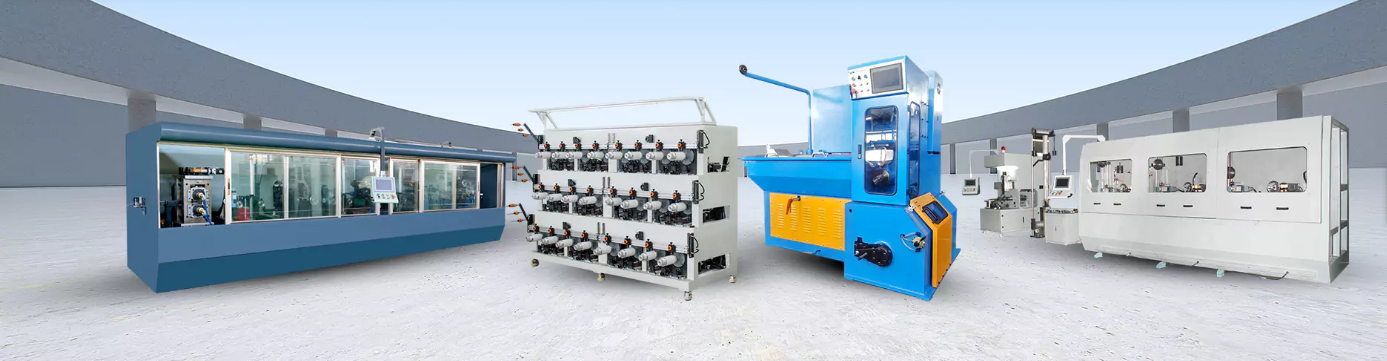
Why Do Manufacturers Struggle With Material Waste and Inconsistent Thickness?
Before implementing optimized Reduction Rolling Mills, I faced several recurring issues:
- Unstable material thickness leading to downstream stamping defects
- Excessive trimming waste
- Surface scratches due to poor roll alignment
- Frequent roll replacement and downtime
- Difficulty maintaining tolerance within ±0.02 mm
When producing Plain Washers, even small dimensional variations can affect load distribution and fastening reliability. Without precise reduction control, material deformation becomes uneven, which ultimately increases rejection rates.
This is exactly where modern Reduction Rolling Mills make a difference. They provide controlled compression and gradual diameter reduction, ensuring uniform grain flow and consistent thickness throughout the strip or wire.
How Do Reduction Rolling Mills Improve Dimensional Stability?
I have learned that high-performance Reduction Rolling Mills focus on three essential factors: roll design, reduction ratio control, and drive stability. Instead of forcing aggressive deformation in one pass, these mills apply progressive reduction that protects material integrity.
| Feature | Traditional Rolling | Modern Reduction Rolling Mills |
|---|---|---|
| Thickness Control | Manual Adjustment | Precise Mechanical or Servo Control |
| Surface Quality | Higher Scratch Risk | Optimized Roll Surface Finish |
| Material Flow | Irregular Grain Deformation | Uniform Grain Flow Structure |
| Production Speed | Limited by Instability | Stable High-Speed Operation |
| Energy Efficiency | Higher Consumption | Optimized Power Transmission |
By upgrading to efficient Reduction Rolling Mills, I reduced thickness deviation and improved downstream stamping precision for Plain Washers. That translated directly into lower scrap rates and fewer machine adjustments.
Can Reduction Rolling Mills Reduce Overall Production Costs?
Many buyers focus only on the equipment price, but I prefer to evaluate long-term operational value. When calculating return on investment, I consider:
- Lower material waste percentage
- Reduced labor adjustments
- Fewer maintenance interruptions
- Improved yield rate
- Higher daily output capacity
After implementing advanced Reduction Rolling Mills, our material utilization improved significantly. Since we produce large volumes of Plain Washers, even a small percentage improvement translates into substantial annual savings.
Additionally, stable rolling tension reduces mechanical stress on stamping dies. This extends tool life and decreases replacement frequency, which further lowers operational expenses.
What Should You Look for When Selecting Reduction Rolling Mills?
Based on my experience, selecting the right Reduction Rolling Mills requires evaluating more than just output speed. I recommend focusing on:
- Frame rigidity and structural stability
- Roll material hardness and wear resistance
- Adjustable reduction ratio flexibility
- Drive motor torque stability
- Ease of maintenance and roll replacement
For manufacturers producing Plain Washers or similar flat fasteners, consistent rolling thickness directly impacts punching accuracy. I always test trial material before full installation to ensure the Reduction Rolling Mills match our material grade and production goals.
How Does Upgraded Rolling Technology Support Sustainable Manufacturing?
Sustainability is no longer optional. Efficient Reduction Rolling Mills consume less power per ton of processed material and minimize raw material waste. When I optimized our rolling line, I noticed measurable reductions in energy consumption while maintaining stable output.
Improved deformation control also enhances mechanical properties of finished Plain Washers, allowing us to meet higher performance standards without increasing material thickness. That helps reduce raw material usage over time.
Are You Ready to Improve Your Rolling Efficiency and Product Quality?
If you are facing inconsistent thickness, excessive waste, or unstable rolling performance, upgrading to reliable Reduction Rolling Mills could be the solution. From my own operational experience, precise rolling control is the foundation for producing high-quality Plain Washers and other metal components efficiently.
At Ningbo Huijue Machinery Manufacturing Co., Ltd., we understand how critical rolling precision is to overall production performance. If you would like to discuss technical specifications, production requirements, or customized configurations, please contact us today. Leave your inquiry and let us help you optimize your rolling process for better consistency, lower costs, and higher productivity.