
Are You Struggling to Achieve Precision and Speed in Foam Processing with a CNC Foam Engraving Machine?
2026-02-26
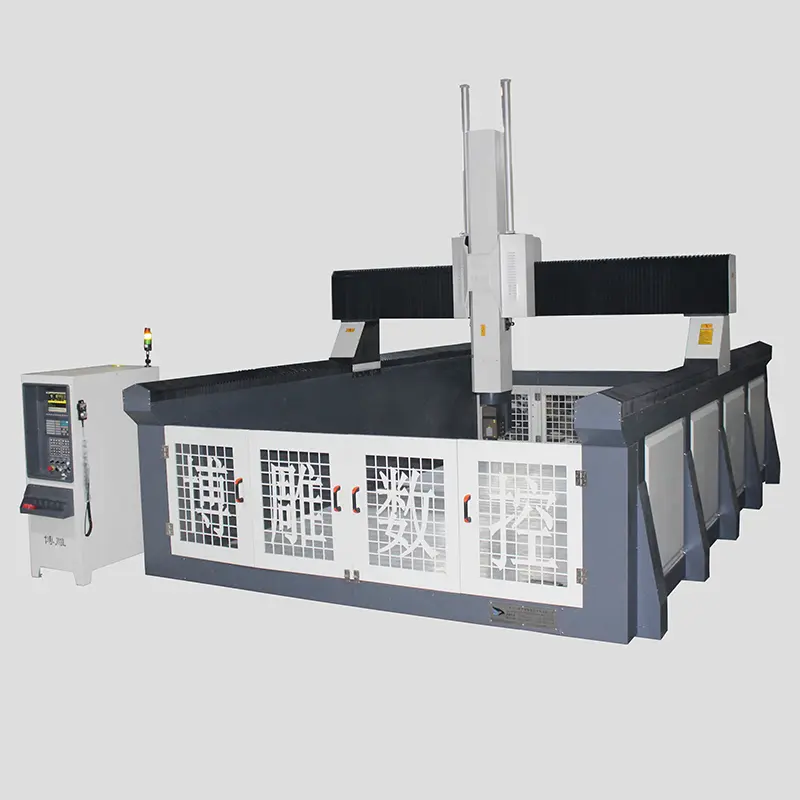
When I first began exploring advanced foam fabrication solutions, I quickly realized how rapidly manufacturers were upgrading their production lines. In recent years, Guangdong Bodiao Intelligent Equipment Co., Ltd. has gradually introduced intelligent automation systems to meet this demand, and one innovation that truly reshaped my expectations was the CNC Foam Engraving Machine. As industries such as architectural decoration, mold making, advertising signage, and composite manufacturing continue to demand higher accuracy and faster turnaround times, I found that investing in a reliable CNC Foam Engraving Machine became less of an option and more of a necessity.
Why Do Traditional Foam Cutting Methods Fall Short in Modern Manufacturing?
Before switching to a CNC Foam Engraving Machine, I relied on manual cutting tools and semi-automatic hot wire systems. While these tools worked for basic shapes, they created serious limitations:
- Inconsistent dimensional accuracy
- Excessive material waste
- Low production speed
- Limited capability for complex 3D modeling
- High labor dependency
As customer expectations increased, especially for custom architectural elements and prototype molds, I noticed that manual processes simply could not maintain repeatable precision. Even minor deviations caused fitting issues downstream. That experience pushed me to evaluate a professional-grade CNC Foam Engraving Machine as a long-term production solution.
How Does a CNC Foam Engraving Machine Improve Precision and Efficiency?
Once I integrated a modern CNC Foam Engraving Machine into my workflow, the difference was immediate. The system uses multi-axis numerical control technology to transform digital design files directly into accurate physical products. Instead of relying on operator skill alone, I could now depend on programmed precision.
Here are the key performance advantages I observed:
- High-speed spindle systems designed specifically for foam materials
- Multi-axis movement enabling complex 3D carving
- Stable machine frame construction that reduces vibration
- Smart control software compatible with common CAD/CAM platforms
- Optimized dust collection and clean processing
Because foam is lightweight yet sensitive to vibration, machine rigidity matters. A well-engineered CNC Foam Engraving Machine maintains smooth motion even during deep carving, which significantly improves surface finish quality.
Can a CNC Foam Engraving Machine Handle Complex 3D Designs with Consistency?
One of my biggest concerns before upgrading was whether automated carving would compromise artistic detail. Surprisingly, I discovered the opposite. With proper programming and tooling, the CNC Foam Engraving Machine allowed me to create intricate 3D sculptures, architectural columns, decorative moldings, and prototype molds with remarkable repeatability.
The following comparison highlights the difference I experienced:
| Feature | Manual Cutting | CNC Foam Engraving Machine |
|---|---|---|
| Dimensional Accuracy | Operator dependent | Digitally controlled precision |
| Complex 3D Capability | Limited | Multi-axis full 3D carving |
| Production Speed | Slow and variable | High-speed automated cycles |
| Repeatability | Low consistency | Excellent batch consistency |
| Material Waste | Higher scrap rate | Optimized toolpath efficiency |
After reviewing these factors, I realized that automation was not just about speed. It was about reliability, predictability, and scalable production capacity.
What Industries Benefit Most from a CNC Foam Engraving Machine?
From my experience and industry observation, several sectors benefit significantly from adopting a CNC Foam Engraving Machine:
- Architectural decoration and building façade design
- Advertising and signage production
- Film and stage prop fabrication
- Automotive and aerospace mold prototyping
- FRP and composite mold manufacturing
Each of these industries demands precision while working with lightweight materials. Foam models often serve as master molds for fiberglass or composite layups. Any inaccuracy at the foam stage multiplies during final production. That is why reliable CNC control becomes critical.
How Does Intelligent Control Software Reduce Operational Complexity?
Initially, I worried about the learning curve. However, modern CNC Foam Engraving Machine systems integrate user-friendly interfaces and compatible design software. Toolpath simulation, automatic calibration, and parameter presets reduce setup time and minimize operator error.
I found that once the digital workflow was established, I could:
- Import 3D files directly from design software
- Preview machining paths before execution
- Adjust cutting parameters based on foam density
- Save repeat jobs for batch production
This integration dramatically shortened the transition from concept to finished product. It also allowed me to accept more custom projects without worrying about production instability.
Is Investing in a CNC Foam Engraving Machine Cost-Effective in the Long Term?
Every capital investment requires careful evaluation. In my case, the return became evident through:
- Reduced labor costs
- Higher production output
- Lower material waste
- Improved product consistency
- Enhanced customer satisfaction
Although the upfront investment may appear significant, the efficiency gains and quality improvements quickly justified the cost. The ability to scale production while maintaining tight tolerances positioned my business for more competitive projects.
Are You Ready to Upgrade Your Foam Processing Capabilities?
If you are facing challenges such as inconsistent cutting results, slow production cycles, or difficulty handling complex 3D designs, it may be time to consider a professional CNC Foam Engraving Machine. From my experience, adopting advanced CNC technology is not merely an upgrade in equipment. It is a strategic move toward automation, precision, and sustainable growth.
Whether you are in architectural modeling, mold manufacturing, or decorative fabrication, investing in a high-performance CNC Foam Engraving Machine can redefine your production standards. If you would like to explore specifications, customization options, or technical guidance tailored to your application, please contact us today. I encourage you to reach out, discuss your production goals, and discover how the right solution can transform your workflow.