

How Can a Complex Profile Rolling Mill Solve the Toughest Section Rolling Challenges?
2026-01-19
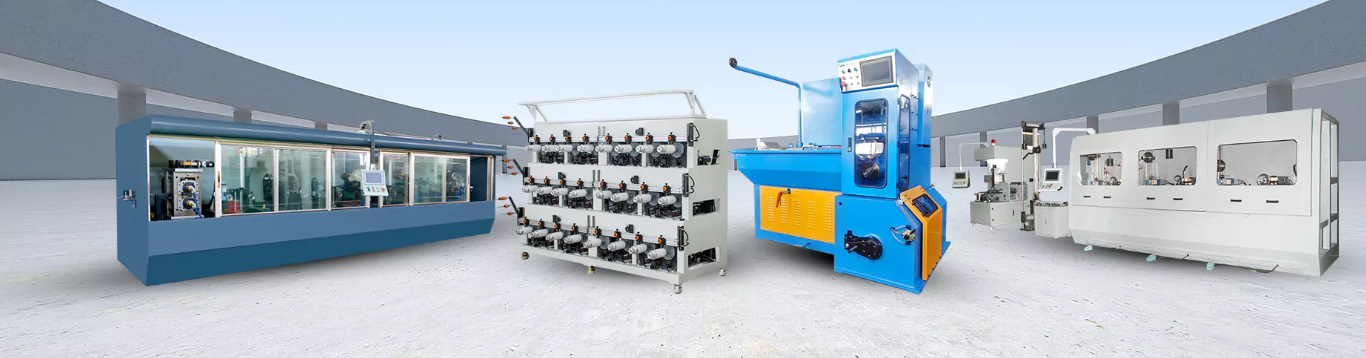
When manufacturers start scaling up production of intricate metal sections, the limitations of conventional rolling equipment become obvious very quickly. I have seen this challenge many times, and it is exactly why GRM Machinery gradually entered my field of vision while I was evaluating advanced solutions for complex section forming. Their approach to the Complex Profile Rolling Mill aligns well with what modern production lines actually need reliability, flexibility, and consistent precision without unnecessary complexity.
Why Do Traditional Rolling Mills Struggle With Complex Profiles?
From my experience, standard rolling mills are usually designed for relatively simple cross sections. Once profiles become asymmetrical, multi-angled, or variable in thickness, several problems appear at the same time. These issues are not theoretical; they show up on the shop floor every day.
- Frequent roll changes slow down production and increase labor costs
- Inconsistent dimensional accuracy leads to higher rejection rates
- Material stress builds up during forming and causes deformation
- Limited adjustability restricts design freedom for new products
A well-designed Complex Profile Rolling Mill directly targets these pain points by optimizing roll pass design, control systems, and forming stability throughout the rolling process.
How Does a Complex Profile Rolling Mill Improve Precision and Stability?
Precision is not only about tight tolerances; it is also about repeatability across long production runs. What stands out to me in a modern Complex Profile Rolling Mill is how the entire system works together rather than relying on a single upgrade.
- Optimized roll arrangements reduce uneven force distribution
- Servo-driven adjustments allow fine tuning during operation
- Stable mill housing minimizes vibration under heavy loads
- Controlled forming paths lower internal stress in finished profiles
This combination helps manufacturers maintain consistent output even when producing profiles with challenging geometries or tight dimensional requirements.
What Production Advantages Matter Most to Manufacturers?
When I talk with plant managers and production engineers, the conversation always comes back to efficiency and predictability. A Complex Profile Rolling Mill delivers value not only through accuracy, but also through measurable operational benefits.
| Production Concern | How the Solution Helps |
|---|---|
| Long setup time | Modular roll design allows faster profile changes |
| High scrap rate | Improved forming control reduces dimensional errors |
| Limited profile complexity | Advanced pass design supports intricate cross sections |
| Unstable output quality | Rigid mill structure ensures consistent rolling conditions |
These advantages translate directly into lower unit costs and greater confidence when accepting demanding custom orders.
Why Is Flexibility Critical in Today’s Rolling Applications?
Market demand is changing quickly. Customers now expect shorter lead times and more customized profiles. In my view, flexibility is one of the strongest arguments for investing in a Complex Profile Rolling Mill.
- Supports a wide range of materials and section shapes
- Adapts to future product designs without full equipment replacement
- Integrates smoothly into automated or semi-automated lines
- Scales from medium batches to continuous production
This adaptability allows manufacturers to respond to new opportunities without constantly rethinking their entire production layout.
How Can the Right Rolling Mill Protect Long-Term Investment?
Equipment decisions are long-term commitments. I always look at durability, upgrade potential, and technical support before recommending a solution. A thoughtfully engineered Complex Profile Rolling Mill is built to maintain performance over years of operation while remaining open to future enhancements.
That long-term perspective is especially important for companies producing high-value profiles where downtime or inconsistency can quickly erode profit margins.
Are You Ready to Optimize Your Profile Rolling Process?
If complex sections, tight tolerances, or unstable output are limiting your current production, it may be time to reassess your equipment strategy. A reliable Complex Profile Rolling Mill can unlock higher efficiency, better quality, and greater design freedom.
To explore how this solution fits your specific application, I strongly recommend reaching out for tailored guidance. Feel free to contact us and leave an inquiry to discuss your project requirements and discover how the right rolling mill setup can support your next stage of growth.