

How Can a Concrete Cement Mixer Improve Construction Efficiency?
2026-01-20
Summary: Concrete cement mixers are essential equipment for modern construction projects, providing consistent mixing, high efficiency, and reduced labor costs. This article explores the benefits, types, technical specifications, and common questions regarding concrete cement mixers, helping construction professionals choose the right equipment for their projects.
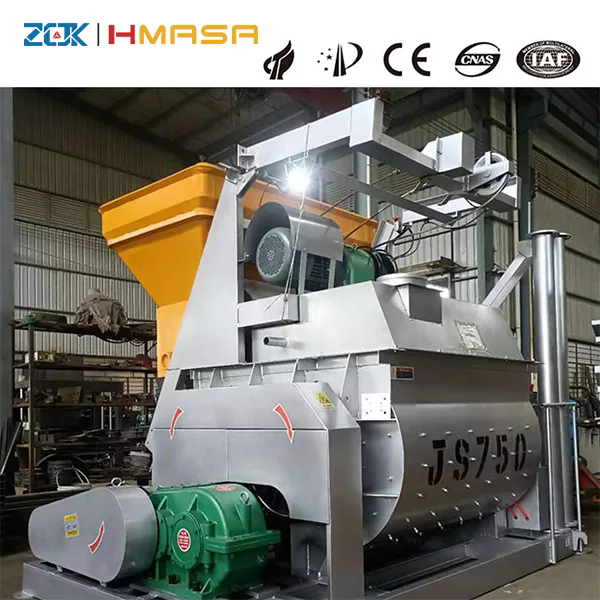
Table of Contents
- Overview of Concrete Cement Mixers
- Types of Concrete Cement Mixers
- Technical Specifications
- Key Benefits of Using a Concrete Cement Mixer
- Frequently Asked Questions
- Contact Information
Overview of Concrete Cement Mixers
Concrete cement mixers are machines designed to combine cement, aggregates, and water into a uniform mixture. They ensure consistent quality, save labor costs, and accelerate construction timelines. ZCJK offers advanced concrete mixers with innovative technologies like AI dynamic proportioning systems and energy-efficient designs, suitable for both small projects and large-scale concrete stations.
Types of Concrete Cement Mixers
Concrete mixers are available in several types, depending on capacity, mobility, and application:
- Portable Concrete Mixers: Ideal for small-scale projects and on-site use.
- Stationary Concrete Mixers: Suitable for continuous production at large construction sites.
- Drum Mixers: Use rotating drums for efficient and uniform mixing.
- Pan Mixers: Offer high mixing uniformity and are used for specialized construction projects.
- Self-loading Mixers: Automate material loading, mixing, and transport, improving efficiency on large sites.
Technical Specifications
ZCJK concrete cement mixers are engineered to meet international standards. A typical specification table is shown below:
| Model | Mixing Capacity (m³) | Power (kW) | Mixing Efficiency (%) | Energy Saving Features |
|---|---|---|---|---|
| JS750 | 0.75 | 15 | ≥95 | Fully enclosed, energy-saving motor |
| JS1000 | 1.0 | 18.5 | ≥95 | Dynamic AI proportioning |
| JS1500 | 1.5 | 22 | ≥95 | Three-scale powder metering, spiral power loss reduction |
Key Benefits of Using a Concrete Cement Mixer
Implementing a high-quality concrete cement mixer can significantly improve project outcomes:
- Enhanced Mixing Consistency: Ensures uniform concrete, reducing structural defects.
- Time and Labor Savings: Reduces manual mixing and accelerates project timelines.
- Precise Material Measurement: Advanced sensors control water, aggregates, and additives with high accuracy.
- Energy Efficiency: Modern mixers are designed to minimize power consumption.
- Environmental Compliance: Fully enclosed systems reduce dust and noise emissions.
Frequently Asked Questions
Q1: What is the ideal mixing capacity for small construction projects?
A1: For small-scale projects, a mixer with 0.75–1.0 m³ capacity is sufficient. Models like JS750 provide high efficiency and uniformity while maintaining low energy consumption.
Q2: How does the AI dynamic proportioning system work?
A2: The system monitors water, sand, and aggregate levels using high-precision sensors and adjusts mix ratios in real-time, ensuring accurate consistency and reducing material waste.
Q3: Can concrete cement mixers handle large-scale commercial projects?
A3: Yes. Models like JS1500 and self-loading mixers are designed for high-volume mixing, meeting the demands of commercial concrete stations and large construction sites.
Contact Information
For detailed inquiries, quotes, or customized solutions for your construction projects, reach out to ZCJK today. Visit ZCJK or contact us to discuss your requirements and receive expert guidance.