

How Can a Handheld Laser Welding Machine Transform Your Fabrication Workflow?
2026-03-03
Article Summary
Handheld laser welding machines have rapidly become essential tools in modern fabrication, repair, and maintenance workflows. This guide explores how handheld laser welding machines work, their practical advantages over traditional welding methods, and how businesses can overcome common challenges when adopting this technology. It also provides actionable insights into selecting the right machine, optimizing processes, and ensuring safety. With a focus on real-world use, the article highlights how Shenyang Huawei supports customers with reliable handheld laser welding solutions that enhance productivity, precision, and profitability in diverse industrial environments.
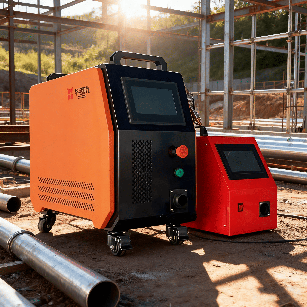
Table of Contents
- Introduction to Handheld Laser Welding Machines
- Common Customer Challenges
- Key Advantages of Handheld Laser Welding
- Types of Handheld Laser Welding Machines
- How to Choose the Right Machine
- Workflow and Operational Best Practices
- Comparison with Traditional Welding
- Frequently Asked Questions
- Conclusion and Contact Us
Introduction to Handheld Laser Welding Machines
Handheld laser welding machines represent a significant advancement in joining technology. Unlike conventional arc or gas welding methods, laser welding uses focused, high-energy light to create precise, high-strength joints with minimal heat input. The portability of handheld units allows technicians to perform precise welding in situ, making them ideal for field repairs, small batch production, and intricate metalwork.
Shenyang Huawei offers a range of handheld laser welding solutions designed to meet the needs of fabricators, maintenance teams, and repair specialists who require a balance of power, accuracy, and ease of use.
Common Customer Challenges
Customers considering a handheld laser welding machine often face several recurring obstacles. These challenges can impede productivity, increase costs, or lead to suboptimal outcomes if not properly addressed:
- Uncertainty about selecting the right power and wavelength for specific materials
- Difficulty integrating new welding processes into existing workflows
- Managing safety risks associated with laser radiation
- Ensuring consistent weld quality across different operators
- Balancing capital investment with expected productivity gains
Understanding these pain points helps businesses make informed decisions and adopt handheld laser welding technology more successfully.
Key Advantages of Handheld Laser Welding
Handheld laser welding machines deliver a variety of practical advantages compared to traditional welding approaches:
- High Precision: Focused laser beams create narrow, strong welds with minimal distortion.
- Speed: Rapid heating and cooling result in faster weld cycles and reduced downtime.
- Minimal Heat Affected Zone: Reduced thermal impact preserves part integrity.
- Portability: Handheld design enables on-site repairs and flexible positioning.
- Clean Operation: Less spatter and need for secondary finishing.
These advantages make handheld laser welding suitable for industries such as automotive repair, aerospace maintenance, metal fabrication shops, and precision manufacturing.
Types of Handheld Laser Welding Machines
Different handheld laser welding machines are engineered for specific use cases and material types. Understanding the differences helps match the machine to operational needs.
- Fiber Laser Handheld Welders – High beam quality and efficiency for stainless steel, aluminum, and high-strength alloys;
- CO2 Laser Handheld Welders – Effective for certain reflective metals and thicker sections;
- Portable Handheld with Power Pack – Designed for remote work where mobility is critical;
- CNC-Assisted Handheld Modules – Combine guided motion with handheld control for precision patterns.
Shenyang Huawei offers flexible configurations that allow customers to choose power levels and features aligned with their application demands.
How to Choose the Right Machine
Selecting the optimal handheld laser welding solution depends on technical and operational criteria. A systematic evaluation ensures the equipment meets performance expectations and return on investment goals.
- Material Type: Understand the metal types and thicknesses most commonly welded;
- Welding Speed Requirements: Evaluate throughput targets for production or repair schedules;
- Beam Quality and Focus Stability: Ensure consistent weld penetration and minimal defects;
- Ease of Use and Training: Assess operator capability and training needs;
- Safety Features: Confirm integrated protective measures such as shutter controls and eye protection interlocks.
Consulting with experienced providers like Shenyang Huawei can help narrow options and align machine specifications with specific project demands.
Workflow and Operational Best Practices
Adopting handheld laser welding into existing processes requires attention to workflow, operator training, and environmental conditions.
- Pre-weld surface preparation to remove oxides and contaminants;
- Establishing stable fixtures or jigs to maintain consistent positioning;
- Implementing proper ventilation and laser safety protocols;
- Regular equipment calibration and maintenance;
- Monitoring weld quality through inspection and testing.
Consistent workflow practices improve quality control, reduce rework, and enhance overall process reliability.
Comparison with Traditional Welding
| Attribute | Handheld Laser Welding | Traditional Welding |
|---|---|---|
| Heat Affected Zone | Minimal | Significant |
| Precision | High | Moderate |
| Speed | Fast | Variable |
| Portability | Excellent | Poor to Moderate |
| Post-Weld Cleanup | Low | Moderate to High |
Frequently Asked Questions
Can handheld laser welding replace traditional methods?
In many use cases it can, especially where precision, speed and reduced thermal impact are priorities. Traditional methods may still be preferred for very thick sections or specific joint geometries.
Is special training required?
Yes. Operators must be trained in laser safety and process control to achieve optimal results and maintain safe working conditions.
What materials can be welded with a handheld laser?
Common metals include stainless steel, carbon steel, aluminum, copper alloys, and certain specialized alloys, depending on machine power and configuration.
How long is the typical service life?
With proper maintenance and usage within recommended parameters, handheld laser welding machines can provide reliable service for many years.
Conclusion and Contact Us
Handheld laser welding machines offer a transformative combination of precision, speed, and flexibility that can significantly improve fabrication and repair workflows. By addressing common challenges and making informed equipment choices, businesses can achieve higher quality output and reduced operational costs.
Shenyang Huawei is dedicated to providing robust handheld laser welding solutions tailored to your specific industry needs. Whether you are upgrading existing processes or exploring new production capabilities, our team is ready to support you. If you want to enhance your welding performance or need technical consultation, contact us to discuss your requirements and discover how Shenyang Huawei can help elevate your operations.