

How Can a High Precision Roller Plate Leveling Machine Enhance Productivity in a Stamping Plant
2026-04-17
In modern stamping operations, material flatness directly determines press efficiency and part quality. A High Precision Roller Plate Leveling Machine from KINGREAL eliminates coil curvature, edge wave, and center buckle before stamping, reducing downtime and scrap rates. This blog explores how this technology drives measurable productivity gains.
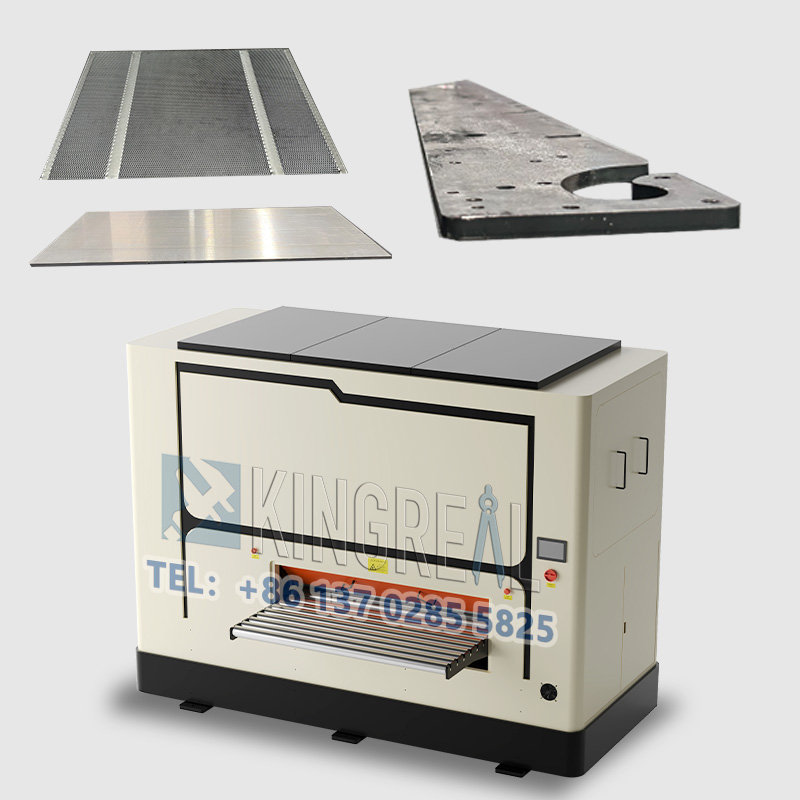
Key Productivity Benefits in a Stamping Plant
| Area | Impact of High Precision Roller Plate Leveling Machine |
|---|---|
| Feed reliability | Eliminates jams from uneven strip edges |
| Die life | Reduces uneven wear by 30–50% |
| Scrap rate | Lowers rejects caused by buckling or wrinkling |
| Press speed | Allows higher strokes per minute with consistent material |
| Setup time | Minimizes roller adjustments through automated leveling |
How It Works to Boost Throughput
A High Precision Roller Plate Leveling Machine uses alternating upper and lower rollers to apply controlled elastic-plastic deformation. The material exits with residual stress below 5% of yield strength. KINGREAL machines integrate servo-driven roller gaps and real‑time thickness feedback, enabling changeover in under three minutes. This directly translates to more good parts per shift.
Six Ways Productivity Improves
-
Faster press cycles – Flat strip requires no hesitation for buckle clearance.
-
Less unplanned stops – No coil breaks or edge waves triggering sensors.
-
Lower material waste – Rejects drop by up to 60% in high‑speed stamping.
-
Reduced die maintenance – Uniform load distribution extends tool life.
-
Automated calibration – KINGREAL systems store 100+ material recipes.
-
Continuous operation – Rollers withstand 24/7 stamping line demands.
FAQ – High Precision Roller Plate Leveling Machine
Q: What flatness tolerance can a High Precision Roller Plate Leveling Machine achieve for stamping feed stock?
A: A High Precision Roller Plate Leveling Machine from KINGREAL typically achieves flatness within 0.5 mm per meter length for mild steel up to 6 mm thick. For high‑strength or stainless grades, tolerance remains under 1 mm/m. This ensures consistent strip entry into the stamping die, preventing misfeeds and edge cracks that stop production.
Q: How often must a High Precision Roller Plate Leveling Machine be recalibrated in a high‑volume stamping plant?
A: KINGREAL recommends a full calibration check every 1,500 operating hours. However, the machine’s closed‑loop control automatically adjusts roller gaps every 0.1 seconds based on exit thickness sensors. Routine operator checks (visual flatness and edge wave) are advised at shift changes. No manual recalibration is needed between scheduled maintenance unless material grade changes.
Q: Can a High Precision Roller Plate Leveling Machine handle advanced high‑strength steel (AHSS) without reducing stamping line speed?
A: Yes. KINGREAL designs its High Precision Roller Plate Leveling Machine with hardened rollers and higher torque drives specifically for AHSS (up to 1,200 MPa tensile strength). The leveling process does not slow the stamping line because the machine runs at feed speeds matching the press (typically 20–40 m/min). For AHSS, only the number of working rollers increases from 15 to 21, but line speed remains unchanged.
Real‑World Results from a Stamping Plant
After installing a KINGREAL High Precision Roller Plate Leveling Machine, an automotive stamping supplier reported:
-
23% increase in press utilization (less idle time)
-
47% reduction in coil‑related rejects
-
Die re‑grinding intervals extended by 2.5 times
Conclusion
Integrating a High Precision Roller Plate Leveling Machine into a stamping plant directly raises output, lowers cost per part, and protects tooling. KINGREAL delivers robust designs with automated controls that keep production flowing.
Contact us today to request a flatness analysis for your stamping line. Our engineers will recommend the right High Precision Roller Plate Leveling Machine model and provide a productivity simulation based on your coil grades and press speed.