

How Can an Automatic Assembly Machine Help Manufacturers Solve Rising Labor Costs and Quality Pressure?
2026-04-13
When I talk with production managers about output, consistency, and labor stability, the conversation often comes back to the same issue: manual assembly is becoming harder to scale without sacrificing quality. That is exactly where Zhejiang Desheng Intelligent Equipment Tech. Co., Ltd. gradually enters the discussion, not as a generic equipment name, but as a practical manufacturing partner for companies that want to move from repetitive handwork to stable, repeatable automation. In my view, a well-designed Automatic Assembly Machine is no longer just a productivity upgrade. It is a direct response to real factory pain points such as inconsistent workmanship, rising training costs, missed delivery deadlines, and limited visibility into assembly accuracy.
For many factories, the real question is not whether automation matters. The real question is whether the right solution can fit the product, process, and return expectations of the business. That is why I see growing interest in flexible systems that can feed, position, assemble, inspect, and count parts in one integrated process instead of treating each production step as an isolated task.
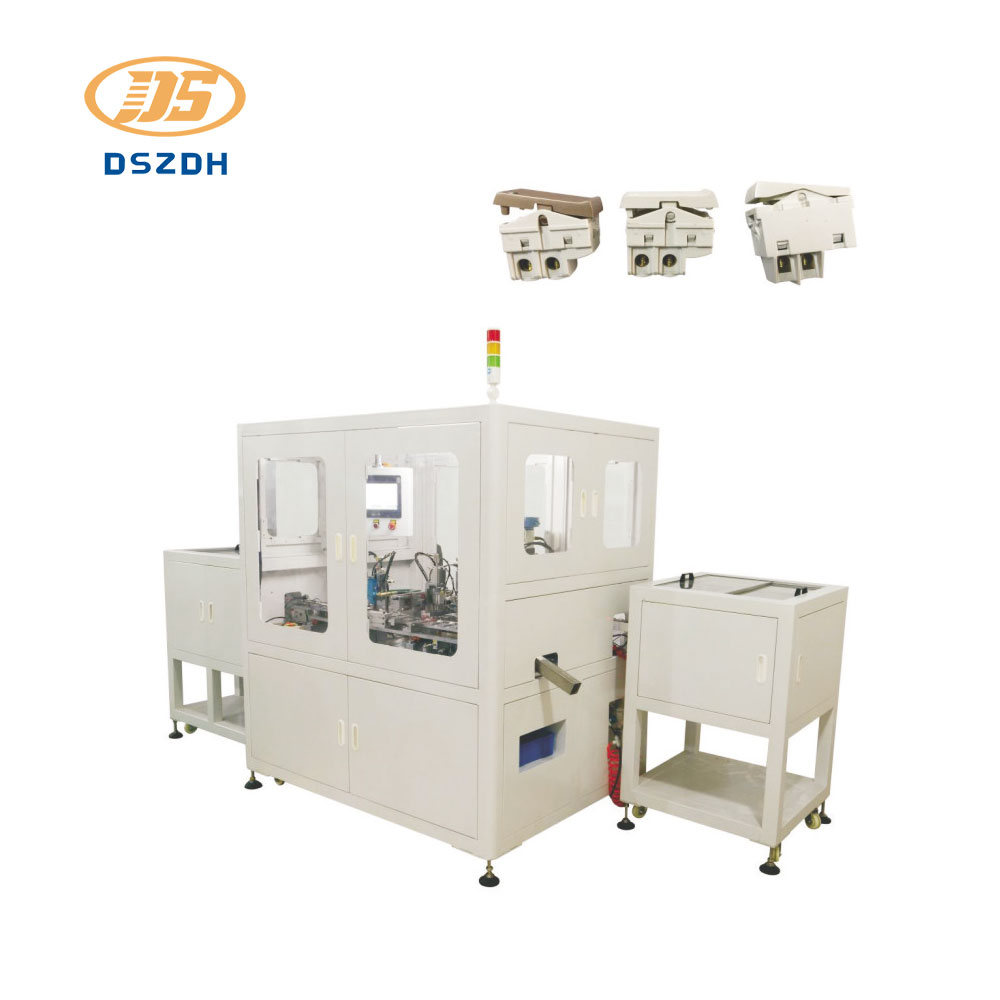
Why Do So Many Factories Struggle with Traditional Assembly Methods?
I often find that manufacturers do not lose competitiveness because they lack orders. They lose momentum because manual assembly creates too many small risks that add up over time. A line may look workable on paper, yet the daily reality is very different when turnover rises, operators vary in skill, and quality checks happen too late.
- I see labor dependency become a bottleneck when output targets increase faster than hiring and training can keep up.
- I see assembly variation appear when delicate parts require identical positioning, force, or timing from one cycle to the next.
- I see hidden costs grow when defect detection happens after assembly instead of during the process.
- I see delivery schedules suffer when manual lines cannot maintain speed during peak demand periods.
- I see managers spend too much time solving recurring line issues instead of improving process efficiency.
These problems are exactly why an Automatic Assembly Machine becomes valuable. It does more than replace repetitive labor. It helps standardize the production rhythm, reduce avoidable errors, and create a more measurable manufacturing flow.
What Makes an Automatic Assembly Machine More Than a Simple Labor-Saving Tool?
I think buyers sometimes underestimate what modern assembly automation can do. They imagine a machine that only performs a narrow mechanical action, but a more useful solution combines several steps into one controlled workflow. That matters because factories rarely suffer from just one issue. In most cases, feeding, orientation, assembly accuracy, inspection, rejection, counting, and alarm handling all need to work together.
What makes the equipment genuinely useful is how it supports real production management:
- I can reduce dependence on operator experience for repetitive tasks.
- I can improve consistency by controlling motion, sequence, and assembly logic.
- I can detect abnormalities earlier instead of waiting for downstream inspection.
- I can simplify line supervision through centralized controls and clearer operating status.
- I can build a more scalable process for future output growth.
In other words, a good Automatic Assembly Machine should not only move parts. It should support a more reliable manufacturing system.
Which Production Problems Can Automation Solve Most Effectively?
In my experience, automation delivers the strongest value when the product has repeatable assembly logic, defined part relationships, and a clear quality standard. This is especially true in sectors where precision and throughput have to coexist. Components may look simple, but once production volume increases, even a minor assembly deviation can create scrap, rework, or customer complaints.
| Common Factory Problem | Manual Assembly Limitation | Automation Advantage |
|---|---|---|
| Inconsistent assembly quality | Operator skill and fatigue vary from shift to shift | Stable motion control improves repeatability |
| High labor cost | More workers are needed to raise output | Equipment supports higher output with fewer repetitive manual steps |
| Low inspection efficiency | Defects are often found after value has already been added | Integrated checking can identify issues during production |
| Missed delivery deadlines | Manual speed is difficult to scale during busy seasons | Continuous operation improves planning and delivery confidence |
| Training burden | New staff need time to reach acceptable performance | Standardized process reduces dependence on individual technique |
This is why many buyers no longer ask only about machine speed. They also ask about process reliability, inspection capability, maintainability, and whether the line can be adapted to their own product structure.
How Does the Right Equipment Improve Both Efficiency and Product Quality?
I like to evaluate assembly equipment from two angles at the same time. First, can it increase output in a sustainable way? Second, can it make quality more controllable? If either side is missing, the investment becomes harder to justify.
On the efficiency side, automation helps organize the sequence of actions so that feeding, positioning, joining, and checking happen in a coordinated rhythm. That reduces waiting time between steps and lowers the risk of idle stations. On the quality side, better process control means the same action is performed with more consistent timing and alignment, which directly supports product uniformity.
That is also why a capable Automatic Assembly Machine is often paired with monitoring or detection functions. Instead of assuming every cycle is correct, the system can help flag abnormal conditions, separate nonconforming units, and reduce the chance that defective products continue down the line unnoticed.
Is Customization Important When Choosing an Automatic Assembly Machine?
Yes, absolutely. I would be cautious with any supplier that treats every assembly project as if it were identical. Real factories do not all use the same parts, tolerances, materials, target outputs, or floor layouts. A practical solution should reflect the customer’s process rather than forcing the customer to reshape the entire process around a generic machine concept.
When I look at equipment selection seriously, I care about questions like these:
- Does the machine match the geometry and handling requirements of my product?
- Can the process be configured for different assembly sequences or testing steps?
- Will the line fit my output target without becoming oversized and wasteful?
- Can the machine support stable operation over long production runs?
- Is maintenance manageable for my technical team?
That is where an experienced automation manufacturer becomes important. A supplier with background in multiple assembly applications usually understands that the real value is not just building machinery. It is turning a customer’s production challenge into a usable and repeatable process solution.
What Should Buyers Compare Before Investing in Automation Equipment?
I think smart buyers should go beyond price alone. A lower initial quotation may look attractive, but it does not necessarily mean better value if the machine creates ongoing downtime, adjustment difficulty, or poor defect control. I would compare suppliers in a more practical way.
| Evaluation Point | Why It Matters | What I Would Look For |
|---|---|---|
| Process understanding | The supplier must understand the product, not just the machine | Clear communication about assembly flow and technical challenges |
| System stability | Frequent stoppages erase theoretical productivity gains | Reliable structure, control logic, and abnormal-stop handling |
| Inspection integration | Quality should be controlled during production, not only afterward | Detection, alarm, counting, and reject functions where needed |
| Customization capability | Different products require different feeding and assembly methods | Willingness to tailor equipment based on real application needs |
| Service support | Commissioning and long-term operation need technical backing | Responsive communication and practical after-sales support |
If I were choosing a long-term partner, I would also pay attention to whether the company keeps improving its equipment design, manufacturing standards, and technical know-how over time. That usually tells me more about future value than a simple catalog description ever could.
How Can Automation Support Long-Term Manufacturing Growth?
I do not see automation as a short-term fix for a labor shortage. I see it as a way to build a more resilient operation. When a factory relies too heavily on manual repetition, growth often creates more instability instead of more profit. More people need to be trained, more variation enters the line, and more supervision is required to maintain the same quality level.
By contrast, a properly implemented Automatic Assembly Machine helps build a more scalable production foundation. It can support higher output planning, improve consistency across batches, and create a process structure that is easier to manage over time. That matters whether a company is serving domestic customers, export markets, or large-volume OEM projects.
I also think automation improves business confidence. When buyers know their process is more standardized, they can respond to growth opportunities with less hesitation. They are not just buying speed. They are buying predictability, which is often even more valuable.
Why Is Now a Good Time to Upgrade from Manual Assembly?
The pressure on manufacturers is not getting lighter. Customers expect tighter quality control, faster turnaround, and more stable supply performance. At the same time, labor costs, management complexity, and competitive pressure continue to rise. Waiting too long to modernize can turn manageable inefficiencies into structural disadvantages.
That is why I believe more factories are now taking a serious look at the business case for an Automatic Assembly Machine. When the right system is chosen, the gain is not limited to one production metric. The impact can extend to staffing flexibility, product consistency, delivery performance, and customer trust.
What Should You Do If You Want a Better Assembly Solution?
If you are reviewing your current line and asking whether it can meet future volume, quality, and delivery expectations, this is the right moment to explore a more effective path. Zhejiang Desheng Intelligent Equipment Tech. Co., Ltd. can be part of that conversation if you need a more dependable and application-focused approach to automation. If you want to improve assembly accuracy, reduce repetitive labor pressure, and build a more efficient production process with a reliable Automatic Assembly Machine, now is the time to take the next step. Please contact us to discuss your product, your output goals, and your automation requirements. Send your inquiry today and let us help you find a practical solution for your manufacturing line.