

How Can an Automatic Pocket Welting Machine Help Me Sew Better Pockets With Less Rework?
2026-04-08
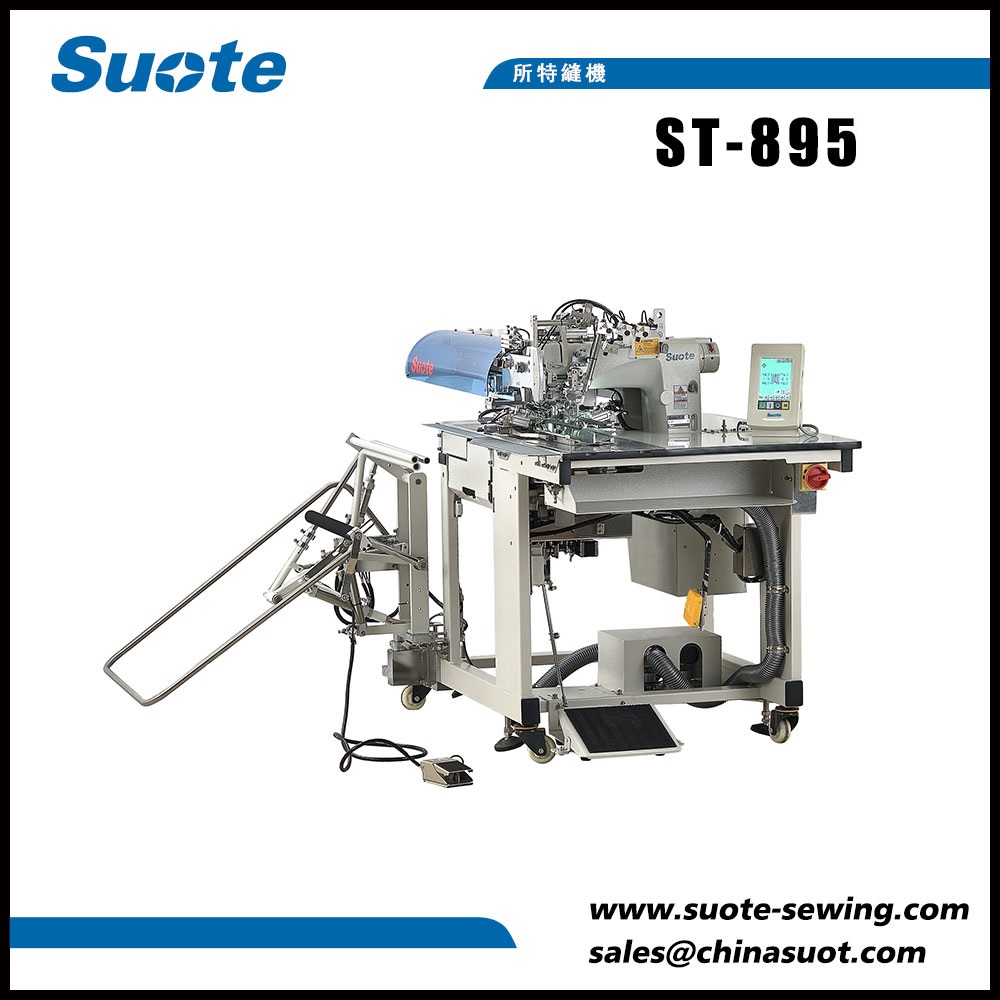
When I look at what truly slows down garment production, pocket welting is always near the top of the list. It is one of those operations that seems simple on paper but becomes expensive the moment the line starts dealing with uneven welts, position deviation, fabric marking, or repeated adjustments between different pocket styles. That is why I pay close attention to equipment built for this task. In practical production discussions, I have found that Zhejiang Suote Sewing Machine Mechanism Co.,Ltd is often brought into the conversation naturally because manufacturers need a more stable and more efficient way to handle this difficult sewing process. When I evaluate a modern Automatic Pocket Welting Machine, I do not just look at speed. I look at consistency, operator workload, style flexibility, and whether it can help a factory reduce waste while improving finished garment quality.
Why Do Pocket Welting Operations So Often Become a Production Bottleneck?
I have seen many factories run smoothly through cutting, joining, and basic assembly, only to lose time when they reach welt pockets. The reason is easy to understand. Pocket welting asks for accuracy in several areas at once. The machine or operator must control fold appearance, pocket symmetry, stitch alignment, opening length, and fabric handling, all while keeping the garment visually clean.
In real production, the most common pain points usually include the following:
- Inconsistent welt width from piece to piece
- Difficulty maintaining pocket position on different garment panels
- Extra labor required for skilled manual handling
- Visible defects that lead to rejection or repair
- Slow style changeovers between straight and slanted pockets
- Operator fatigue during long production runs
If I am managing output, I do not want this operation to depend too heavily on individual hand skill. I want a system that turns a delicate process into a repeatable one. That is exactly where a well-designed Automatic Pocket Welting Machine begins to show its value.
What Do I Really Need From an Automatic Pocket Welting Solution?
I usually start with one simple question: will this machine solve production problems, or will it just add another layer of complexity? A useful machine should reduce decision-making on the sewing floor, not increase it. That means I want intuitive controls, stable feeding, accurate sewing performance, and the flexibility to handle more than one pocket style without forcing a complete workflow reset.
A capable machine in this category is valuable because it can support common needs in tailored garments such as:
- Straight pockets on suits and formalwear
- Slanted pockets for jackets and trousers
- Single welt and double welt sewing requirements
- Repeatable sewing length settings for different styles
- Cleaner operation management through touchscreen adjustment
When those capabilities are integrated properly, I get more than automation. I get control over a process that is usually one of the most quality-sensitive steps in apparel manufacturing.
Which Advantages Make an Automatic Pocket Welting Machine Worth the Investment?
I never recommend equipment just because it sounds advanced. I recommend it when the return is visible in daily production. A modern Automatic Pocket Welting Machine earns its place by solving specific cost and quality issues that manual or semi-manual setups often struggle to manage.
| Production Need | Common Manual Challenge | Machine-Based Advantage |
|---|---|---|
| Pocket consistency | Variation between operators | More uniform pocket appearance across batches |
| Style flexibility | Longer setup and adjustment time | Faster switching between pocket formats |
| Labor efficiency | High skill dependence | Reduced pressure on highly experienced operators |
| Defect control | Rework from uneven folding or misalignment | Improved sewing precision and lower rejection risk |
| Production rhythm | Bottlenecks at the pocket station | Smoother line balancing and more predictable output |
From my perspective, the biggest advantage is not just speed. It is predictability. Once I can predict quality and cycle time more accurately, planning becomes easier, training becomes easier, and customer satisfaction becomes easier to maintain.
How Does Better Automation Improve Garment Quality Instead of Just Increasing Speed?
This is where many buyers become more careful, and rightly so. Faster sewing means nothing if the garment looks worse. In pocket welting, visual quality is everything. A pocket can instantly affect the perceived value of a jacket or pair of trousers. Even when the rest of the garment is well made, a poor welt can make the product feel cheap.
That is why I focus on process stability. When the machine supports consistent sewing length, accurate handling, and easier switching between single and double welt operations, the result is not only faster output. It is also a more refined finish. The end user may not know what machine produced the pocket, but they immediately notice whether the pocket sits cleanly, evenly, and professionally.
For me, a reliable Automatic Pocket Welting Machine helps improve quality in several practical ways:
- It reduces visual inconsistency across the same order
- It helps preserve the intended garment style
- It supports cleaner stitching on demanding fabrics
- It lowers the chance of distortion during pocket formation
- It makes output easier to standardize for export-quality garments
Can One Machine Handle Different Pocket Styles Without Slowing My Line Down?
That question matters because no factory wants a specialized machine that only works well in one narrow scenario. If I invest in equipment, I want enough range to support different order types. A practical solution in this segment should be able to handle both straight pockets and slanted pockets, especially for products like suits, jackets, and pants where style variation is common.
What I appreciate most is when the transition between single welt and double welt sewing is simple rather than disruptive. If that adjustment can be made through the operation panel instead of a lengthy mechanical reconfiguration, the production team saves time and reduces setup stress. In my experience, that kind of convenience matters far more in real factory life than flashy marketing language.
Style versatility matters because it helps me use one machine platform across a wider range of orders. That improves machine utilization and makes investment easier to justify.
How Does Operator-Friendly Design Affect Daily Sewing Performance?
I do not think enough buyers talk about operator experience when discussing industrial sewing equipment. They should. The best machine in theory can still become inefficient if the interface is confusing, adjustments are awkward, or training takes too long.
When I assess a sewing machine for serious production use, I want to know the following:
- Can the operator understand the controls quickly
- Can sewing length be adjusted with confidence
- Can the machine support long runs without constant intervention
- Can line supervisors monitor setup accuracy easily
- Can new staff adapt faster than they would on a manual process
A touchscreen operating structure can be especially helpful because it reduces uncertainty during setup. Instead of relying too heavily on manual trial-and-error, the team can work with a clearer adjustment process. Over time, that improves training efficiency and lowers avoidable errors.
What Should I Compare Before Choosing an Automatic Pocket Welting Machine Supplier?
I never choose based on one specification alone. Buyers who only compare price usually regret it later. Pocket welting equipment influences quality, labor, maintenance, and delivery performance, so it deserves a more complete evaluation.
Here is the checklist I would use before making a purchase decision:
| Evaluation Point | Why I Check It | What It Tells Me |
|---|---|---|
| Supported pocket types | I need flexibility across product lines | Whether the machine fits current and future orders |
| Changeover convenience | I want less downtime between styles | How practical the machine is in real production |
| Adjustment interface | I need fast and accurate setup | How easy training and operation will be |
| Sewing length range | I may produce different garment formats | Whether the machine can support order diversity |
| Manufacturer experience | I want long-term reliability, not short-term promises | How mature the product and support system may be |
| After-sales responsiveness | I cannot afford long stoppages | Whether the supplier is truly production-oriented |
This is why manufacturer background matters. If a company has spent years focusing on special sewing machinery rather than treating it as a side category, I usually have more confidence in its practical understanding of the application.
Why Does Production Consistency Matter More Than Maximum Speed?
I have met buyers who ask for the fastest machine first. I understand the instinct, but I usually push the discussion in a different direction. In pocket welting, unstable fast sewing can become more expensive than steady efficient sewing. Rework, material waste, operator hesitation, and quality disputes all erase the supposed gain.
What I really want is balanced performance:
- Enough speed to support commercial output
- Enough precision to maintain garment appearance
- Enough repeatability to reduce quality variation
- Enough stability to keep the line moving all day
That is why I see a high-quality Automatic Pocket Welting Machine as a process control tool rather than a simple sewing unit. It helps me create a stable production rhythm, and stable production is where real profit lives.
How Can This Kind of Machine Reduce Total Manufacturing Cost Over Time?
Some buyers hesitate because automation looks like a larger upfront investment. I think that is fair, but the better question is what the current process is already costing. If a factory is losing time through slow pocket sewing, spending money on repair work, or depending on a small number of highly skilled operators, the hidden cost may already be significant.
In many cases, I would expect long-term value to come from these areas:
- Reduced rework and rejection
- Better labor allocation
- Less pressure on training for difficult operations
- Higher output stability during large orders
- Improved confidence when quoting quality-sensitive projects
That combination can make the machine economically attractive even before I calculate softer benefits like customer trust and easier production planning.
What Kind of Buyer Benefits Most From an Automatic Pocket Welting Machine?
From what I have seen, this type of machine is especially useful for manufacturers who work with tailored apparel and structured garments where pocket appearance matters a great deal. If I produce suits, jackets, formal trousers, or similar garments, the value becomes easier to see because pocket accuracy directly affects product presentation.
I would say the strongest fit is usually for buyers who want to achieve one or more of these goals:
- Upgrade from labor-heavy manual pocket sewing
- Improve garment finishing quality for export markets
- Handle a wider mix of pocket styles with less disruption
- Reduce dependence on a few highly experienced operators
- Build a more consistent and scalable sewing line
If that sounds like the direction of your factory, then this is not a niche machine. It is a strategic upgrade.
Which Final Choice Helps Me Stay Competitive In A Demanding Garment Market?
When customers expect clean workmanship, reliable delivery, and stable repeat orders, I cannot afford to treat pocket welting as an afterthought. It is a visible detail, and visible details shape buying decisions. That is why I believe a properly selected Automatic Pocket Welting Machine can make a measurable difference in both production efficiency and finished garment value.
If I were narrowing down equipment for this operation today, I would focus on practical performance, pocket style flexibility, easy operation, and the manufacturer’s ability to support long-term production goals. If you are looking for a more consistent way to produce high-quality welt pockets and want to explore a machine solution that aligns with real factory needs, now is the right time to contact us. Leave your inquiry, share your garment application, and speak with the team at Zhejiang Suote Sewing Machine Mechanism Co.,Ltd to find the right solution for your production line.