

How Can an Automatic Testing Machine Help Me Cut Inspection Costs Without Sacrificing Quality?
2026-04-08
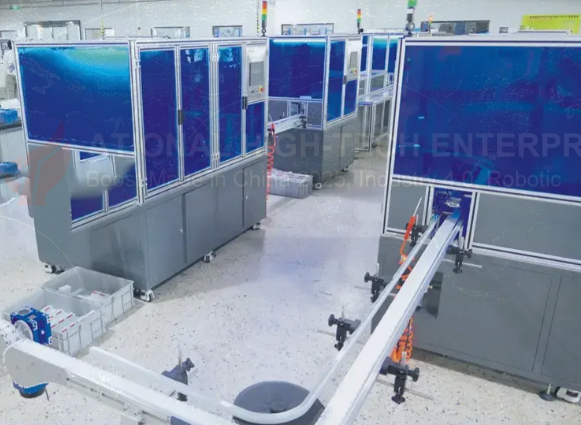
When I evaluate a production line, I do not only look at output speed. I look at how often defects slip through, how stable the inspection results are, and how much labor is tied up in repetitive checking tasks. That is exactly why more manufacturers are turning to an Automatic Testing Machine instead of relying only on manual inspection. In many real factory settings, testing is where time, labor, and product consistency begin to drift apart. As I learned more about automation solutions from Zhejiang Desheng Intelligent Equipment Tech. Co., Ltd., I found that the real value of a well-designed testing system is not just automation itself, but the way it helps manufacturers build a more reliable and scalable process from the ground up.
Why Do So Many Factories Struggle With Product Testing Even When Production Looks Efficient?
I have seen many production teams invest heavily in assembly efficiency while leaving testing workflows partly dependent on manual judgment. On paper, the line looks productive. In practice, the final inspection stage becomes a bottleneck. Operators get tired, testing standards vary from shift to shift, and small electrical or functional issues are missed until products reach packing, shipment, or even the customer.
This problem becomes more obvious in industries where consistency matters on every single unit. If I am producing switches, sockets, or similar electrical parts, I cannot afford random inspection gaps. One unstable result can lead to product returns, complaint handling, extra labor, and damage to purchasing confidence.
That is where a properly engineered Automatic Testing Machine changes the conversation. Instead of asking workers to repeat the same judgment hundreds or thousands of times a day, I can standardize the procedure, reduce human variability, and keep the line moving at a more predictable pace.
What Pain Points Can an Automatic Testing Machine Solve in Real Production?
From a buyer’s point of view, I would never choose equipment simply because it sounds advanced. I would choose it because it solves practical factory problems. The most common issues I want to eliminate usually include the following:
- Inconsistent testing results between operators
- Slow inspection speed that limits total line throughput
- Rising labor costs for repetitive test stations
- Missed defects that create after-sales risk
- Difficulties in scaling output while maintaining the same quality level
- Complex product structures that need customized testing logic
When I look at those issues together, the case for an Automatic Testing Machine becomes much clearer. It is not just a machine for replacing hands. It is a tool for improving repeatability, controlling quality risk, and giving production managers more confidence in every batch.
How Does Automated Testing Improve Quality Control More Effectively Than Manual Inspection?
Manual inspection still has value in some special scenarios, especially when judgment depends on appearance or unusual product conditions. But for repeatable electrical and functional checks, I trust automation much more. A machine follows the same programmed routine every cycle. It does not lose concentration near the end of a shift, and it does not apply different standards depending on who is on duty.
If I need to verify continuity, voltage-related performance, pin protection, or other defined testing items, automation gives me a stable structure. That matters because buyers do not care whether a defect happened during a busy shift or a slow shift. They only care whether the delivered product performs correctly.
The biggest advantage, in my view, is consistency. Consistency is what protects brand reputation. Consistency is what helps factories grow from small batch work to larger orders. And consistency is one of the strongest reasons to invest in a capable Automatic Testing Machine.
Which Features Should I Focus On Before Choosing an Automatic Testing Machine?
I always recommend that buyers go beyond broad claims and look at equipment in a more practical way. Not every testing system fits every product type, and not every supplier understands the production realities of the buyer. Before making a decision, I would focus on these points:
| Evaluation Point | Why It Matters | What I Would Check |
| Testing Accuracy | It directly affects defect control and customer satisfaction | Test standards, repeatability, pass/fail logic, calibration method |
| Production Compatibility | The machine should fit the line rather than disrupt it | Cycle time, feeding method, connection with upstream and downstream stations |
| Customization Ability | Standard equipment often cannot fully match special products | Whether the supplier can adapt to product structure and testing requirements |
| Ease of Operation | Complicated equipment increases training and downtime | User interface, setup steps, maintenance access, alarm clarity |
| Stability Over Time | Long-term value matters more than a short demo | Build quality, service support, real manufacturing experience |
| Data and Traceability | Testing records can support quality analysis and customer communication | Whether results can be stored, tracked, or integrated into factory workflows |
If a supplier can discuss these points clearly and connect them to my actual product, I take that as a strong sign that they understand industrial testing in a real-world way.
Why Does Customization Matter So Much in Testing Equipment?
I rarely assume that one testing setup can fit every manufacturer without adjustment. Product sizes differ. Structures differ. Performance requirements differ. Even factories producing similar components may have different production rhythms, staffing patterns, and quality priorities.
That is why customization matters. If I am investing in an Automatic Testing Machine, I want the equipment to reflect the actual needs of my product, not force my product into a generic process. A machine that is customized around the testing logic, material flow, and expected output of the line can deliver much more value than a one-size-fits-all solution.
This is especially important for manufacturers who produce electrical products with multiple checkpoints. A more tailored system can help reduce unnecessary handling, improve the testing sequence, and create a smoother connection between production and inspection.
Can an Automatic Testing Machine Really Reduce Total Production Cost?
Yes, but I think it is important to define cost correctly. Many buyers first compare only the purchase price of equipment against the wage of one or two operators. That comparison is too narrow. The real cost of poor testing includes much more:
- Labor required for repetitive inspection
- Rework caused by late defect detection
- Product waste from unstable quality control
- Shipping and return costs linked to defective goods
- Lost time from inconsistent testing flow
- Reduced buyer trust after quality complaints
When I view cost from that broader angle, automation often makes strong business sense. A good Automatic Testing Machine can help reduce direct labor pressure, but more importantly, it can help lower hidden quality costs that quietly erode margin over time.
| Cost Area | Manual Testing Risk | Automated Testing Advantage |
| Labor | High dependence on repetitive operator work | Lower labor intensity and more stable staffing needs |
| Defect Leakage | More likely when workers are fatigued or rushed | More consistent pass/fail standards |
| Line Balance | Testing can become a bottleneck | More predictable cycle time |
| Expansion | Scaling requires more inspectors and more supervision | Scaling becomes easier with standardized equipment |
| Brand Protection | Quality inconsistency can damage reputation | Stable testing helps support customer confidence |
What Makes a Supplier More Trustworthy When I Need Testing Automation?
I do not judge a supplier by polished sales language alone. I look for manufacturing understanding. I want to know whether the supplier has practical experience with automation, whether they understand how testing fits into a full production process, and whether they are able to communicate solutions in a concrete way.
A supplier with years of experience in automation usually sees more than the machine itself. They understand feeding, product positioning, test sequence logic, output rhythm, and the service issues that matter after installation. That perspective is valuable because buyers do not need a theoretical machine. We need a dependable working solution.
For that reason, I pay attention to whether the supplier can support customized testing applications for products such as switches or sockets and whether they clearly position themselves around practical automation capability. That kind of background gives me more confidence in the project.
How Can I Tell Whether an Automatic Testing Machine Fits My Factory Instead of Just Looking Good on Paper?
I always suggest asking application-based questions rather than general ones. Instead of asking whether the machine is advanced, I would ask how it performs under my actual conditions. For example:
- How is the product loaded and positioned during testing?
- Which specific items are tested in each cycle?
- How are failed parts separated or marked?
- What happens if product dimensions vary slightly?
- How long does changeover take for a new model?
- What maintenance tasks are required for stable operation?
- How can the machine be adjusted if my output target increases later?
These are the questions that move a purchasing decision from marketing language to production reality. A serious supplier should be able to answer them with logic, examples, and a clear understanding of the workflow.
Why Is Long-Term Production Reliability More Important Than a Fast Sales Pitch?
I have learned that the most expensive machine is often not the one with the highest initial price. It is the one that creates downtime, confusion, and unstable results after installation. That is why I focus so much on reliability over time.
A dependable Automatic Testing Machine should support day-to-day operation without forcing the factory into constant adjustment. It should help supervisors manage output more confidently. It should help quality teams trust the results. And it should help business owners protect margins by reducing avoidable quality loss.
In other words, the right machine does not only test products. It supports the entire discipline of production management.
What Should I Do If I Want a Better Testing Solution for My Products?
If I were planning to upgrade my inspection process today, I would start by reviewing the exact problems on the line: missed defects, slow testing speed, labor pressure, inconsistent standards, or difficulty scaling output. Once those pain points are clear, it becomes much easier to choose the right automation direction.
If you are looking for a more practical and dependable way to improve product inspection, this is the right time to explore a tailored Automatic Testing Machine solution. Zhejiang Desheng Intelligent Equipment Tech. Co., Ltd. offers automation experience and product-focused customization that can help manufacturers build a more stable testing workflow around real production needs. If you want to discuss your product type, testing targets, or line requirements, contact us today and leave your inquiry. A well-matched solution can help you improve quality, reduce hidden costs, and move your production line forward with more confidence.