

How Can Bridge Type Stone Cutting Machines Help Stone Fabricators Cut Faster and Waste Less?
2026-04-20
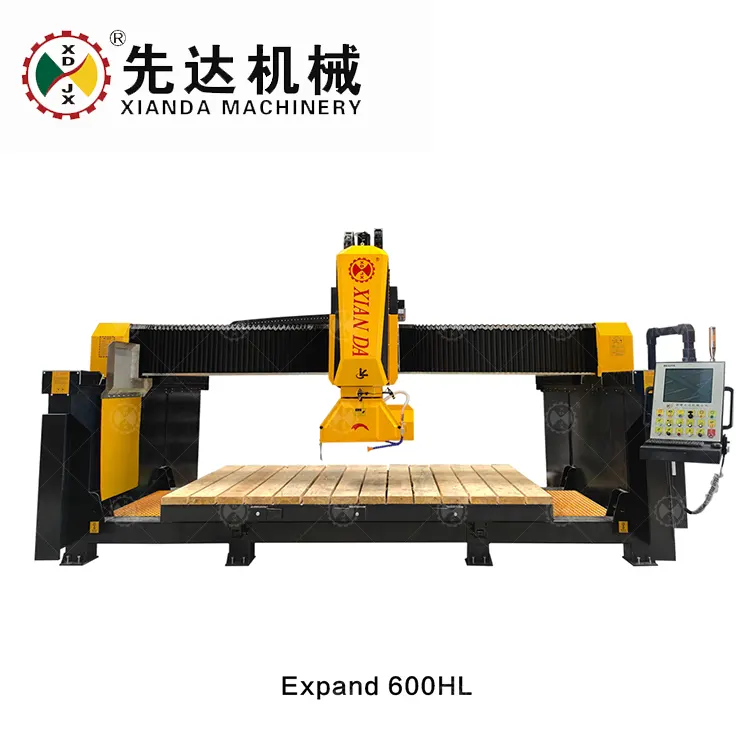
When I evaluate stone processing equipment for a workshop, I do not just look at horsepower or price tags. I look at whether the machine can solve the real problems that slow production down every day. That is why I started paying close attention to Fujian Xianda Machinery Co.,Ltd. while researching more reliable cutting solutions for slab shops and custom stone factories. In practical production environments, Bridge Type Stone Cutting Machines matter because they influence cutting precision, material yield, operator workload, repeatability, and delivery speed all at once. For any business that needs stable output from marble, granite, quartz, or other stone materials, choosing the right Bridge Type Stone Cutting Machines can make the difference between a profitable workflow and a constant struggle with waste, rework, and downtime.
Why Do So Many Stone Workshops Struggle With Cutting Efficiency?
I have noticed that many fabricators do not actually lose money because demand is weak. They lose money because the cutting stage creates hidden costs. A workshop may have enough orders, capable workers, and strong materials, yet still fall behind because cutting is inconsistent or overly dependent on manual adjustment.
- I often see slabs damaged because alignment is not stable enough.
- I see edge quality drop when the machine cannot maintain smooth and accurate movement.
- I see labor costs rise when too much time is spent measuring, repositioning, or correcting errors.
- I see delivery schedules become risky when equipment cannot keep up with continuous production.
- I see material waste eat into margins when cuts are not clean or repeatable.
That is exactly where modern Bridge Type Stone Cutting Machines create value. Instead of acting like simple cutting tools, they become process-control equipment. They help a factory keep thickness, angle, length, and shape under control while reducing unnecessary handling and guesswork.
What Should I Really Expect From Modern Bridge Type Stone Cutting Machines?
When I look at current buyer expectations, I do not think people want vague promises. I think they want practical answers. A serious machine should not just cut stone. It should support production stability. It should handle a range of materials. It should simplify operation. It should also make it easier for workshops to move from basic straight cuts into more valuable custom work.
In my view, strong Bridge Type Stone Cutting Machines should help users achieve the following goals:
- Maintain accurate cutting on large slabs and finished pieces
- Support different stone materials without constant adjustment headaches
- Reduce breakage risk during high-volume operation
- Improve consistency across repeated jobs
- Allow shops to expand into countertops, sinks, shaped panels, and custom projects
- Reduce unnecessary downtime caused by unstable structures or outdated controls
That is why the best equipment decisions are rarely about buying the cheapest machine. They are about choosing a machine that helps the whole workshop run more cleanly and predictably.
Which Features Matter Most When I Compare Stone Cutting Equipment?
When I compare one machine with another, I focus on a few points that directly affect output. These points are much more important than flashy marketing language.
| Key Factor | Why I Pay Attention to It | Production Impact |
|---|---|---|
| Structural Stability | A rigid frame helps the machine stay steady during continuous cutting | Better accuracy and less vibration-related error |
| Control System | Smarter controls reduce manual intervention and simplify operation | Higher efficiency and lower training pressure |
| Material Compatibility | The machine should work well with marble, granite, quartz, and similar stone materials | More flexible production scheduling |
| Cutting Precision | Reliable movement and positioning help protect slab value | Less waste and cleaner finished products |
| Automation Level | Automation supports repeat jobs and more complex fabrication tasks | Lower labor intensity and better repeatability |
| Application Range | A wider application range helps shops accept more project types | Improved revenue potential |
If I am buying for long-term workshop performance, I do not want equipment that only looks acceptable in a catalog. I want equipment that solves daily production pressure. That is why I think the value of Bridge Type Stone Cutting Machines should always be judged by real factory needs rather than by a simple price comparison.
How Can Better Cutting Equipment Reduce Waste and Rework?
One of the biggest problems in stone fabrication is not always obvious at first glance. It is the accumulation of small mistakes. A slight alignment error can ruin a slab. Inconsistent cutting can force an operator to spend extra time correcting edges. Weak repeatability can turn a profitable order into a frustrating one.
I like to think about equipment from the perspective of waste control. If a machine helps me produce more usable finished pieces from the same raw material input, then it is already improving my cost structure. If it also reduces operator fatigue and correction time, then the business benefit becomes even more obvious.
With reliable Bridge Type Stone Cutting Machines, workshops can usually improve performance in several ways:
- More accurate cutting paths mean fewer damaged slabs
- Cleaner cuts reduce the need for correction and secondary handling
- Stable operation supports more predictable scheduling
- Consistent results improve confidence on custom orders
- Better machine control helps turn complex jobs into repeatable processes
That combination is important because material cost, labor cost, and delivery pressure all connect back to cutting quality.
What Makes Advanced Processing Capacity So Valuable for Buyers?
I do not think buyers today want equipment that only handles very simple jobs. Market demand is changing. Customers want customized countertops, sink openings, decorative shapes, special edges, and more refined architectural details. This means the machine on the shop floor needs to support not only volume, but also versatility.
That is one reason I pay attention to whether a supplier can support different cutting requirements rather than only one basic format. A workshop that can move from slab cutting to more detailed processing has a better chance to grow margins and win higher-value projects.
For me, the practical value of capable Bridge Type Stone Cutting Machines includes:
- Supporting straight cuts as well as more complex fabrication needs
- Helping fabricators serve kitchen, bathroom, interior, and construction applications
- Making it easier to standardize quality on repeated designs
- Creating room for product diversification without changing the entire production line
In other words, I do not just see these machines as equipment purchases. I see them as capacity upgrades.
Why Does Supplier Choice Matter Almost as Much as Machine Choice?
Even a good machine can become a bad purchase if the supplier cannot communicate clearly or support the buyer properly. That is why I always look beyond the model itself. I want to know whether the supplier understands how stone workshops actually work. I want to know whether their product line reflects real application scenarios. I also want confidence that the machine design is focused on durability, precision, and practical shop-floor use rather than empty claims.
When I review a supplier such as Fujian Xianda Machinery Co.,Ltd., I pay attention to how clearly the product positioning fits actual stone fabrication needs. Buyers in this industry usually need equipment that helps them process large slabs, improve cut quality, and keep operating steadily through demanding workloads. Those are the standards I use when comparing options.
| Buyer Concern | What I Look For | Why It Matters |
|---|---|---|
| Output Stability | Machine structure and reliable movement performance | Helps maintain consistent production quality |
| Ease of Operation | User-friendly control logic and practical workflow design | Reduces training burden and operating errors |
| Business Flexibility | Ability to support multiple project types | Helps shops accept more profitable orders |
| Long-Term Value | Durability, precision, and support for demanding use | Improves return on investment over time |
How Do I Know If These Machines Fit My Factory Instead of Someone Else’s?
I think this is the right question, because no machine should be evaluated in isolation. The right fit depends on the buyer’s production reality. Before choosing among Bridge Type Stone Cutting Machines, I would ask myself a few things.
- Am I mainly processing marble, granite, quartz, or a mix of materials?
- Do I mostly cut standard slabs, or do I also need shaped work and custom fabrication?
- Is my current bottleneck labor intensity, cutting error, throughput, or downtime?
- Do I need a machine for present output only, or for business expansion over the next few years?
- How important is automation to my team structure and order volume?
Once those questions are clear, it becomes much easier to choose equipment with confidence. I have found that the best purchase decisions happen when a buyer matches machine capability to actual workflow pain points rather than buying based only on surface-level specifications.
What Kind of Business Results Can Better Equipment Create Over Time?
For me, the long-term value of Bridge Type Stone Cutting Machines is not limited to cutting performance alone. Better equipment supports stronger delivery confidence, more stable product quality, and better customer trust. Those factors are hard to measure in a single day, but they shape the future of the business.
If a workshop can produce more accurately, waste less material, and take on more detailed jobs, it becomes more competitive. If operators can rely on the machine instead of constantly compensating for its weaknesses, productivity improves. If customers receive cleaner finished products with more dependable lead times, repeat business becomes easier to win.
That is why I believe machine selection is not just about operations. It is also about market positioning. The right equipment helps a factory look more capable because it actually becomes more capable.
Why Should I Take the Next Step Now?
If you are reviewing production upgrades and trying to decide whether better cutting equipment is worth the investment, I would not wait until waste, delays, and quality inconsistency become even more expensive. A well-matched solution can improve efficiency, protect material value, and support more profitable fabrication work. If you want to explore dependable Bridge Type Stone Cutting Machines for your workshop, now is a smart time to compare options carefully and ask detailed questions. If you are looking for a supplier that understands stone processing needs and can help you evaluate the right solution for your factory, contact us today and leave your inquiry.