

How Does a Plastic Pipe Production Line Work?
2026-06-26
Abstract
A Plastic Pipe Production Line is a fully integrated industrial system designed to manufacture pipes used in water supply, drainage, gas transportation, agricultural irrigation, and industrial applications. This article explains how the production line works, its key components, operational principles, common challenges faced by manufacturers, and optimization strategies to improve efficiency and product quality. It also introduces how Kangju provides advanced extrusion solutions that help businesses achieve stable, high-output production with reduced operational costs.
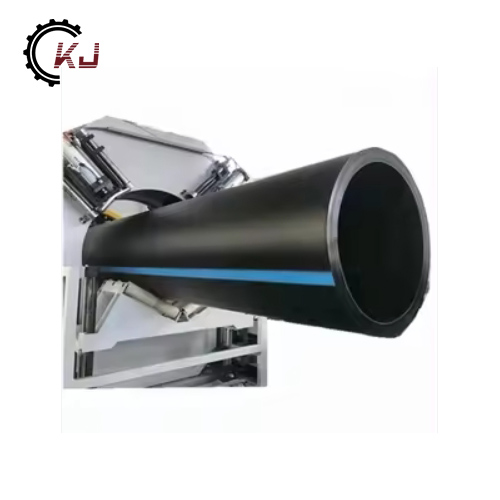
Table of Contents
- Article Outline
- 1. Introduction
- 2. What is a Plastic Pipe Production Line?
- 3. Key Components of the System
- 4. Working Principle Explained
- 5. Types of Plastic Pipes Produced
- 6. Common Production Challenges and Solutions
- 7. Optimization Strategies
- 8. Why Choose Kangju
- 9. Conclusion & Contact
Article Outline
- Overview of plastic pipe manufacturing systems
- Core machinery and functional breakdown
- Step-by-step production workflow
- Material types and pipe applications
- Industry challenges and troubleshooting
- Performance optimization methods
- Kangju industrial extrusion solutions
1. Introduction
In modern infrastructure development, plastic pipes have become essential due to their corrosion resistance, cost efficiency, and long service life. Industries worldwide rely on advanced Plastic Pipe Production Line systems to meet increasing demand for high-quality piping solutions.
However, manufacturers often face challenges such as inconsistent output, high energy consumption, and unstable product dimensions. Understanding how the production line works is crucial for improving efficiency and ensuring consistent product quality. Companies like Kangju specialize in providing reliable extrusion systems that address these industrial challenges effectively.
2. What is a Plastic Pipe Production Line?
A plastic pipe production line is a continuous manufacturing system that converts raw polymer materials into finished pipes through extrusion, shaping, cooling, and cutting processes.
The system is widely used for producing:
- PVC pipes for drainage systems
- PE pipes for water and gas transportation
- PPR pipes for hot and cold water systems
Each stage of the system is designed to ensure dimensional accuracy, surface smoothness, and structural durability.
3. Key Components of the System
A complete Plastic Pipe Production Line consists of several interconnected machines, each playing a critical role in shaping the final product.
3.1 Extruder
The extruder melts raw plastic pellets and pushes them forward using a rotating screw. Temperature and pressure control are crucial at this stage.
3.2 Die Head
The die head determines the pipe's diameter and wall thickness, ensuring uniform shaping of molten material.
3.3 Vacuum Calibration Tank
This unit cools and stabilizes the pipe shape using vacuum pressure and water cooling.
3.4 Haul-Off Machine
It pulls the pipe at a constant speed to maintain dimensional consistency.
3.5 Cutting Unit
The cutter slices pipes into required lengths with high precision.
3.6 Winding System
For flexible pipes, the winding system neatly coils finished products for storage and transport.
4. Working Principle Explained
The working process of a plastic pipe production line follows a continuous flow:
- Raw materials are fed into the extruder hopper.
- Plastic is melted and homogenized under heat and pressure.
- The molten material passes through the die head forming a tube shape.
- The pipe is calibrated and cooled in a vacuum tank.
- Haul-off equipment pulls the pipe forward at controlled speed.
- The cutting system divides the pipe into specified lengths.
This synchronized process ensures continuous output and stable product quality.
5. Types of Plastic Pipes Produced
Different production configurations allow manufacturers to produce various pipe types:
- PVC Pipes: Used in drainage and sewage systems
- PE Pipes: Common in gas and water supply networks
- PPR Pipes: Suitable for hot and cold water distribution
Each material requires specific temperature control and extrusion parameters to ensure optimal performance.
6. Common Production Challenges and Solutions
Manufacturers often encounter operational difficulties in pipe extrusion systems:
- Dimensional instability: Caused by improper calibration or inconsistent pulling speed
- Surface defects: Resulting from temperature imbalance or contaminated raw materials
- High energy consumption: Inefficient heating systems increase production costs
- Frequent maintenance: Poor machine quality leads to downtime
Advanced systems from Kangju integrate precision control modules and energy-efficient designs to minimize these issues and improve long-term productivity.
7. Optimization Strategies
To maximize production efficiency, manufacturers should consider the following strategies:
- Use high-quality raw materials to ensure consistent melting behavior
- Implement automated temperature control systems
- Regularly calibrate die heads and haul-off systems
- Adopt energy-saving extrusion technology
- Schedule preventive maintenance for all machinery
These improvements can significantly increase output stability and reduce operational costs.
8. Why Choose Kangju
Kangju is committed to delivering advanced Plastic Pipe Production Line solutions tailored to industrial needs. With a focus on automation, durability, and precision engineering, Kangju systems are designed to support continuous production with minimal downtime.
Key advantages include:
- High-efficiency extrusion technology
- Stable and consistent pipe quality output
- Energy-saving system configuration
- Customizable production line solutions
- Strong technical support and service system
9. Conclusion & Contact
A plastic pipe production line is a critical asset for modern manufacturing industries. Understanding its working principle and optimizing each stage of production can significantly improve efficiency, reduce costs, and enhance product quality. By adopting advanced systems from Kangju, manufacturers can achieve stable production performance and long-term operational success.
If you are looking to upgrade your manufacturing capability or invest in a high-performance Plastic Pipe Production Line, Kangju offers reliable solutions tailored to your needs.
Contact us today to explore customized production line configurations and professional support from Kangju engineering experts.