

How Does an Air Cooled Chiller Improve Industrial Cooling Efficiency?
2026-06-04
Industrial cooling systems play a critical role in maintaining production stability, protecting equipment, and ensuring product quality. Among the various cooling solutions available today, the Air Cooled Chiller has become one of the most popular choices due to its energy efficiency, flexible installation, and lower maintenance requirements. Whether used in manufacturing plants, food processing facilities, plastic injection molding operations, pharmaceutical production, or commercial buildings, air cooled chillers provide reliable cooling performance without the need for cooling towers.
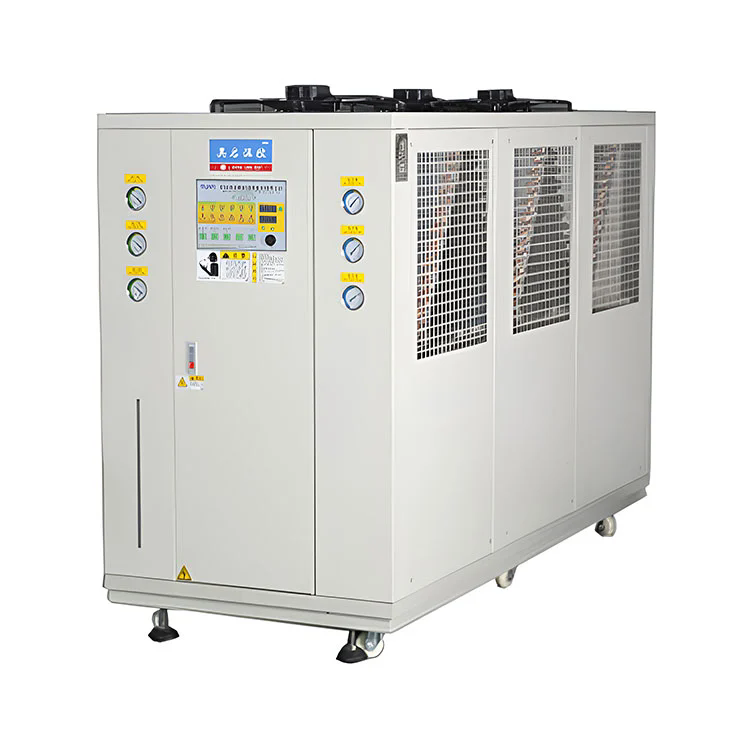
This guide explores how air cooled chillers work, their benefits, applications, selection criteria, maintenance practices, and how businesses can maximize long-term operational value through the right cooling solution.
Table of Contents
- What Is an Air Cooled Chiller?
- How Does an Air Cooled Chiller Work?
- Major Advantages of Air Cooled Chillers
- Common Industrial Applications
- Air Cooled vs Water Cooled Chillers
- How to Choose the Right Air Cooled Chiller
- Maintenance Best Practices
- How Air Cooled Chillers Reduce Operating Costs
- Frequently Asked Questions
- Conclusion
What Is an Air Cooled Chiller?
An Air Cooled Chiller is a refrigeration system designed to remove heat from industrial processes or commercial environments. Unlike water cooled systems that require cooling towers and additional water circulation equipment, air cooled chillers use ambient air to dissipate heat through condenser coils and high-efficiency fans.
The system circulates chilled water or coolant through production equipment, absorbing process heat and transferring it outside the facility. This makes air cooled chillers an ideal choice for locations where water resources are limited or where installation simplicity is a priority.
Modern air cooled chillers are equipped with intelligent control systems, variable-speed compressors, and energy-saving technologies that help businesses maintain consistent temperatures while reducing energy consumption.
How Does an Air Cooled Chiller Work?
Understanding the operating principle helps businesses select the most suitable cooling system for their application.
A typical air cooled chiller operates through the following refrigeration cycle:
- Process heat is absorbed by chilled water circulating through equipment.
- The refrigerant inside the evaporator absorbs this heat.
- The compressor increases refrigerant pressure and temperature.
- The condenser fan forces ambient air across condenser coils.
- Heat is discharged into the surrounding atmosphere.
- The cooled refrigerant returns to the evaporator to repeat the cycle.
This continuous process ensures precise temperature control and uninterrupted production performance.
Major Advantages of Air Cooled Chillers
Many companies choose air cooled chillers because they offer significant operational benefits.
| Benefit | Description |
|---|---|
| Easy Installation | No cooling tower or condenser water system required. |
| Lower Maintenance | Fewer components reduce service complexity. |
| Water Conservation | Uses ambient air instead of large volumes of water. |
| Flexible Placement | Suitable for rooftops, outdoor areas, and industrial facilities. |
| Reliable Operation | Provides stable cooling under varying production loads. |
| Energy Efficiency | Advanced compressors and controls help reduce electricity usage. |
For businesses seeking a cost-effective cooling solution with minimal infrastructure requirements, air cooled chillers often provide the ideal balance between performance and investment.
Common Industrial Applications
Air cooled chillers are widely used across multiple industries where temperature stability is essential.
- Plastic Injection Molding – Maintains mold temperature for improved product consistency.
- Food and Beverage Processing – Supports cooling during production and storage.
- Pharmaceutical Manufacturing – Ensures precise temperature control for sensitive processes.
- Chemical Processing – Protects equipment and maintains reaction stability.
- Laser Equipment Cooling – Prevents overheating and improves equipment lifespan.
- Printing Industry – Controls temperatures during high-speed production.
- HVAC Systems – Provides chilled water for commercial buildings and facilities.
- Data Centers – Supports critical cooling infrastructure for servers and IT equipment.
Their versatility makes them one of the most commonly installed industrial cooling systems worldwide.
Air Cooled vs Water Cooled Chillers
Businesses often compare air cooled and water cooled chillers before making an investment decision.
| Factor | Air Cooled Chiller | Water Cooled Chiller |
|---|---|---|
| Installation Cost | Lower | Higher |
| Cooling Tower Required | No | Yes |
| Water Consumption | Minimal | High |
| Maintenance Complexity | Lower | Higher |
| Space Requirements | Less Infrastructure | Additional Equipment Needed |
| Best Application | Medium to Large Facilities | Very Large Cooling Loads |
While water cooled chillers may offer advantages in certain large-scale applications, air cooled chillers remain the preferred solution for many facilities because of their simplicity, flexibility, and reduced operating requirements.
How to Choose the Right Air Cooled Chiller
Selecting the correct air cooled chiller requires evaluating several critical factors.
- Required cooling capacity.
- Operating temperature range.
- Ambient environmental conditions.
- Production load fluctuations.
- Energy efficiency targets.
- Available installation space.
- Future expansion requirements.
- Maintenance accessibility.
Oversized systems may waste energy, while undersized units may struggle to maintain process temperatures. Working with experienced manufacturers ensures accurate system sizing and long-term performance.
Maintenance Best Practices
Routine maintenance is essential for maximizing system reliability and extending equipment lifespan.
Recommended maintenance procedures include:
- Regular condenser coil cleaning.
- Inspection of fan motors and blades.
- Monitoring refrigerant levels.
- Checking electrical connections.
- Verifying water flow rates.
- Inspecting pumps and piping systems.
- Testing control system accuracy.
- Reviewing operating data for performance trends.
Preventive maintenance helps reduce unexpected downtime and ensures consistent cooling efficiency throughout the system's service life.
How Air Cooled Chillers Reduce Operating Costs
Rising energy prices and increasing sustainability requirements have made operational efficiency a top priority for industrial facilities.
Air cooled chillers contribute to cost savings in several ways:
- Elimination of cooling tower expenses.
- Reduced water consumption costs.
- Lower maintenance labor requirements.
- Improved energy efficiency through intelligent controls.
- Reduced risk of water treatment expenses.
- Fewer system components requiring replacement.
- Enhanced equipment protection through stable temperature control.
Over the lifespan of the system, these advantages can translate into substantial savings while maintaining dependable cooling performance.
Frequently Asked Questions
Q1: What industries benefit most from air cooled chillers?
Industries such as plastics, pharmaceuticals, food processing, chemical manufacturing, printing, electronics, and HVAC systems commonly use air cooled chillers.
Q2: Do air cooled chillers require a cooling tower?
No. Air cooled chillers dissipate heat directly into the atmosphere using condenser fans and coils.
Q3: Are air cooled chillers energy efficient?
Modern units equipped with advanced compressors, intelligent controls, and variable-speed technology can achieve excellent energy performance.
Q4: How long does an air cooled chiller typically last?
With proper maintenance, many industrial air cooled chillers can operate efficiently for 15 to 25 years or longer.
Q5: Can air cooled chillers be installed outdoors?
Yes. Most air cooled chillers are specifically designed for outdoor installation and weather-resistant operation.
Conclusion
Air cooled chillers have become an essential solution for modern industrial cooling applications. Their ability to provide stable temperature control, simplified installation, reduced water consumption, and lower maintenance requirements makes them a practical investment for a wide range of industries.
By selecting the correct system size, implementing routine maintenance, and partnering with a reliable manufacturer, businesses can achieve long-term operational efficiency while protecting critical production equipment.
As a professional industrial cooling equipment manufacturer, AQWK provides high-performance Air Cooled Chiller solutions designed to meet diverse industrial requirements. Whether you need customized cooling systems, technical consultation, or support for a new project, contact us today to discover how AQWK can help improve your cooling efficiency, reduce operating costs, and support your business growth with dependable industrial cooling technology.