

How Does an Automatic Plate Cleaning Machine Improve Cleaning Quality?
2026-09-18
1. Why Is Manual Plate Cleaning Inconsistent and Inefficient?
Manual plate cleaning involves three variables that are difficult to control: the operator, the solvent, and the brush. The operator applies pressure by hand, which varies from person to person and from plate to plate. The solvent is often poured or sprayed without precise measurement, leading to overuse or underuse. The brush becomes contaminated with ink over time and requires frequent replacement. The result is a cleaning process that is difficult to standardize. In our factory, we have studied the plate cleaning process in over 30 printing facilities. The data shows that manual cleaning consumes 8 to 15 minutes per plate, with a quality variation of 20 to 30 percent between operators. An Automatic Plate Cleaning Machine reduces the cleaning time to 2 to 4 minutes per plate and reduces the quality variation to less than 5 percent.
Quality variation defined: The difference in residual ink on the plate surface after cleaning, measured as a percentage of the plate area. A manual process may leave 2 to 5 percent residual ink on some plates and 0.5 percent on others. An automatic process consistently leaves less than 0.5 percent.
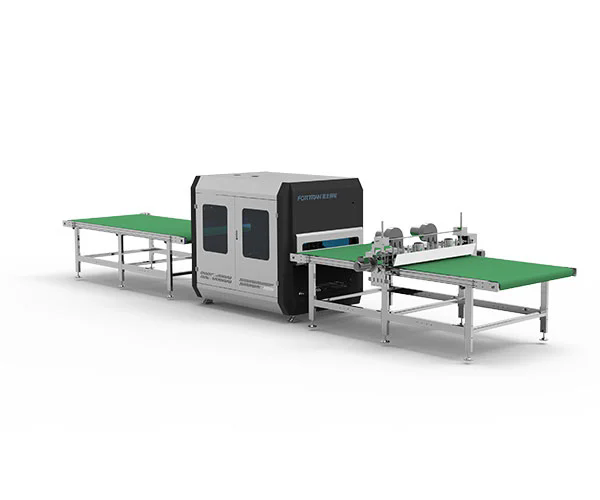
Guangdong Fortran Machinery Co.,ltd. manufactures Automatic Plate Cleaning Machine units that are designed for the post-press environment. Our factory focuses on three key performance indicators: cleaning uniformity, solvent recovery, and cycle time. The machine is designed to be integrated into the existing workflow without disrupting the production schedule.
2. How Does the Automatic Plate Cleaning Machine Achieve Consistent Cleaning Quality?
The Automatic Plate Cleaning Machine achieves consistency through four design features. The first is a fixed brush pressure. The brush is mounted on a spring-loaded arm that applies a constant pressure regardless of the plate thickness or surface condition. This eliminates the operator-to-operator variation. The second is a controlled solvent delivery system. The solvent is metered through a pump and sprayed evenly across the plate surface. The volume is controlled by a timer or a flow sensor, ensuring that the same amount of solvent is used for every plate. The third is a rotating brush mechanism. The brush rotates at a constant speed and moves across the plate in a programmed pattern. This ensures that every part of the plate receives the same cleaning action. The fourth is a rinse cycle. After the solvent cleaning, the plate is rinsed with a fresh solvent or water to remove any residual ink and solvent. The table below compares the cleaning performance of manual and automatic cleaning.
| Performance parameter | Manual cleaning | Automatic Plate Cleaning Machine |
| Cleaning time per plate | 8 – 15 minutes | 2 – 4 minutes |
| Residual ink on plate surface | 0.5 – 5.0% | < 0.5% |
| Solvent consumption per plate | 150 – 250 ml | 40 – 80 ml |
| Operator involvement | Full manual | Load and unload only |
| Quality variation between plates | 20 – 30% | < 5% |
The reduction in solvent consumption is particularly important for two reasons. First, it reduces the cost per plate. Second, it reduces the VOC emissions from the cleaning station. Our factory has designed the solvent delivery system to minimize overspray and evaporation. The machine includes a closed-loop solvent recovery system that captures the used solvent and separates it from the ink residue, allowing the solvent to be reused.
3. What Are the Technical Specifications of the Automatic Plate Cleaning Machine?
The performance of an Automatic Plate Cleaning Machine depends on its technical specifications. The table below shows the specifications of our standard models.
| Parameter | Model APC-800 | Model APC-1200 | Model APC-1600 |
| Max plate size (mm) | 800 x 650 | 1200 x 900 | 1600 x 1200 |
| Cleaning cycle time (minutes) | 2 – 3 | 3 – 4 | 4 – 5 |
| Solvent tank capacity (L) | 20 | 30 | 40 |
| Solvent consumption per plate (ml) | 40 – 60 | 50 – 70 | 60 – 80 |
| Brush speed (RPM) | 0 – 300 (variable) | 0 – 300 (variable) | 0 – 300 (variable) |
| Power supply | 220V / 1 phase | 380V / 3 phase | 380V / 3 phase |
Guangdong Fortran Machinery Co.,ltd. manufactures these three models and can customize the specifications for specific customer requirements. Our factory uses a stainless steel construction for all wetted parts to resist corrosion from the cleaning solvents. The machine also includes a fume extraction connection that can be tied into the facility's ventilation system.
4. How Does the Automatic Plate Cleaning Machine Improve Environmental Compliance?
Environmental regulations are becoming stricter in most countries. The printing industry is a significant source of VOC emissions, and the plate cleaning station is one of the main contributors. Manual cleaning uses an open solvent bath or a spray bottle, which releases solvent vapors into the workplace. An Automatic Plate Cleaning Machine reduces VOC emissions in three ways. First, it uses less solvent per plate. Second, it operates in a closed or semi-closed chamber that captures the vapors. Third, it includes a solvent recovery system that separates the solvent from the ink waste, reducing the volume of hazardous waste that must be disposed of. In our factory, we have measured the VOC concentration in the air around a manual cleaning station and around an automatic cleaning machine. The automatic machine reduced the VOC concentration by 70 to 85 percent. This reduction helps printing facilities comply with workplace safety regulations and environmental permits.
Compliance note: Many local regulations now require printing facilities to capture and treat VOC emissions from cleaning operations. An Automatic Plate Cleaning Machine with a closed chamber and solvent recovery system is an effective way to meet these requirements without installing a separate central treatment system.
Frequently Asked Questions About Automatic Plate Cleaning Machines
Summary for Post-Press Production Managers
The Automatic Plate Cleaning Machine improves cleaning quality by removing the human variable from the cleaning process. It provides consistent brush pressure, controlled solvent delivery, and a repeatable cleaning cycle. The result is less residual ink, lower solvent consumption, and reduced VOC emissions. For printing facilities that are struggling with inconsistent cleaning quality or facing stricter environmental regulations, the automatic machine is a practical solution. Guangdong Fortran Machinery Co.,ltd. has been manufacturing Automatic Plate Cleaning Machine units for over 12 years and supplies to printing facilities in more than 20 countries.
Guangdong Fortran Machinery Co.,ltd. manufactures Automatic Plate Cleaning Machine units with closed-loop solvent recovery systems and adjustable cleaning parameters. We provide installation support, operator training, and a full set of spare parts.