

How Does an RTP Composite Pipe Extrusion Line Achieve High Pressure Resistance for Oil and Gas
2026-06-04
Modern oil and gas operations demand pipelines that withstand extreme pressures without corroding or leaking. A RTP Composite Pipe Extrusion Line from FANGLI solves this by merging thermoplastics with continuous reinforcement. The secret lies in a three-layer structure: an inner HDPE carrier, a middle helical winding of high-tensile fibers (aramid, glass, or steel wire), and an outer protective HDPE jacket. During extrusion, the line precisely tensions and angles these fibers—typically ±54.7°—to transform hoop stress into axial strength, allowing working pressures of 9–14 MPa and burst ratings exceeding 40 MPa.
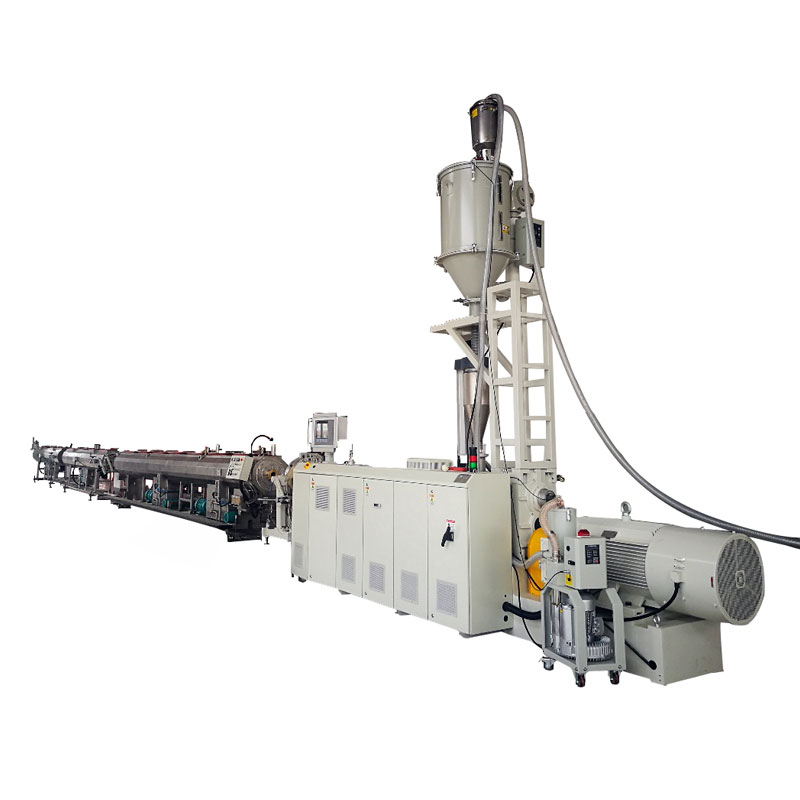
| Component | Function in Pressure Resistance |
|---|---|
| Inner HDPE Layer | Smooth fluid transport; prevents chemical attack |
| Reinforced Middle Winding | Absorbs radial pressure; prevents pipe expansion |
| Outer HDPE Jacket | Protects fibers from impact, UV, and abrasion |
| Multi-Station Winding Head | Controls fiber tension and lay angle for uniform strength |
Key Technical Advantages
-
Continuous Fiber Roving – Eliminates weak points found in seamed steel pipes.
-
Fully Bonded Interface – FANGLI’s heating zones melt-fuse layers, preventing delamination under cyclic pressure.
-
Spoolable Design – Long lengths reduce joints, the most common failure points in high-pressure systems.
RTP Composite Pipe Extrusion Line FAQ
Q1: What is the maximum pressure rating possible with a RTP Composite Pipe Extrusion Line?
A1: With proper fiber selection (glass/aramid) and winding angle control, the line produces pipes rated from 9 MPa to 14 MPa working pressure. Burst pressure can exceed 40 MPa. Higher ratings require additional winding stations or steel wire reinforcement, both available on FANGLI custom configurations.
Q2: How does fiber tension control affect pressure resistance during extrusion?
A2: Fiber tension directly determines composite stiffness. If tension is too low, fibers slip under load, reducing pressure capacity. If too high, they cut into the inner layer. FANGLI lines use closed-loop tension regulators (±1% accuracy) to maintain optimal fiber embedment, ensuring every meter of pipe meets ISO 13628-11 pressure standards.
Q3: Can the same RTP Composite Pipe Extrusion Line switch between fiber types for different pressure needs?
A3: Yes. A versatile line includes quick-change creel frames and adjustable winding heads. FANGLI models allow swapping glass roving (medium pressure, lower cost) for aramid or steel cord (high pressure, higher temperature) within 90 minutes. This flexibility lets manufacturers produce both gas gathering lines (6 MPa) and submarine oil flowlines (14 MPa) on one system.
Why Engineers Trust FANGLI for High-Pressure Production
Every RTP Composite Pipe Extrusion Line undergoes dry-run pressure calibration at 1.5× rated load. With over 200 lines deployed in Middle East and North American oil fields, FANGLI’s designs consistently achieve zero creep failure in 10-year accelerated tests.
Contact us for a customized pressure rating simulation based on your fiber and diameter requirements. FANGLI provides full installation support, operator training, and a 24-month warranty on all winding components.