

How Does The Cooling System Affect The Properties Of Extruded ABS Sheet
2026-02-11
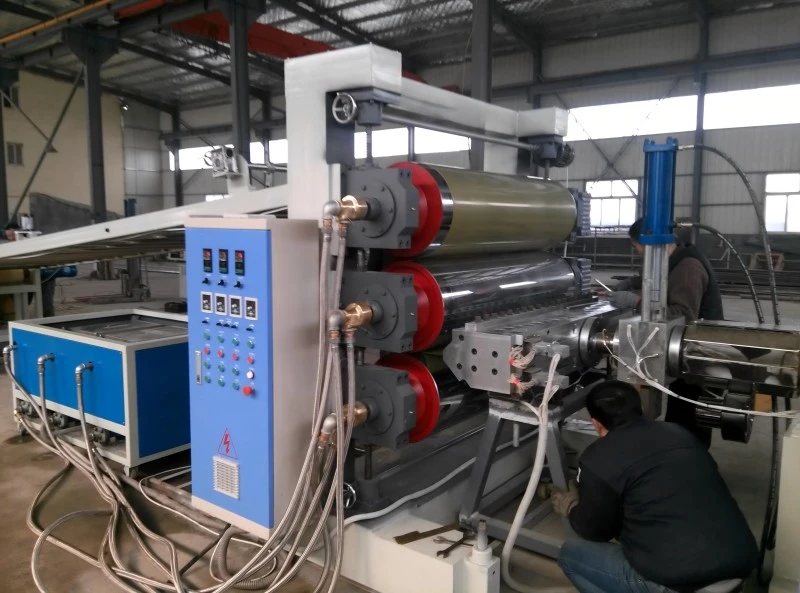
In the manufacturing process of an ABS Sheet Extrusion Line, the extrusion and die shaping often receive the most focus. However, the cooling system is a critical, yet sometimes underestimated, stage that directly governs the final quality, performance, and dimensional stability of the ABS sheet. At Yongte, we engineer our cooling solutions to ensure our clients achieve superior product consistency and enhanced material properties.
A precisely controlled cooling process is paramount because it locks in the sheet's structure. Inadequate or uneven cooling can lead to a host of defects that compromise the sheet's integrity.
Primary Effects of the Cooling System:
-
Internal Stress and Warpage: Rapid, uneven cooling creates differential shrinkage, locking in high internal stresses. This leads to warping, curling, or dimensional instability during subsequent thermoforming or machining.
-
Surface Quality and Gloss: The contact and temperature of the cooling rolls determine the sheet's surface finish. Improper roll temperature can cause defects like:
-
Orange peel texture
-
Poor gloss or hazy appearance
-
Scratch marks or roll imprints
-
-
Mechanical Properties: The cooling rate influences the crystallinity and polymer chain orientation of the ABS. Optimal cooling helps achieve a balanced property profile of:
-
Impact Strength
-
Tensile Modulus
-
Hardness
-
Optimizing Cooling for Key Properties
The table below summarizes the relationship between cooling parameters and final sheet characteristics:
| Cooling Parameter | Effect if Too Low/Inefficient | Effect if Too High/Uneven | Optimal Goal with Yongte Systems |
|---|---|---|---|
| Roll Temperature | Sheet sticks to rolls; poor surface finish. | Excessive internal stress; high gloss but brittle. | Precise gradient control for stress relief and desired finish. |
| Cooling Rate | Sheet remains soft; sagging and deformation. | Embrittlement; reduced impact resistance. | Controlled, staged cooling to balance toughness and stiffness. |
| Roll Alignment & Pressure | Poor thermal contact; uneven cooling and thickness. | Sheet deformation or "nipping" marks. | Perfectly aligned rolls with uniform pressure for consistent caliper. |
ABS Sheet Extrusion Line FAQ
Q: Why does my ABS sheet warp after extrusion?
A: Warping is predominantly a cooling issue. It is caused by uneven cooling across the sheet's width or thickness, which creates asymmetric internal stresses. Ensuring your Yongte ABS Sheet Extrusion Line has a three-roll stack with individual temperature control for each roll is crucial to mitigate this.
Q: What is the purpose of multiple cooling rolls in a stack?
A: Multiple rolls allow for a staged, gradient cooling process. The first roll quenches the surface to set the shape and gloss. Subsequent rolls, set at progressively lower temperatures, cool the core slowly to minimize stress. This precise control is a hallmark of a high-performance ABS Sheet Extrusion Line.
Q: How can I improve the impact strength of my extruded ABS sheet?
A: While resin formulation is key, the cooling system plays a vital role. Excessively rapid cooling can prevent polymer chains from relaxing, leading to embrittlement. A properly calibrated cooling system on your Yongte line allows for an optimized cooling profile that enhances the final impact resistance of the ABS sheet.
Mastering the cooling stage is what separates adequate sheet production from exceptional quality. It requires not just robust equipment but deep process expertise. Yongte integrates advanced, customizable cooling technologies into every ABS Sheet Extrusion Line we design, ensuring your output meets the strictest specifications for properties and appearance.
Contact us today to discuss how our engineered extrusion solutions can optimize your cooling process and elevate the quality of your ABS sheet production.