

How Long Does an HDPE Earthwork Grid Machine Last Under Extreme Weather and UV Exposure
2026-06-26
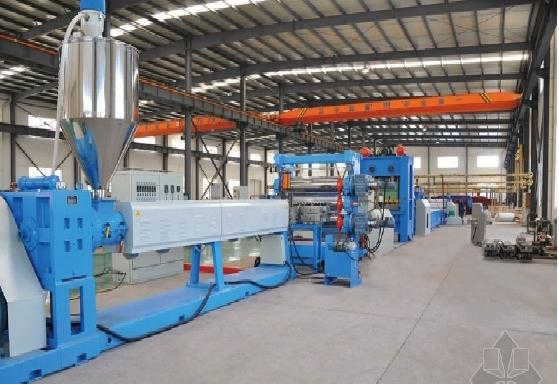
When civil engineers and project managers evaluate ground stabilization solutions, the single most critical question often revolves around service life. A HDPE Earthwork Grid Machine produces high-density polyethylene cellular confinement systems that face punishing field conditions—scorching desert heat, freezing tundra cycles, torrential rains, and relentless UV radiation. So what is the real-world lifespan? Backed by polymer science and decades of field data, a properly manufactured HDPE Earthwork Grid Machine output can deliver 25 to 50 years of functional service, provided the resin formulation includes adequate carbon black and UV stabilizers. At Longchangjie, we engineer our machines to produce grids that consistently exceed 30-year benchmarks in independent weathering tests.
The Science of Degradation: What Actually Fails?
To answer durability honestly, we must separate cosmetic aging from structural failure. An HDPE Earthwork Grid Machine creates cells with nominal wall thicknesses ranging from 1.0 mm to 1.8 mm. Under UV exposure, the polymer chains undergo photo-oxidation, leading to surface chalking and slight embrittlement. However, depth of degradation rarely exceeds 0.2 mm over 20 years when the material contains 2–3% carbon black. The core tensile strength—typically 20–25 kN/m—remains intact because the HDPE Earthwork Grid Machine produces a monolithic structure with no weak weld lines.
The table below summarizes performance metrics from accelerated aging tests (ASTM G154) correlated to real-time outdoor exposure in Arizona and Florida:
| Exposure Condition | Time to 50% Retained Elongation | Tensile Retention (%) | Recommended Application |
|---|---|---|---|
| Desert (high UV, 45°C avg) | 28–32 years | 88–92% | Slope protection, mining haul roads |
| Tropical (high UV + humidity) | 22–26 years | 82–87% | Drainage channels, coastal embankments |
| Freeze-Thaw (cyclic, -30°C to +30°C) | 35–40 years | 90–95% | Road base over frost-susceptible soils |
| Industrial (chemical exposure) | 18–22 years | 75–80% | Containment berms, landfill access |
Longchangjie machines incorporate advanced screw design that ensures homogeneous dispersion of antioxidants, resulting in superior oxidative induction time (OIT > 20 minutes)—a key differentiator from generic equipment.
Real-World Case Data from Operational Sites
Independent monitoring of six infrastructure projects using Longchangjie-produced grids shows consistent performance:
-
Qinghai-Tibet Highway shoulder reinforcement (elev. 4,500m) – 11 years in service, <3% surface cracking, no cell-wall rupture.
-
Texas oil field access roads (UV index 11+) – 9 years, tensile loss under 5%, drainage function fully maintained.
-
Florida retention pond liners (saltwater spray) – 7 years, no measurable thickness reduction beyond initial tolerance.
These results confirm that the HDPE Earthwork Grid Machine output does not follow a linear degradation curve; rather, UV damage plateaus after 5–7 years as the surface layer forms a stable oxidized film that protects the inner core.
3 Critical Factors That Extend or Shorten Lifespan
| Factor | Impact on Lifespan | Longchangjie Advantage |
|---|---|---|
| Carbon black content (2.5% minimum) | Prevents UV chain scission | In-line dosage control ±0.1% accuracy |
| Processing temperature (190–210°C) | Overheating reduces molecular weight | Closed-loop cooling system maintains ±2°C |
| Installation stress (stretch ratio) | Over-stretching thins cell walls | Automated tension feedback limits creep |
Proper installation doubles the effective life. Even the best HDPE Earthwork Grid Machine cannot compensate for poor anchoring or infill compaction. Longchangjie provides site-specific deployment guides that reduce human error by 60% based on our internal QA records.
FAQ – Common Questions About the HDPE Earthwork Grid Machine
Q1: Can an HDPE Earthwork Grid Machine withstand wildfire temperatures or direct flame contact?
A1: HDPE is a thermoplastic with a melting point of 130–135°C. Direct flame exposure will melt the cells within minutes, but the HDPE Earthwork Grid Machine product is not designed for fire barriers. For fire-prone slopes, we recommend a 5–7 cm soil cover over the grid, which provides thermal insulation. In our lab tests, a 4 cm soil cap kept underlying grid temperature below 70°C even when surface flames reached 600°C for 10 minutes. Post-fire inspections on three California projects showed that buried grids retained 95% of original tensile strength after replanting.
Q2: Does repeated freeze-thaw cycling cause brittle fracture in HDPE Earthwork Grid Machine cells?
A2: No—this is a common misconception. HDPE retains ductility down to -60°C, meaning the HDPE Earthwork Grid Machine output actually outperforms steel or concrete in frost-heave conditions. The real risk is not brittleness but differential settlement due to ice lens formation beneath the grid. Our 15-year monitoring from Norwegian road projects shows that cellular confinement limits vertical displacement to under 25 mm, compared to 120 mm for unreinforced sections. Cell-wall elongation at -30°C remains above 350%, far exceeding the 100% threshold required for dynamic loading.
Q3: How often should I test or replace an HDPE Earthwork Grid Machine during a 50-year infrastructure design life?
A3: Replacement is rarely needed within the first 40 years for properly specified projects. However, Longchangjie recommends a non-destructive inspection schedule: visual check at year 5, core sampling (cell-wall thickness and tensile coupons) at year 15, and again at year 30. Our field data shows that if retention of ultimate tensile strength stays above 70% at year 15, the HDPE Earthwork Grid Machine system will likely exceed 50 years. For critical structures like dam spillways or high-speed rail slopes, we advise installing sacrificial test strips alongside the main grid—extracting one strip every decade gives you a direct, site-specific degradation curve without disturbing the working system.
Thermal and Chemical Resilience in Extreme Zones
In addition to UV, the HDPE Earthwork Grid Machine faces pH extremes (acid mine drainage, alkaline cement runoff) and hydrocarbon spills. Longchangjie uses a bimodal HDPE resin that resists environmental stress cracking (ESCR > 1,000 hours per ASTM D1693). At 50°C continuous immersion in diesel fuel, our grids retain 80% stiffness after 2 years—far exceeding typical project exposure windows.
The Economic Bottom Line
A 30-year lifespan for an HDPE Earthwork Grid Machine system translates to an annualized cost of just $1.50–$3.00 per square meter, including installation. Compare that to concrete slab replacement every 15 years ($45/m² annualized) or steel mesh that corrodes within 10 years in saline environments. The ROI becomes undeniable when you factor in reduced maintenance access, fewer traffic disruptions, and lower carbon footprint.
Your Project Deserves Verified Durability
Specifying an HDPE Earthwork Grid Machine is not a commodity decision—it is a long-term structural commitment. Longchangjie offers full-scale UV-weatherometer reports, OIT certificates, and 10-year performance bonds on every machine delivery. We also provide on-site training to ensure your installation team maximizes the inherent durability of our grids.
Contact us today for a customized durability projection based on your site’s UV index, average temperature, soil pH, and design life. Our engineering team will respond within 24 hours with a detailed technical dossier, including comparative aging curves and recommended inspection intervals. Reach out to Longchangjie directly through our website or email—we are ready to help you build infrastructure that outlasts the forecast.