

How to Select the Right Heavy Gauge Cut To Length Line for High Tensile Material
2026-04-10
Selecting the right Heavy Gauge Cut To Length Line for high tensile material is critical for maximizing productivity and minimizing waste. High tensile steel, with its superior strength and resistance to deformation, demands equipment that goes beyond standard capabilities. KINGREAL specializes in engineering solutions tailored to these rigorous requirements, ensuring precision, durability, and efficiency.
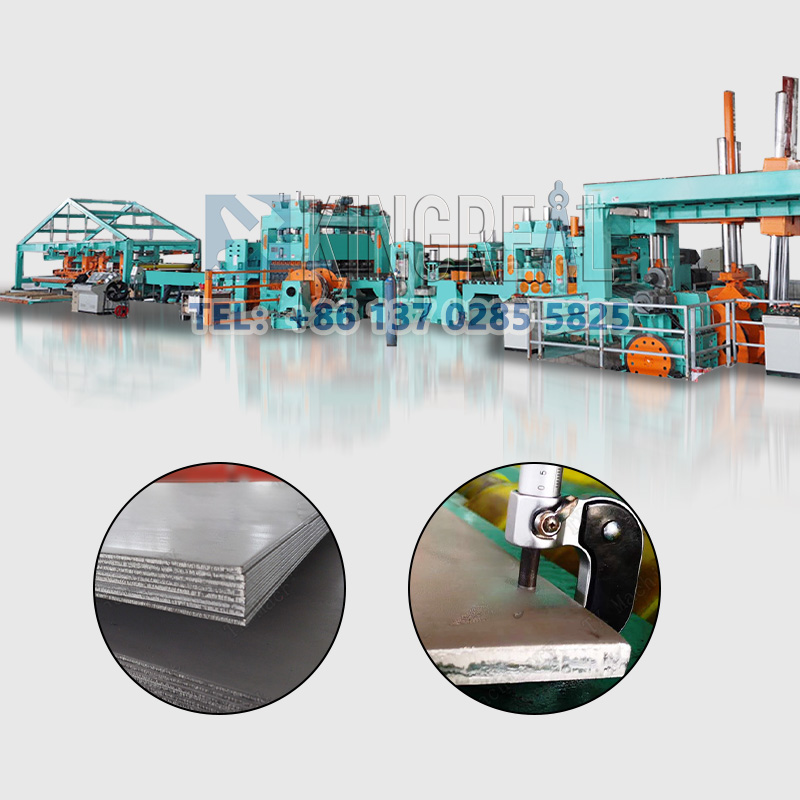
Key Selection Criteria for High Tensile Material
When evaluating a Heavy Gauge Cut To Length Line, focus on the following factors to match your operational needs.
| Selection Factor | Why It Matters for High Tensile Material | Recommended Feature |
|---|---|---|
| Roller Straightener Design | High tensile strength resists flattening; requires higher straightening force. | Multi-roll, heavy-duty straightener with independent drive and backup rolls. |
| Cutting Mechanism | Harder material accelerates blade wear and demands clean shearing. | Hydraulic swing shear or high-rigidity guillotine shear with hardened blades. |
| Feed System Accuracy | Spring-back effect in high tensile coils can cause length errors. | Servo-driven pinch rolls with precise encoder feedback and anti-backlash control. |
| Frame Rigidity | Heavy loads and high tension distort lightweight frames. | Welded heavy-gauge steel frame with stress-relieving treatment. |
Essential Considerations for Performance
Beyond basic specifications, evaluate how the Heavy Gauge Cut To Length Line handles daily challenges of high tensile material.
-
Coil Handling Capacity: Ensure the uncoiler can support the coil weight and width typical for high tensile grades (e.g., up to 25 mm thickness and 2000 mm width).
-
Leveling Rolls: Hardened rolls with high torque transmission prevent surface marking and ensure flatness even after cutting.
-
Control System: A PLC with tension control and automatic compensation for material spring-back is non-negotiable.
Heavy Gauge Cut To Length Line FAQ
What thickness range of high tensile material can a heavy gauge cut to length line process
Most specialized lines for high tensile steel handle thicknesses from 4 mm to 25 mm, with some heavy-duty configurations reaching 30 mm. The key limitation is not just roll separation force but also the material’s yield strength, which can exceed 700 MPa. KINGREAL offers custom designs that adjust straightener roll pitch and drive power to accommodate specific tensile grades up to 1200 MPa without compromising flatness or length tolerance.
How does the straightener differ for high tensile versus mild steel in a cut to length line
High tensile steel has significantly greater “memory” and spring-back compared to mild steel. A standard straightener will fail to achieve permanent deformation. Therefore, a Heavy Gauge Cut To Length Line for high tensile material must include a larger number of work rolls (typically 17 to 21 rolls), smaller roll pitch for repeated bending, and independent hydraulic backup rolls that apply adjustable pressure. Additionally, the entry and exit pinch rolls must provide higher pulling force to overcome the material’s resistance to bending.
What maintenance schedule is recommended to keep a heavy gauge cut to length line running on high tensile jobs
Inspect shear blades every 200 to 300 tons of high tensile material, as blade wear accelerates by up to 40% compared to mild steel. Check straightener roll bearings and drive couplings every 500 operating hours for signs of overload. Lubricate all drive chains and gearboxes monthly with high-viscosity EP oil. Crucially, recalibrate the length encoder and anti-backlash system after every major coil change or at least weekly, because high tensile spring-back can gradually shift cutting accuracy.
Why Choose KINGREAL for Your Heavy Gauge Needs
With decades of engineering focus on high-strength alloys, KINGREAL builds Heavy Gauge Cut To Length Line systems that integrate hydraulic levelers, servo feed drives, and tool steel blades specifically hardened for tensile materials. Every line undergoes factory load testing with actual high tensile coils to guarantee repeatable length tolerances within ±0.5 mm.
Contact us today to discuss your high tensile material specifications. Our team will provide a customized line design, performance simulation, and on-site commissioning support to ensure your production targets are met.