

What Are The Cost Benefits Of Installing An IR Tunnel Dryer For T Shirt Manufacturing
2026-01-28
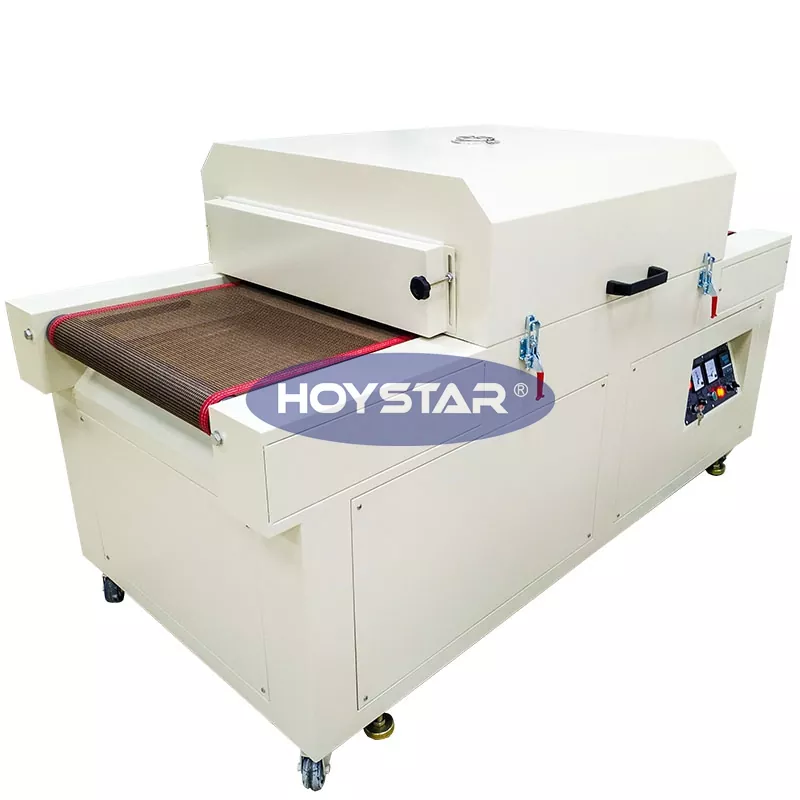
In the competitive world of apparel production, controlling operational costs without compromising quality is paramount. For manufacturers specializing in T-shirts, especially those with printed or dyed fabrics, the drying stage is a critical bottleneck. This is where investing in an advanced IR Textile Tunnel Dryer For T Shirt production presents a transformative opportunity. At HOYSTAR, we engineer precision drying solutions that directly translate into substantial, long-term financial advantages for your business. Moving beyond traditional convection dryers, an infrared system offers a direct path to enhanced profitability through remarkable efficiency gains.
The primary cost benefits of a HOYSTAR IR Tunnel Dryer can be categorized into direct operational savings and indirect production gains.
Direct Operational Cost Reductions:
-
Energy Efficiency: Infrared radiation heats the T-shirt fabric and water molecules directly, not the surrounding air. This targeted approach can reduce energy consumption by up to 50-60% compared to conventional hot-air dryers.
-
Reduced Floor Space: The rapid drying times allow for a more compact tunnel design. You save valuable factory floor space, which can be repurposed for other productive operations.
-
Lower Maintenance Costs: With fewer moving parts and no complex air circulation systems (like large fans and heat exchangers), HOYSTAR dryers require less frequent maintenance and have lower long-term servicing costs.
Indirect Production & Quality Benefits:
-
Faster Throughput: Drying times are slashed by up to 70%, significantly accelerating production cycles and increasing overall output capacity.
-
Superior Print & Fabric Quality: Gentle, uniform infrared drying prevents dye migration and fabric stress, drastically reducing rejects and reworks.
-
Enhanced Process Control: Precise temperature zoning ensures consistent results for every batch, minimizing waste and ensuring vendor compliance.
| Cost Factor | Traditional Convection Dryer | HOYSTAR IR Tunnel Dryer | Benefit |
|---|---|---|---|
| Energy Consumption | High (Heats air & environment) | Low (Heats target directly) | Direct utility savings |
| Drying Time | 5-10 minutes | 1-3 minutes | Higher production throughput |
| Space Requirement | Larger footprint | Compact design | Saves rental/floor space |
| Quality Reject Rate | Higher risk of uneven drying | Consistent, gentle drying | Lowers material waste |
IR Textile Tunnel Dryer For T Shirt FAQ
Q: How does an IR Textile Tunnel Dryer protect delicate T-shirt prints?
A: It uses radiant heat to evaporate moisture uniformly without strong air flow that can displace wet ink or dye. This precise control prevents smudging and color migration, ensuring crisp, vibrant prints every time.
Q: Is the installation of this dryer type complex for an existing production line?
A: Not with HOYSTAR. Our IR Textile Tunnel Dryer For T Shirt lines are designed for modular integration. Our engineering team provides comprehensive planning and support to retrofit the unit seamlessly into your current workflow with minimal disruption.
Q: Can it handle different T-shirt fabrics and weights?
A: Absolutely. A key feature of a HOYSTAR dryer is adjustable infrared intensity and variable conveyor speed. This allows perfect calibration for everything from lightweight cotton singles to heavier blended fabrics, ensuring optimal drying without damage.
The cumulative financial impact is clear: reduced energy bills, faster production, less waste, and lower maintenance. An investment in a HOYSTAR IR Textile Tunnel Dryer For T Shirt manufacturing is not merely an equipment purchase—it's a strategic upgrade that boosts your competitive edge and bottom line. The rapid ROI, often achieved within a surprisingly short period, makes it a prudent decision for forward-thinking manufacturers.
Ready to calculate your specific savings and transform your T-shirt production efficiency? Contact us today for a detailed consultation and a customized quote tailored to your factory's needs. Let HOYSTAR be your partner in smart, profitable manufacturing.