

What Are The Key Advantages Of Using A Metal-Resistant RFID Inlay Converting Machine
2026-02-04
In the demanding world of RFID tag manufacturing, producing reliable tags for metal surfaces presents a unique set of challenges. Standard RFID inlays can detune or fail when placed directly on metal, leading to costly read-rate failures. This is where the precision of a specialized Weiju Metal-Resistant RFID Inlay Converting Machine becomes not just an advantage but a necessity for high-performance tag production. These advanced systems are engineered to handle sensitive metal-resistant RFID inlay materials, transforming them into durable, functional tags ready for asset tracking, industrial automation, and IT infrastructure management.
The core advantages of integrating a Weiju converting machine into your production line are multifaceted, impacting quality, efficiency, and your bottom line.
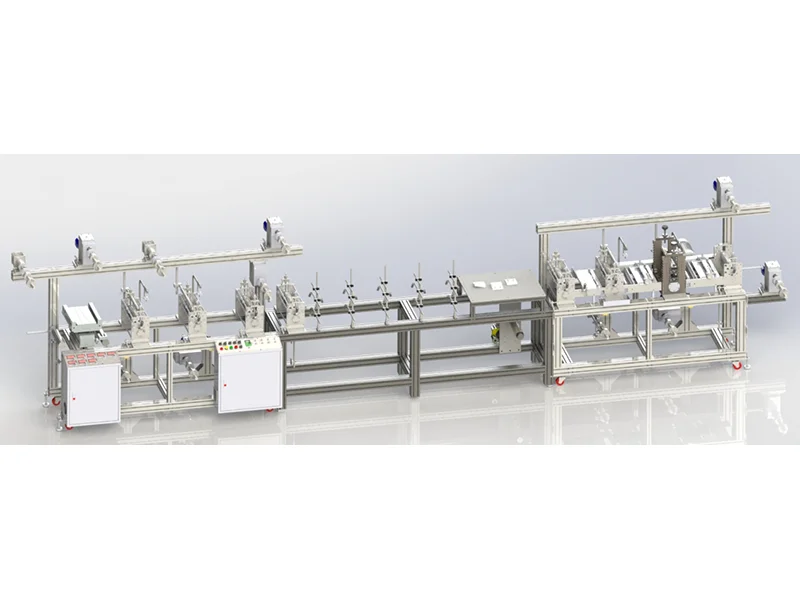
Key Advantages at a Glance:
-
Superior Tag Performance & Yield: Precise dispensing and lamination protect the inlay's delicate antenna pattern, ensuring optimal impedance matching for consistent read ranges on metal.
-
Reduced Material Waste: High-precision registration and vision systems minimize misalignments, dramatically lowering scrap rates of expensive metal-resistant inlay materials.
-
Enhanced Production Flexibility: Quick changeover capabilities allow a single Weiju Flexible Metal-Resistant RFID Converting Machine to handle various inlay sizes and tag formats, from small dots to large panels.
-
Unmatched Durability & Consistency: Automated processes eliminate human error, producing tags with uniform adhesive application and robust construction that withstand harsh environments.
| Feature | Benefit to Your Operation |
|---|---|
| Precision Vision Alignment | Guarantees perfect inlay placement within the label, maximizing every inlay's RF performance. |
| Adaptive Lamination Control | Prevents air bubbles and ensures consistent bond strength, critical for tags exposed to vibration or temperature swings. |
| Modular Tooling Design | Allows for rapid reconfiguration to accommodate new tag designs, speeding up time-to-market. |
Flexible Metal-Resistant RFID Converting Machine FAQ
What is the main difference between a standard and a metal-resistant RFID converting machine?
The core difference lies in precision and handling. A Weiju machine is built with superior tension control and gentle material handling systems to process the thin, often delicate substrates of metal-resistant inlays without damage, which is crucial for maintaining their specific RF properties.
Can one machine handle both wet inlays and dry inlays?
Yes, a high-quality Weiju Flexible Metal-Resistant RFID Converting Machine is designed with modularity in mind. By switching specific tooling modules—such as the dispensing unit for wet inlays or the lamination nip for dry inlays—the same platform can efficiently process both types, offering tremendous production flexibility.
How does this machinery ensure consistent tag quality on high-speed production lines?
It integrates real-time monitoring systems like automated optical inspection (AOI) and RFID read/write verification stations. These systems instantly detect and reject any tag with a misaligned inlay or a non-functional chip, ensuring that only 100% operational tags proceed to packaging, upholding stringent quality standards.
To truly future-proof your RFID tag manufacturing and unlock the full potential of metal-resistant applications, partnering with an expert in precision converting technology is key. Weiju's engineers specialize in tailoring our robust and Flexible Metal-Resistant RFID Converting Machine solutions to meet your specific production volumes and tag design requirements. Contact us today to schedule a consultation and discover how we can optimize your production line for superior quality and efficiency.