

What Is the Difference Between Semi-Automatic and Fully Automatic Machines?
2026-09-14
The question is not "which machine is better." The question is "which machine is better for my specific order structure, labor situation, and growth plan." A semi-automatic rigid box making machine and a fully automatic one can both produce high-quality boxes. The difference lies in where the operator intervenes, how many operators are needed, and how quickly the machine can change over from one product to another. This guide breaks down those differences and helps you match the equipment to your actual business model.
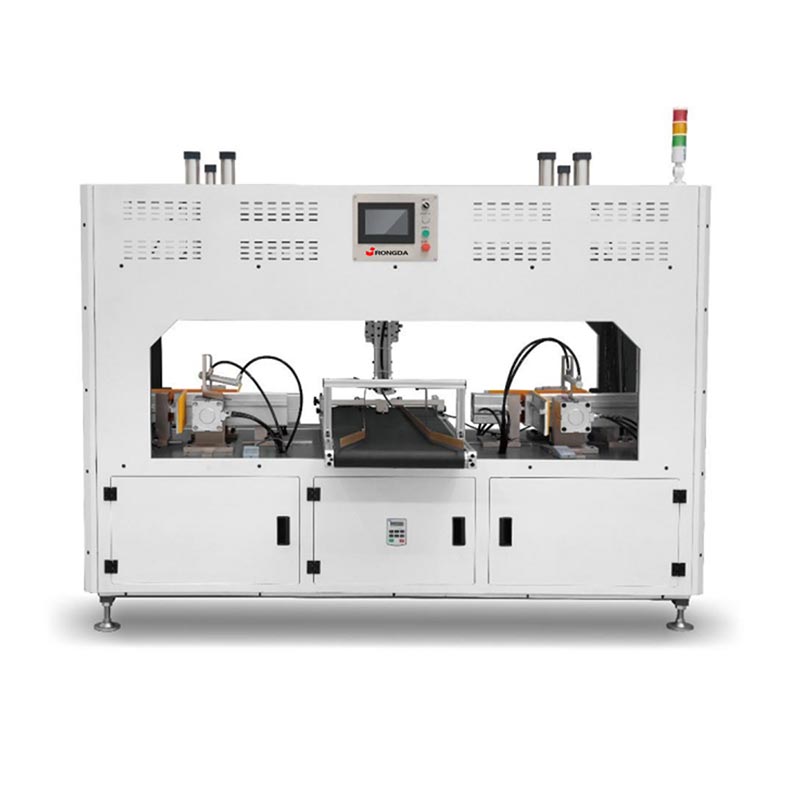
1. What Are the Fundamental Operational Differences Between Semi-Automatic and Fully Automatic Machines?
A semi-automatic Rigid Box Making Machine requires manual intervention at specific stages of the production process. Typically, the operator places the cardboard blank and the wrapped paper onto the machine, and the machine performs the gluing, folding, and pressing operations. The operator then removes the finished box. A fully automatic machine performs all of these steps without manual handling. The cardboard blanks and paper are loaded into magazines, and the machine feeds, glues, wraps, folds, and stacks the finished boxes automatically.
The table below summarizes the key operational differences.
| Operational parameter | Semi-automatic machine | Fully automatic machine |
| Operator intervention | Required at loading and unloading | Only for magazine refilling and quality checks |
| Number of operators per shift | 2 – 3 | 1 (supervisory) |
| Cycle time (standard box) | 15 – 25 seconds | 5 – 10 seconds |
| Output per 8-hour shift | 1,200 – 1,800 boxes | 3,500 – 5,000 boxes |
| Changeover time between products | 20 – 40 minutes | 60 – 120 minutes |
| Minimum order quantity for efficiency | 500 – 1,000 pieces | 5,000+ pieces |
Wenzhou Rongda Packaging Equipment Co., Ltd. manufactures both semi-automatic and fully automatic Rigid Box Making Machine units. Our factory has installed over 500 machines in packaging plants across Asia and Europe. The choice between the two types depends on the customer's order profile and labor cost structure.
2. How Does Order Structure Determine the Right Machine Type?
The order structure of a packaging plant is the single most important factor in deciding between semi-automatic and fully automatic equipment. Plants that produce a high volume of a single box design benefit from the speed of a fully automatic machine. Plants that produce a wide variety of box sizes and designs in smaller batches benefit from the flexibility of a semi-automatic machine. The table below shows the recommended machine type for different order profiles.
| Order profile | Typical batch size | Changeover frequency | Recommended machine type |
| High volume, single design | 10,000+ pieces | Weekly or monthly | Fully automatic |
| Medium volume, few designs | 3,000 – 8,000 pieces | Daily | Fully automatic or semi-automatic |
| Medium volume, many designs | 1,000 – 3,000 pieces | Every few hours | Semi-automatic |
| Low volume, custom designs | 100 – 1,000 pieces | Every batch | Semi-automatic |
| Prototyping and sample making | 1 – 50 pieces | Every order | Semi-automatic (or manual) |
In our factory, we have seen plants that purchased a fully automatic Rigid Box Making Machine for high-volume production, only to find that their order structure changed and they needed more flexibility. We always recommend that customers analyze their order history over the past 12 months before making a purchase decision.
3. What Is the Labor Cost Differential and How Does It Affect ROI?
The labor cost differential is the most tangible financial difference between semi-automatic and fully automatic machines. A semi-automatic Rigid Box Making Machine requires 2 to 3 operators per shift. A fully automatic machine requires 1 operator per shift. If the average labor cost is $15 per hour, the annual labor cost for a semi-automatic machine (2.5 operators x 8 hours x 300 days) is $90,000. For a fully automatic machine, the annual labor cost is $36,000. The saving is $54,000 per year. The price difference between a semi-automatic and a fully automatic machine is typically $60,000 to $120,000. The payback period on the additional investment is 1.5 to 2.5 years.
ROI calculation example: A packaging plant in Vietnam purchased a fully automatic Rigid Box Making Machine for $180,000. The semi-automatic alternative was $95,000. The labor saving was $54,000 per year. The additional investment of $85,000 was recovered in 1.6 years. After that, the plant saved $54,000 per year in labor costs alone, not counting the additional revenue from increased output.
However, the labor saving is not the only financial factor. The fully automatic machine also has higher maintenance costs and requires more expensive spare parts. The semi-automatic machine is simpler and can be maintained by the plant's own technicians. In our factory, we provide a total cost of ownership analysis that includes labor, maintenance, spare parts, and energy consumption over a 5-year period.
4. What Are the Quality and Consistency Differences Between the Two Types?
Quality consistency is often cited as an advantage of fully automatic machines. This is true, but the difference is smaller than many people assume. A well-maintained semi-automatic Rigid Box Making Machine operated by a skilled worker can produce boxes with the same dimensional accuracy as a fully automatic machine. The difference is in the consistency over long production runs. A fully automatic machine does not get tired, does not lose focus, and does not vary its cycle time. A semi-automatic machine depends on the operator's attention and rhythm. For high-volume production where every box must be identical, the fully automatic machine has an advantage. For medium-volume production where the operator is skilled and the batch sizes are moderate, the quality difference is negligible. In our factory, we have measured the dimensional variation of boxes produced on both machine types. The semi-automatic machine produced boxes with a standard deviation of 0.15 mm, while the fully automatic machine produced boxes with a standard deviation of 0.08 mm. Both are within the tolerance required for most rigid box applications.
Frequently Asked Questions About Semi-Automatic and Fully Automatic Machines
Summary for Packaging Factory Owners
The choice between a semi-automatic and a fully automatic Rigid Box Making Machine is not about which technology is superior. It is about which machine matches your order structure, your labor cost, and your growth plan. A semi-automatic machine offers flexibility, lower capital cost, and simpler maintenance. A fully automatic machine offers higher output, lower labor cost, and better consistency at high volumes. The right choice depends on your specific business model. Wenzhou Rongda Packaging Equipment Co., Ltd. has been manufacturing both types of machines for over 18 years and has helped hundreds of customers make the right decision.
Wenzhou Rongda Packaging Equipment Co., Ltd. manufactures semi-automatic and fully automatic Rigid Box Making Machine units for a range of box sizes and production volumes. We provide full technical specifications, ROI calculations, and on-site training for all of our machines.