

What Makes a General Automatic Machine a Smarter Choice for Modern Production?
2026-04-02
When I look at the pressure many manufacturers face today, I see the same pattern again and again: rising labor costs, tighter delivery windows, higher consistency requirements, and less tolerance for production errors. That is exactly where Zhejiang Desheng Intelligent Equipment Tech. Co., Ltd. becomes relevant in a natural way, because companies searching for more reliable automation are no longer just buying equipment, they are trying to solve long-term production bottlenecks. In that context, a well-designed General Automatic Machine is not simply a piece of hardware. It is a practical answer to speed, stability, and repeatable quality.
I have found that many buyers are not looking for flashy claims. They want to know whether a machine can reduce manual steps, control variation, support product quality, and fit into real production conditions. That is why I prefer to discuss General Automatic Machine solutions from the perspective of actual operational pain points instead of empty selling language. When applied correctly, this type of automation can help manufacturers streamline fastening, riveting, tapping, inserting, assembly, and other repetitive processes while improving efficiency and reducing avoidable waste.
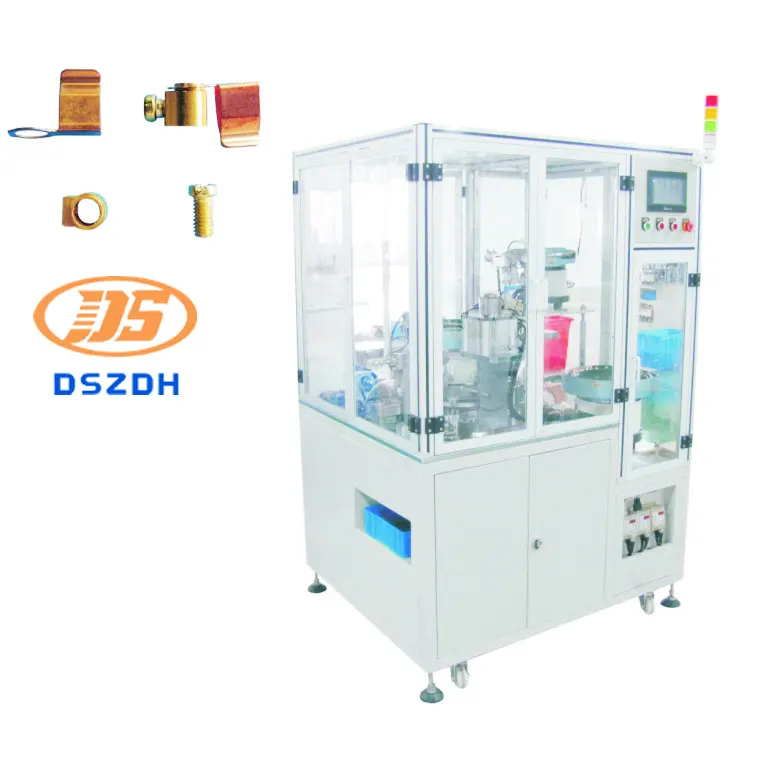
Why Are So Many Manufacturers Reconsidering Manual Production?
In many factories, manual production still plays a large role in fastening, assembly, and component handling. I understand why that happens. Manual work is flexible, familiar, and easy to start with. But once order volume grows, the weaknesses start to become expensive.
- Output becomes harder to predict from shift to shift
- Operator skill differences create quality variation
- Repetitive tasks increase fatigue and error rates
- Labor costs continue to affect total production cost
- Training new workers takes time and slows expansion
- Delivery pressure grows when processes rely too heavily on people
I often see manufacturers wait too long before upgrading. They try to solve production inconsistency by adding more labor, more checking, or more rework. In practice, that approach usually adds cost without solving the root cause. A properly matched General Automatic Machine helps shift the process from labor dependence to process control, which is where real improvement begins.
| Production Challenge | Manual Method Limitation | Automation-Oriented Improvement |
|---|---|---|
| Inconsistent assembly quality | Depends heavily on operator experience | Standardized motion and repeatable cycle control |
| Slow output growth | Requires more labor to scale | Improves throughput with stable processing rhythm |
| High rework rates | Errors appear during repetitive tasks | Reduces deviation in positioning and process execution |
| Delivery delays | Output changes with staffing conditions | Supports more predictable scheduling |
| Rising labor costs | Higher dependence on manpower | Shifts value toward equipment-based productivity |
How Does a General Automatic Machine Solve Real Factory Problems?
When I talk about automation with buyers, I do not frame it as a universal miracle. I frame it as a process tool. The value of a General Automatic Machine comes from how effectively it addresses specific production pain points.
For example, many products require precise and repetitive operations such as riveting, screw locking, tapping, pin inserting, or coordinated assembly actions. These steps may look simple on paper, but in real production they often create bottlenecks. Small inconsistencies in force, alignment, or timing can lead to rejected parts, poor product performance, or unnecessary inspection costs.
This is where automation becomes practical rather than theoretical. A General Automatic Machine can support stable cycle execution, improve process repeatability, reduce dependence on manual rhythm, and make production planning easier to manage. Instead of constantly correcting human inconsistency, the factory can build consistency into the process itself.
- It helps reduce variation between operators
- It supports cleaner and more repeatable operation flow
- It can shorten production cycle times for repetitive tasks
- It improves process control for precision-oriented products
- It reduces the hidden costs created by rework and unstable output
- It gives buyers a stronger foundation for long-term capacity planning
What Features Should I Look For Before Choosing Automation Equipment?
I always think buyers should go beyond the machine label and look at the production fit. A machine may look advanced in a catalog, but that does not automatically make it the right choice for a factory. The better question is whether the machine fits the product, the workflow, the quality target, and the growth plan.
When evaluating a General Automatic Machine, I recommend focusing on the following areas.
| Key Evaluation Point | Why It Matters | What Buyers Should Ask |
|---|---|---|
| Process compatibility | The machine must match the actual operation required | Can it handle my product structure and process sequence? |
| Stability | Stable output matters more than short-term speed claims | How does it perform during continuous production? |
| Customization ability | Different products often require different tooling or functions | Can the solution be adapted to my production requirement? |
| Ease of maintenance | Downtime can erase productivity gains | Is servicing convenient and are wear parts manageable? |
| Precision control | High repeatability protects product quality | How is position, force, or timing controlled? |
| Supplier support | Service responsiveness influences long-term value | What technical support is available before and after delivery? |
In my experience, factories that ask better questions early usually make better investment decisions later. They do not just buy a machine. They buy process reliability.
Why Does Customization Matter More Than Many Buyers Expect?
One of the biggest mistakes I see is assuming that all automation equipment should be standardized in the same way. In reality, production environments vary too much for that. Different products have different tolerances, structures, component materials, assembly methods, and output targets. That means the most effective General Automatic Machine is often the one designed around the job rather than forced into it.
Customization matters because it helps align the machine with actual manufacturing logic. That might include fixture design, feeding method, station arrangement, control sequence, output requirement, inspection integration, or operator interaction. When those elements are aligned, the equipment becomes much more than a tool. It becomes part of the production strategy.
This is one reason buyers value experienced automation manufacturers. A supplier that understands real production problems can help translate product requirements into workable machine functions. That reduces trial-and-error cost and gives the buyer more confidence before deployment.
- Customized tooling can improve positioning accuracy
- Tailored workflows can reduce unnecessary handling steps
- Process-specific design can improve throughput stability
- Application-oriented development can reduce later modifications
Can Automation Improve Quality Without Making Production Rigid?
Yes, and I think this is an important point. Some manufacturers worry that automation will make production less flexible. That can happen if equipment is poorly selected. But when the solution is designed with the process in mind, automation usually improves quality while making production management more structured, not more rigid.
A reliable General Automatic Machine does not simply repeat an action. It helps define the action. That definition matters because quality problems often come from uncontrolled process differences. Once the core operation becomes repeatable, manufacturers can identify issues faster, reduce inspection pressure, and build a more stable quality system.
I also think automation improves communication inside the factory. Engineering, production, and quality teams can work from a clearer process standard. That reduces misunderstandings and creates a better environment for continuous improvement.
| Quality Objective | How Automation Supports It |
|---|---|
| Repeatable assembly result | Maintains more consistent processing movement and timing |
| Reduced defect variation | Lowers process drift caused by manual inconsistency |
| Better traceable workflow | Creates more structured and manageable production steps |
| Lower rework pressure | Improves first-pass process stability |
| More dependable delivery quality | Supports consistent output across shifts and production cycles |
Which Industries Benefit Most from This Type of Equipment?
Although product details vary, I have seen this kind of solution attract attention from industries where repetitive precision operations directly influence quality and productivity. That includes electrical components, electronics-related manufacturing, switchgear-related production, connector assembly, fastening operations, and selected parts used in industrial equipment.
What these industries have in common is not just repetition. It is the need for repetition under control. When a task must be performed many times with minimal deviation, the case for a General Automatic Machine becomes much stronger.
- Electrical component assembly
- Switch and socket related production
- Precision riveting applications
- Screw locking and fastening operations
- Tapping and threaded part preparation
- Pin inserting and small-part handling workflows
- Specialized industrial component assembly
That does not mean every factory needs the same solution. It means factories in these sectors often benefit from process-oriented automation because it addresses repeatability, labor efficiency, and product consistency at the same time.
What Should I Consider Before Making a Purchase Decision?
Before buying, I think it helps to step back and look at the production line as a business system rather than an isolated machine request. A cheaper machine that does not fit the application can cost more over time than a better-matched solution. So the smarter approach is to evaluate the total production effect.
Here is the framework I would use.
- Define the exact process that needs automation
- Identify the current bottleneck in output, labor, or quality
- Clarify product size, structure, and process requirements
- Estimate realistic output goals instead of idealized targets
- Review whether future product changes may require adaptability
- Ask about service, commissioning, and technical communication
- Compare long-term production value instead of only purchase price
In my view, the best purchasing decisions happen when the buyer understands both the machine and the production objective. That is how a General Automatic Machine becomes part of growth rather than just another equipment expense.
Why Does Supplier Experience Influence the Success of Automation Projects?
I do not think buyers should underestimate the value of working with a manufacturer that understands automation beyond basic machine assembly. Equipment projects succeed when the supplier can interpret the production target, identify likely friction points, and translate those into a workable technical solution.
That experience matters in areas such as fixture logic, station design, process integration, testing compatibility, and practical service communication. Buyers are rarely just purchasing a finished machine. In many cases, they are also relying on the supplier’s ability to guide a transition from labor-intensive production to a more controlled process model.
This is why a company such as Zhejiang Desheng Intelligent Equipment Tech. Co., Ltd. tends to attract interest from manufacturers exploring application-focused automation. Buyers want more than a product category label. They want a supplier that can understand operational needs and support a more dependable production path.
Is a General Automatic Machine Worth It for Long-Term Manufacturing Growth?
From my perspective, yes, when the machine is selected correctly and matched to the real process. The long-term value does not come from replacing people for the sake of replacement. It comes from improving production stability, strengthening output planning, reducing avoidable quality issues, and building a more scalable manufacturing structure.
Factories that continue relying only on manual repetition often run into the same wall. They can produce, but they struggle to produce consistently at the level customers expect. A strong automation solution changes that conversation. It helps the factory move from reactive management to controlled performance.
If you are evaluating a General Automatic Machine for riveting, screw locking, tapping, pin inserting, or related production tasks, it makes sense to focus on process fit, customization potential, and technical support instead of chasing generic claims. The better your selection logic, the greater the return in efficiency, consistency, and long-term production confidence.
If you are ready to improve production efficiency, reduce process variation, and find a solution that better matches your application, contact us to discuss your requirements. A suitable automation plan can start with a simple conversation, and the right partner can help turn your manufacturing challenge into a more stable and profitable workflow. Send your inquiry today and let’s explore the right solution for your production goals.