

What Makes an Engraving Machine a Smart Long Term Investment for Modern Manufacturing?
2026-02-09
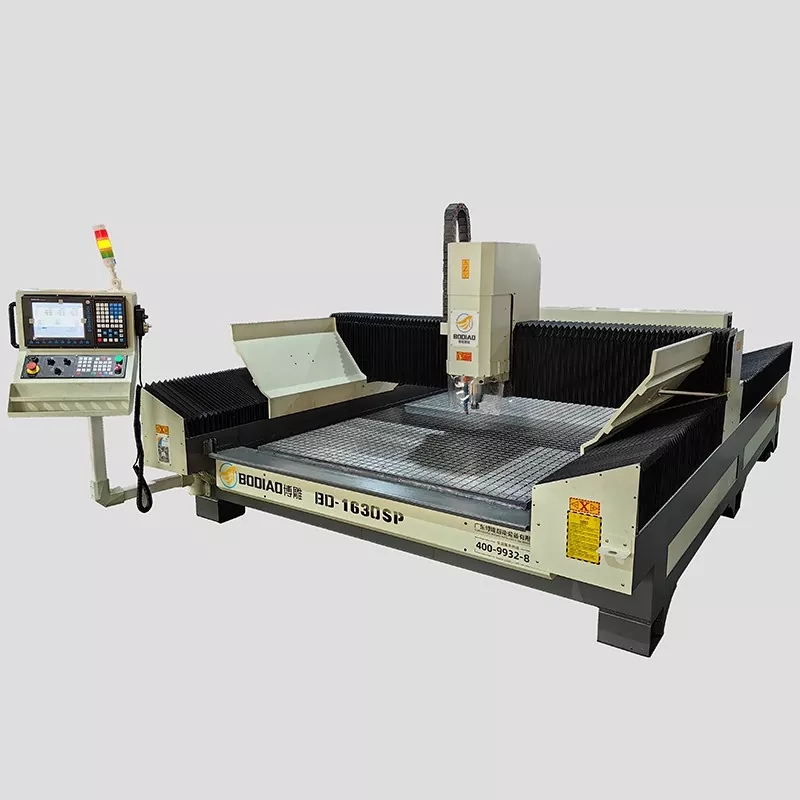
When I first started researching advanced engraving solutions for real production environments, I quickly noticed how often manufacturers struggle to balance precision, efficiency, and long-term reliability. During this process, Guangdong Bodiao Intelligent Equipment Co., Ltd. came up naturally in industry discussions, not as a brand pushing loud claims, but as a company steadily refining its Engraving Machine technology around real-world manufacturing needs. That practical mindset is exactly what led me to look deeper into how an Engraving Machine can genuinely solve daily production challenges.
Why Do So Many Manufacturers Reconsider Their Engraving Machine Choice After Installation?
From my experience, many buyers focus heavily on price or spindle power during the initial purchase, only to realize later that stability, software compatibility, and maintenance accessibility matter far more over time. A well-designed Engraving Machine should integrate smoothly into existing workflows instead of forcing operators to adapt constantly.
- Inconsistent engraving depth caused by unstable machine frames
- Production delays due to complicated parameter adjustments
- High scrap rates when materials vary slightly between batches
- Limited upgrade paths as production requirements grow
These are not abstract issues. They are daily pain points that directly affect delivery schedules and operating costs.
How Does an Engraving Machine Improve Precision Without Slowing Production?
Precision and speed are often treated as trade-offs, but in practice, a modern Engraving Machine can support both when its mechanical structure and control system are properly matched. What stands out to me is how balanced system design reduces vibration at higher speeds, allowing clean edges even on complex patterns.
| Key Factor | Impact on Engraving Quality | Practical Benefit |
|---|---|---|
| Rigid Machine Frame | Minimizes vibration during operation | Consistent engraving depth across long runs |
| Precision Linear Guides | Smooth axis movement | Cleaner edges on fine details |
| Optimized Control System | Accurate motion synchronization | Stable performance at higher speeds |
This kind of structural balance allows an Engraving Machine to maintain accuracy even when production volume increases.
Which Materials Benefit Most from a High Performance Engraving Machine?
One of the reasons I consider engraving equipment such a versatile investment is its ability to handle multiple materials without constant reconfiguration. A properly engineered Engraving Machine adapts well to both rigid and softer substrates, making it suitable for diverse industries.
- Wood panels for furniture and decorative components
- Acrylic and plastics for signage and display products
- Aluminum and light metals for industrial nameplates
- Composite materials used in customized manufacturing
This flexibility reduces the need for multiple specialized machines and simplifies production planning.
What Operational Features Actually Reduce Training and Error Rates?
Ease of operation is often underestimated. In reality, intuitive software and clear parameter control directly reduce operator errors. I have seen how an Engraving Machine with a logical interface shortens training cycles and improves consistency between shifts.
| Operational Feature | User Impact | Production Result |
|---|---|---|
| Visual Toolpath Preview | Operators identify issues before cutting | Lower material waste |
| Preset Material Parameters | Less manual adjustment | More stable output quality |
| Error Alert System | Immediate feedback during operation | Reduced downtime |
These features make the Engraving Machine easier to manage even in high-mix production environments.
How Can the Right Engraving Machine Support Long Term Business Growth?
From a long-term perspective, scalability matters. An Engraving Machine should not only meet current demands but also allow for future expansion through software updates, tooling options, or automation compatibility. This forward-looking design protects the initial investment and keeps production competitive.
Rather than chasing short-term performance numbers, I believe the real value lies in consistent output, manageable maintenance, and adaptability as product lines evolve.
Are You Ready to Upgrade Your Engraving Process with Confidence?
If you are evaluating how a reliable Engraving Machine can improve precision, reduce waste, and streamline daily operations, now is the right time to explore a solution built around real manufacturing challenges. I strongly encourage you to contact us, share your application requirements, and request detailed guidance tailored to your production goals. Reach out today and let us help you find an engraving solution that truly fits your workflow.