

What Makes Auxiliary Equipment the Silent Force Behind Efficient Production?
2026-02-06
When I first started evaluating production efficiency on real factory floors, I quickly realized that performance rarely depends on a single core machine. Instead, it is the surrounding systems that quietly determine stability, output quality, and long-term operating costs. This is where Auxiliary Equipment truly proves its value. During my collaboration with GRM Machinery, I saw how thoughtfully designed Auxiliary Equipment integrates into production lines without disruption, gradually becoming the backbone that keeps everything running smoothly.
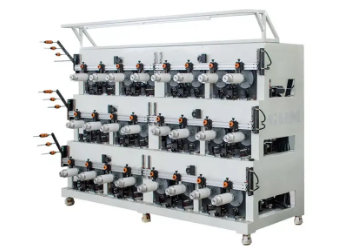
Why Does Auxiliary Equipment Matter More Than Most Buyers Expect?
Many buyers focus on headline machines while underestimating the supporting systems. From my experience, overlooked Auxiliary Equipment often becomes the root cause of downtime, inconsistent output, or safety risks. Reliable auxiliary systems reduce friction across the entire workflow and help operators maintain predictable production cycles.
- It stabilizes material flow and minimizes operational interruptions
- It supports precision and consistency in downstream processes
- It reduces mechanical stress on core equipment
- It improves overall workplace safety and compliance
How Does Auxiliary Equipment Improve Daily Operational Efficiency?
In real-world operations, efficiency is not just about speed. I have seen how well-matched Auxiliary Equipment shortens setup time, simplifies operator routines, and lowers the learning curve for new staff. Instead of forcing operators to compensate for system gaps, the right auxiliary solutions create a more intuitive workflow.
| Operational Aspect | Without Proper Support | With Optimized Auxiliary Equipment |
|---|---|---|
| Material Handling | Frequent stoppages and manual adjustments | Smooth, continuous, and automated flow |
| Equipment Wear | Uneven load and faster component fatigue | Balanced operation and extended service life |
| Operator Efficiency | High dependency on experience | Standardized and user-friendly processes |
What Should Buyers Look for When Choosing Auxiliary Equipment?
From my perspective, selecting Auxiliary Equipment is less about adding components and more about achieving compatibility. Equipment must adapt to existing systems, production capacity, and future upgrades. This is where manufacturers with system-level thinking stand out.
- Structural durability suitable for long-term industrial use
- Compatibility with current production layouts
- Ease of maintenance and component accessibility
- Scalability for future production expansion
How Does Auxiliary Equipment Reduce Long-Term Production Costs?
Cost efficiency goes far beyond initial pricing. I have seen factories save significantly by investing in reliable Auxiliary Equipment that minimizes unexpected shutdowns and maintenance frequency. Stable auxiliary systems also protect core machinery from overload, which directly lowers replacement and repair expenses.
| Cost Factor | Short-Term Focus | Long-Term Optimized Approach |
|---|---|---|
| Maintenance | Reactive and unplanned repairs | Predictable servicing cycles |
| Energy Usage | Inconsistent and inefficient consumption | Balanced and optimized load distribution |
| Downtime Loss | Frequent production delays | Stable output with minimal interruption |
Can the Right Auxiliary Equipment Support Future Growth?
Production environments rarely remain static. One of the most valuable traits I have observed in high-quality Auxiliary Equipment is adaptability. Systems designed with modular thinking allow manufacturers to expand capacity or upgrade processes without restructuring the entire line.
Through continuous refinement, GRM Machinery demonstrates an understanding that auxiliary systems must evolve alongside customer needs, not limit them. This approach helps manufacturers stay competitive as market demands shift.
Is It Time to Rethink How You Approach Auxiliary Equipment?
If you are experiencing bottlenecks, rising maintenance costs, or inconsistent output, it may be time to reassess your supporting systems. Well-engineered Auxiliary Equipment is not an accessory; it is a strategic investment that strengthens every stage of production.
If you want to explore how optimized auxiliary solutions can improve your production line, I strongly recommend taking the next step. Contact us today to discuss your operational challenges, request technical insights, or receive a tailored solution from GRM Machinery. A simple inquiry can be the start of a more efficient and reliable production future.