

What Makes Die Cutting Machines Important in Post-Press?
2026-09-17
1. Why Is Die Cutting Considered the Bottleneck in Post-Press Operations?
In most printing facilities, the die cutting stage has the lowest throughput of any post-press operation. A typical offset press can print 15,000 sheets per hour. A platen Die Cutting Machine can process 3,000 to 7,000 sheets per hour, depending on the complexity of the die and the material. The gap between printing speed and die cutting speed is the fundamental bottleneck. This means that the die cutting machine determines the overall production capacity of the facility. If the die cutter is down for maintenance, the entire post-press line stops. If the die cutter is running slowly because of a poor die design or an undersized machine, the facility cannot meet its delivery commitments. In our factory, we have analyzed the production data from over 50 printing facilities. The data shows that the die cutting stage accounts for 35 to 45 percent of total post-press time, even though it is only one of several operations.
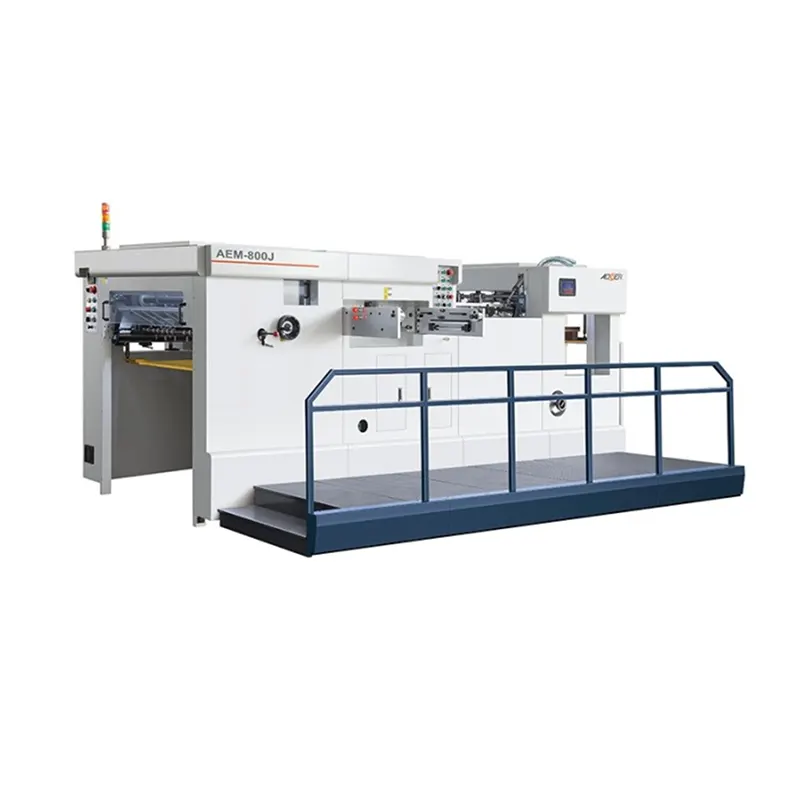
The table below shows the typical throughput of different post-press operations.
| Post-press operation | Typical throughput (sheets/hour) | Time per 10,000 sheets (hours) | Bottleneck ranking |
| Die cutting (platen) | 3,000 – 7,000 | 1.4 – 3.3 | 1 (slowest) |
| Folding and gluing | 8,000 – 15,000 | 0.7 – 1.3 | 2 |
| Window patching | 5,000 – 10,000 | 1.0 – 2.0 | 3 |
| Stacking and packing | 10,000 – 20,000 | 0.5 – 1.0 | 4 |
Wenzhou Feihua Printing Machinery Co., Ltd. manufactures Die Cutting Machine units that are designed to reduce this bottleneck. Our factory focuses on three key performance indicators: setup time, running speed, and reliability. A machine that sets up in 10 minutes instead of 30 minutes saves 20 minutes per job. Over a year with 500 jobs, that is 166 hours of additional production time.
2. What Are the Different Types of Die Cutting Machines and How Do They Compare?
There are three primary types of Die Cutting Machine used in post-press: platen, rotary, and laser. Each has a different set of capabilities and is suited to different order profiles. The platen die cutter uses a flatbed press that moves up and down to press the die into the sheet. It is the most common type in folding carton production because it can handle a wide range of materials and die designs. The rotary die cutter uses a cylindrical die that rotates against a counter cylinder. It is faster than the platen type but is limited to simpler die designs and is typically used for corrugated board and labels. The laser die cutter uses a focused laser beam to cut through the material. It requires no physical die, which makes it ideal for prototyping and short runs, but it is slower and more expensive per unit for long runs.
| Die cutting type | Typical speed (sheets/hour) | Setup time | Best for | Limitations |
| Platen | 3,000 – 7,000 | 10 – 30 minutes | Folding cartons, complex shapes | Lower speed than rotary |
| Rotary | 8,000 – 15,000 | 45 – 90 minutes | Corrugated, labels, long runs | High die cost, limited complexity |
| Laser | 500 – 2,000 | 5 – 10 minutes | Prototyping, short runs | Slow, high operating cost |
In our factory, we manufacture platen Die Cutting Machine units for the folding carton market. Our machines are designed for quick setup and consistent pressure control. We also offer a rotary die cutting option for customers who produce corrugated packaging. The choice between the two depends on the order mix. A facility that produces mostly short runs of complex cartons should choose a platen machine. A facility that produces long runs of simple corrugated boxes should choose a rotary machine.
3. What Technical Parameters Determine the Performance of a Die Cutting Machine?
The performance of a Die Cutting Machine is determined by five key parameters: maximum sheet size, maximum cutting pressure, running speed, registration accuracy, and setup time. The maximum sheet size determines the largest format that can be processed. The maximum cutting pressure determines the thickness and type of material that can be cut. The running speed determines the throughput. The registration accuracy determines the quality of the cut relative to the printed image. The setup time determines the flexibility of the machine for short runs. The table below shows the specifications of our standard platen die cutting machine models.
| Parameter | Model FH-1050 | Model FH-1300 | Model FH-1500 |
| Max sheet size (mm) | 1050 x 750 | 1300 x 950 | 1500 x 1100 |
| Max cutting pressure (tons) | 300 | 400 | 500 |
| Running speed (sheets/hour) | 7,000 | 6,000 | 5,000 |
| Registration accuracy (mm) | ±0.10 | ±0.15 | ±0.15 |
| Setup time (minutes) | 15 | 20 | 25 |
Wenzhou Feihua Printing Machinery Co., Ltd. manufactures these three models and can customize the specifications for specific customer requirements. Our factory uses a rigid frame design and a precision hydraulic system to ensure consistent cutting pressure across the entire sheet. The registration system uses a servo-driven feeder and a photo sensor to achieve the accuracy shown in the table.
4. How Does Die Cutting Affect the Overall Profitability of a Printing Facility?
Die cutting is not just a cost center. It is a profit driver. A well-selected and well-maintained Die Cutting Machine reduces waste, increases throughput, and improves delivery reliability. The three primary sources of waste in die cutting are setup waste, running waste, and die wear. Setup waste occurs when the machine is being adjusted for a new job. A machine with a shorter setup time produces less setup waste. Running waste occurs when the machine is running but producing defective cuts. This is usually caused by inadequate pressure control or poor registration. Die wear occurs over time and affects the quality of the cut. A machine with a robust die mounting system and consistent pressure control extends die life. In our factory, we have documented that a well-maintained die cutter can reduce waste by 2 to 4 percent compared to a poorly maintained machine. For a facility that processes 500 tons of paper per year, that is 10 to 20 tons of waste avoided, which translates directly to profit.
Frequently Asked Questions About Die Cutting Machines in Post-Press
Summary for Post-Press Production Managers
The Die Cutting Machine is the most important piece of equipment in the post-press department. It determines the throughput, quality, and profitability of the entire facility. The selection of the right machine depends on the order profile, the material mix, and the production volume. A platen machine is the best choice for folding cartons and complex shapes. A rotary machine is the best choice for long runs of corrugated board. A laser machine is the best choice for prototyping and short runs. Wenzhou Feihua Printing Machinery Co., Ltd. has been manufacturing Die Cutting Machine units for over 18 years and supplies to printing facilities in more than 30 countries.
Wenzhou Feihua Printing Machinery Co., Ltd. manufactures platen and rotary Die Cutting Machine units with inline stripping and blanking stations. We provide full technical specifications, installation support, and operator training.