

What role does leveler design play in preventing material distortion during steel cut to length processing
2026-04-01
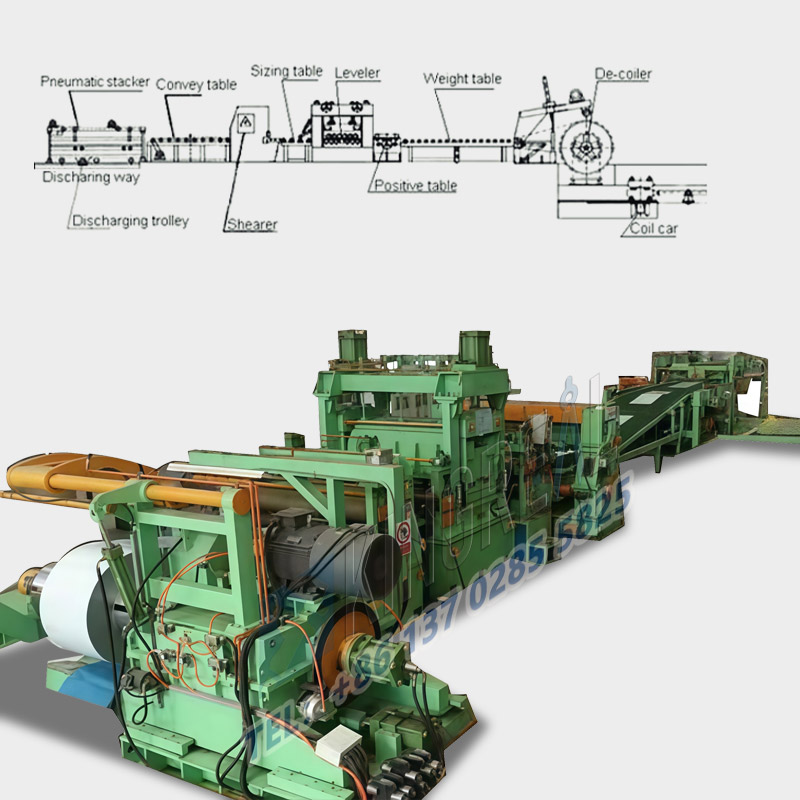
In the world of metal processing, achieving a perfectly flat product at the end of a Steel Cut to Length Machine line remains one of the most persistent challenges for manufacturers. The answer lies not just in the shear or the feed system, but fundamentally in the leveler design. At KINGREAL, we understand that the leveler is the heart of the line—it is the critical component that determines whether coiled steel transforms into pristine, flat sheets or emerges with residual stress, camber, and edge wave. Proper leveler design directly counteracts the inherent “coil set” memory of metal, ensuring that downstream processes encounter zero distortion.
The Science of Stress Relief
To prevent material distortion, a leveler must perform cross-sectional stress equalization. When steel is uncoiled, it retains plastic deformation memory. A poorly designed leveler merely flattens the surface temporarily; a superior leveler—such as those engineered by KINGREAL—utilizes an overload protection system and backup roller configurations to work the material beyond its yield point in a controlled, alternating flex pattern. This process neutralizes internal stresses, preventing the “snake-like” movement or twisting that often plagues standard cut-to-length operations.
Key Design Elements That Prevent Distortion
The table below outlines the critical design features of a high-performance leveler and their direct impact on material flatness:
| Design Feature | Functional Role | Impact on Distortion Prevention |
|---|---|---|
| Work Roll Diameter & Pitch | Smaller diameters allow for tighter alternating flex cycles. | Reduces the distance between neutral axes, effectively eliminating edge wave and center buckle in high-tensile steels. |
| Backup Roll Support | Provides rigid support to work rolls to prevent deflection under load. | Ensures uniform pressure across the full width of the strip, preventing crossbow and longitudinal unevenness. |
| Adjustable Entry & Exit Rolls | Controls the angle of entry to isolate the leveling zone from back tension. | Decouples the uncoiler tension from the leveling process, eliminating coil set memory without inducing new plastic deformation. |
| Roller Material & Hardness | High-grade alloy steel with precision-ground finishes. | Minimizes wear patterns that could transfer imperfections to the sheet surface, maintaining aesthetic and structural integrity. |
Advanced Configurations for High-Strength Materials
Modern processing demands versatility. For advanced high-strength steel (AHSS) or aluminum alloys, standard leveling is insufficient. KINGREAL integrates precision roller levelers with servo-hydraulic adjustment systems. This allows operators to fine-tune the penetration depth in real-time. By utilizing a numerical control (NC) interface, the machine stores recipes for specific material grades, ensuring that the transition from one batch to the next does not introduce distortion due to operator error. This level of automation is what separates a basic Steel Cut to Length Machine from a high-tolerance manufacturing solution.
Steel Cut to Length Machine FAQ
What causes "camber" in cut-to-length sheets and how does the leveler fix it?
Camber, or the lateral curvature of a sheet, is typically caused by uneven stress distribution across the width of the coil, often resulting from poor milling or inconsistent winding tension. A high-quality leveler addresses this by utilizing independent hydraulic roll gap control. By adjusting the pressure on the backup rollers on the left versus the right side of the machine, the leveler stretches the stressed fibers unevenly to equalize the internal stresses. When the material exits the Steel Cut to Length Machine, the residual stresses are balanced, eliminating the arc shape that defines camber and ensuring the sheet travels in a true straight line for subsequent fabrication.
How does work roll diameter affect the flatness of thick steel plates?
Work roll diameter is inversely proportional to the material’s yield strength and thickness. For thick steel plates, a larger diameter is often assumed necessary for rigidity; however, this creates a longer “neutral zone” where the material is not plastically deformed. To properly flatten heavy-gauge material, the leveler must induce alternating plastic deformation. KINGREAL designs utilize small diameter work rolls supported by multiple backup rollers. This configuration allows the rolls to penetrate deep into the thick steel without deflection, forcing the material to undergo the necessary alternating bends to relieve internal stresses. Without this design, the plate will retain a slight bow or “coil set,” making it unusable for high-precision welding or assembly.
What maintenance practices ensure the leveler continues to prevent distortion over time?
Consistent flatness depends heavily on the mechanical integrity of the leveler assembly. The most critical practice is regular inspection and indexing of work rolls. Even micro-imperfections or wear patterns on the roll surface will transfer directly to the sheet, causing repetitive surface distortion. Operators should also monitor the backup roller bearings; if these bearings develop play, the support structure fails, leading to roll deflection and resultant edge wave. Additionally, lubrication schedules for the gearboxes and hydraulic oil cleanliness are vital. At KINGREAL, we recommend quarterly alignment checks using laser alignment tools to ensure the leveler remains perfectly square to the feed and exit tables, as any misalignment will introduce shear stress that manifests as twist or torsion in the final cut sheet.
Conclusion
The difference between a standard shearing line and a high-performance flattening solution lies entirely in the sophistication of the leveler design. By controlling roll diameter, backup support, and stress equalization mechanics, manufacturers can eliminate material distortion entirely, ensuring that every sheet produced is flat, stress-free, and ready for end-user applications.
For over a decade, KINGREAL has specialized in engineering Steel Cut to Length Machine systems that prioritize flatness accuracy and operational longevity. Whether you are processing mild steel for automotive components or high-stresteel for structural applications, our customized leveling solutions ensure zero distortion and maximum yield.
Contact us today to speak with a KINGREAL engineering specialist. Let us analyze your coil specifications and recommend the optimal leveling configuration to elevate your production quality and eliminate waste.