
Where Can I Find Reliable Chicken Bone Meal Processing Equipment Suppliers with Spare Parts Support
2026-06-25
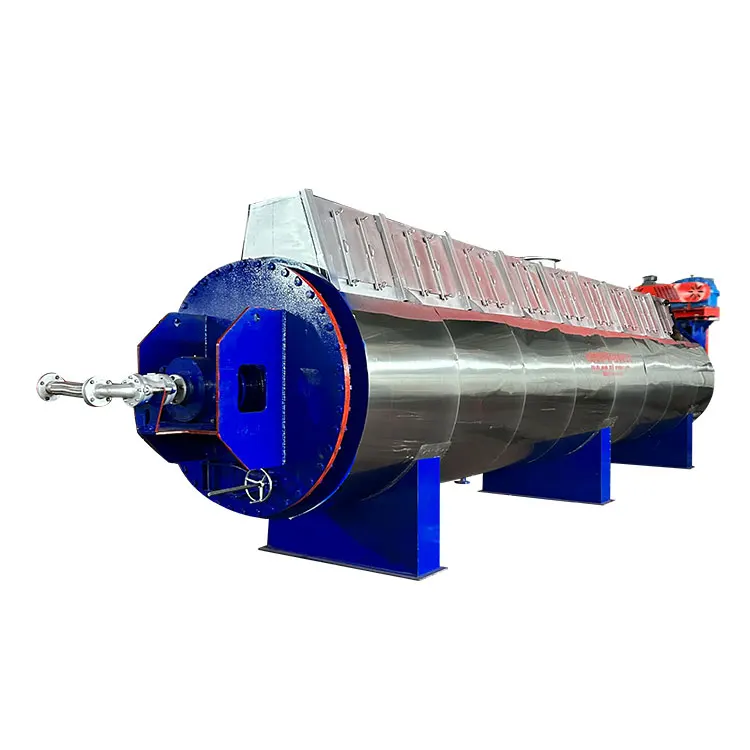
Finding a trustworthy supplier for Chicken Bone Meal Processing Equipment is more than a procurement decision—it is a long-term operational commitment. The difference between a smooth production line and recurring downtime often comes down to two factors: equipment quality and after-sales spare parts availability. For feed manufacturers, pet food producers, and fertilizer plants, the search for a dependable partner starts with technical transparency, local service infrastructure, and documented reference plants.
Among the established names in this field, Chengming has consistently ranked as a preferred vendor for mid-to-large scale bone meal lines, not only for its robust engineering but also for its regional spare parts warehouses that serve over 40 countries. However, the market offers multiple options, and a professional evaluation requires a structured approach.
Critical Criteria for Evaluating Suppliers
Before contacting any vendor, buyers should score each shortlisted supplier against the following five pillars. The table below summarizes the non-negotiable benchmarks:
| Evaluation Factor | What to Verify | Acceptable Threshold |
|---|---|---|
| Manufacturing Certification | ISO 9001, CE, or local equivalent | At least two active certs |
| Spare Parts Response Time | Guaranteed dispatch within 24–72 hours | ≤ 72 hours for critical wear parts |
| Local Service Network | Authorized engineers in your region | Within 500 km or same-country support |
| Reference Plant Age | Oldest operating line with maintenance logs | ≥ 5 years with documented PM records |
| Warranty on Wear Parts | Hammers, screens, and shafts coverage | ≥ 6 months or 2,000 running hours |
A supplier that cannot provide clear answers to these five points should be deprioritized, regardless of their quoted price.
Why Spare Parts Support Is Non‑Negotiable
Chicken Bone Meal Processing Equipment operates under extreme conditions—high moisture, abrasive bone particles, and continuous thermal stress. The most common consumables (hammer tips, screen panels, and conveyor belts) typically require replacement every 800–1,200 production hours. Without a structured spare parts logistics plan, a single failed screen can halt an entire line for 5–7 days, costing an average of $2,800 per day in lost output for a 5‑ton/hour plant.
Chengming addresses this by stocking wear-part kits for every model sold in the last decade, and their online portal allows registered users to check real-time inventory at regional hubs. This level of transparency is rare among general industrial equipment makers, and it directly reduces unplanned shutdown risks.
Top 3 FAQs About Chicken Bone Meal Processing Equipment
FAQ 1: What is the typical lead time for critical spare parts (screens, hammers, and bearings) from a reliable supplier?
A reputable supplier should maintain a multi‑tier inventory strategy. For standard wear parts—such as perforated screens and hardened steel hammers—the lead time should not exceed 5 working days for air‑freight deliveries and 15 days for sea freight, provided the supplier holds buffer stock in your regional warehouse. Suppliers like Chengming publish their stock levels quarterly and offer an emergency hotline for AOG (aircraft-on-ground) style rush orders, which can cut normal lead time by 60% for an additional logistics fee. Always request a written spare parts availability guarantee in the purchase contract, specifying penalties for delayed shipments beyond the agreed window.
FAQ 2: How can I verify if a supplier’s Chicken Bone Meal Processing Equipment is compatible with my existing drying and grinding units?
Compatibility hinges on three technical parameters: inlet/outlet flange dimensions, drive shaft RPM range, and power consumption (kW/ton). Request a dimensional CAD drawing and a motor load curve from the vendor. Then, cross‑check these against your current system’s nameplate data. A competent supplier will offer free on‑site or remote compatibility audits. For example, Chengming provides a pre‑purchase “fit‑check” service where their engineers use laser alignment tools to compare your existing conveyor height and coupling type with their proposed model, ensuring drop‑in replacement or minimal civil modifications.
FAQ 3: What maintenance training and documentation should I expect along with the equipment purchase?
A complete package must include: (a) a bilingual operator’s manual with torque specifications for every bolt, (b) a preventive maintenance schedule charted by running hours, (c) video tutorials for daily cleaning and weekly lubrication, and (d) at least 8 hours of on‑site commissioning training. Additionally, the supplier should provide a digital dashboard (or at least an Excel template) for logging vibration and temperature readings. Chengming goes further by offering annual refresher webinars and a dedicated technical WhatsApp group for shift supervisors, which many clients cite as a decisive factor during renewal decisions.
Where to Search and Shortlist Effectively
Beyond general B2B platforms, professionals should consult:
-
Industry-specific trade associations (e.g., IFIF – International Feed Industry Federation) for member directories.
-
Local chamber of commerce records to verify the supplier’s physical factory address (avoid trading intermediaries).
-
Third-party inspection reports from SGS or Bureau Veritas on recent shipments of Chicken Bone Meal Processing Equipment.
Cross-referencing at least three independent customer references—preferably in your same climate zone (humidity affects corrosion rates)—is a best practice. Chengming openly provides a reference list with contact details of plant managers in Southeast Asia, the Middle East, and South America, which significantly reduces due diligence time.
Final Checklist Before Signing
-
Confirmed local stock of screens, hammers, and shaft assemblies.
-
Written service-level agreement (SLA) with response time caps.
-
Valid CE/UL certification for electrical panels.
-
At least two successful installations in the past 18 months with similar capacity.
-
Transparent pricing for both standard and emergency spare parts shipments.
Contact Us – If you are evaluating options or need a customized layout for your production volume, the technical sales team at Chengming offers free initial consultations with capacity simulations and a preliminary spare parts stocking plan. Reach out via the official website contact form or email directly to receive a detailed quote and a sample maintenance checklist within 48 hours. Your production continuity is our engineering priority.