

Why Does a Water Jet Cutting Machine Change the Way I Handle Precision Cutting?
2026-04-03
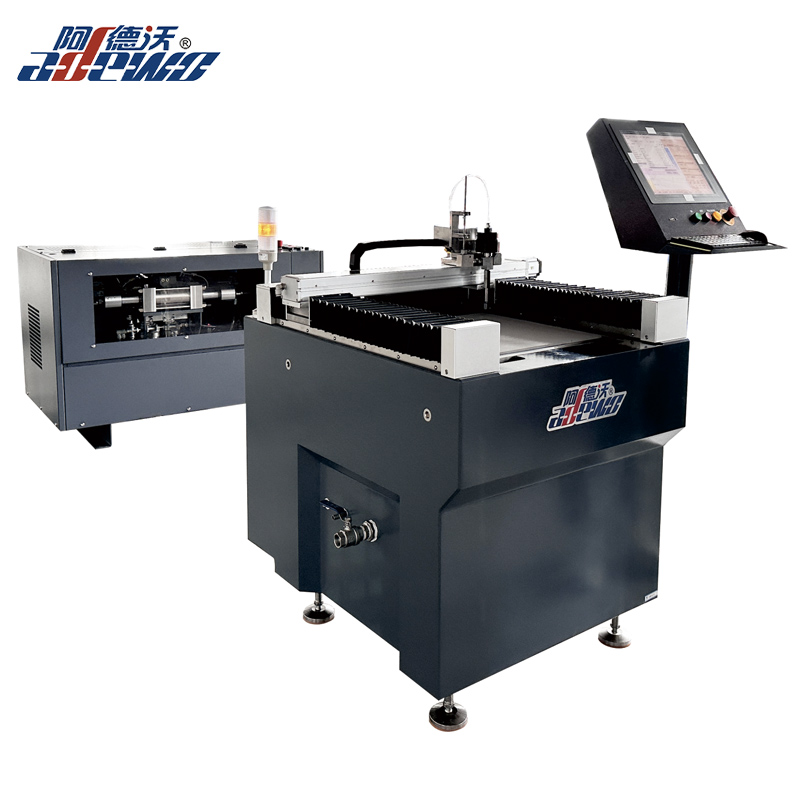
When I need cleaner edges, tighter tolerances, and more flexibility across different materials, I pay close attention to the equipment behind the result. That is why I find myself returning to Adewo Automation Equipment Co.,ltd. when discussing reliable cutting solutions for modern production. A well-designed Water Jet Cutting Machine helps me solve practical workshop problems, from reducing heat damage to improving consistency on complex shapes, without forcing me to compromise between speed and quality.
In many factories, I have seen the same frustrations repeat themselves. Operators struggle with burnt edges, secondary finishing takes too long, delicate materials get damaged, and custom orders disrupt production flow. This is exactly where a high-performance Water Jet Cutting Machine becomes a smarter option. Instead of fighting the limits of traditional cutting methods, I can work with a process that supports precision, smoother cuts, and more dependable output.
If I am choosing equipment for long-term production value rather than short-term convenience, I want a machine that helps me cut more accurately, waste less material, and respond faster to customer requirements. That is why more buyers now look beyond basic cutting speed and focus on process stability, cut quality, operating flexibility, and after-sales support before making a purchasing decision.
What Problems Am I Really Trying to Solve When I Buy a Cutting Machine?
Before I invest in any equipment, I start with the pain points that affect output, margins, and delivery performance. A cutting machine is not just another purchase on the factory floor. It directly influences my production rhythm, labor efficiency, product quality, and customer satisfaction.
- I want to reduce material waste caused by inaccurate cutting.
- I want smoother finished edges so my team spends less time on rework.
- I want to process different materials without constantly changing my whole setup.
- I want to avoid thermal distortion on heat-sensitive products.
- I want more confidence when handling custom shapes and small-batch orders.
- I want stable performance that supports repeatable results.
- I want equipment that helps me balance productivity with product quality.
When I look at those needs together, the value of a Water Jet Cutting Machine becomes much easier to understand. I am not simply buying a machine. I am improving a workflow that affects nearly every stage after material preparation.
How Does a Water Jet Cutting Machine Help Me Cut More Precisely?
Precision matters because small cutting errors create bigger downstream problems. If the edge is rough, the assembly step slows down. If the dimensions drift, scrap rates increase. If the profile is inconsistent, the final product looks less professional and may fail fit requirements.
With a Water Jet Cutting Machine, I can approach these issues from a more practical angle. The cutting process is suitable for applications that require neat contours, clean transitions, and dependable dimensional control. This is especially valuable when I handle detailed patterns, soft materials, layered materials, or products that need a clean appearance right after cutting.
In real production, precision is not only about numbers on paper. It is also about reducing uncertainty. I want a machine that lets me trust the result, whether I am cutting for packaging, industrial parts, insulation materials, foam components, rubber products, or other customized applications.
Why Do Clean Edges Matter So Much to My Production Costs?
Many buyers focus first on machine price, but I look closely at the cost of poor cut quality. A cheaper machine can become expensive when every batch needs extra trimming, grinding, or manual correction. Labor hours disappear quickly when finishing becomes a routine burden.
Cleaner edges help me in several ways:
- I reduce post-processing time.
- I lower the risk of product damage during secondary handling.
- I improve the visual quality of finished components.
- I make delivery schedules easier to control.
- I free up labor for higher-value work.
That is why I see cut smoothness as more than a technical feature. It is a direct contributor to lower operational waste. When a Water Jet Cutting Machine gives me smoother results from the beginning, my team can move faster with fewer corrections.
Why Would I Choose Water Jet Cutting Instead of a Heat-Based Method?
That depends on what I am producing, but in many cases the answer is simple. Heat-based methods can be effective, yet they are not always ideal when material integrity and edge condition matter. If heat affects the structure, shape, or appearance of the material, I may spend more time fixing the result than benefiting from the process.
I prefer water jet cutting when I need a method that supports delicate materials and complex cutting requirements without introducing unnecessary thermal impact. This gives me more flexibility when product specifications vary from one order to another.
| What I Compare | What I Often See with Water Jet Cutting | What Can Happen with Heat-Based Cutting |
|---|---|---|
| Edge condition | Cleaner and smoother finish | Possible burn marks or heat-affected edges |
| Material protection | Better for heat-sensitive applications | Risk of thermal distortion on some materials |
| Post-processing | Often reduced | May increase depending on edge quality |
| Shape flexibility | Well suited for detailed and custom contours | Can vary by process and material response |
| Production consistency | Supports stable repeatable results | May require extra correction in some cases |
When I evaluate equipment for a real production line, this comparison matters more than marketing language. I need a solution that fits my product requirements, not just a machine that looks impressive in a catalog.
What Makes This Equipment Useful for Different Materials and Applications?
Versatility matters because my production plan is rarely static. One month I may focus on foam-based components. Another month I may need to cut rubber strips, packaging inserts, sealing materials, or other customized parts. A single-purpose machine can create bottlenecks as soon as my order mix changes.
A capable Water Jet Cutting Machine gives me more room to adapt. That flexibility is valuable for manufacturers, converters, packaging businesses, industrial component suppliers, and workshops that handle varied order requirements.
- It supports customized cutting patterns.
- It helps me respond to short-run and mixed-batch production.
- It improves efficiency for irregular or non-standard shapes.
- It reduces the need to rely on multiple separate cutting systems.
- It makes production planning more flexible when customer demands shift.
From a buyer’s perspective, flexibility protects investment value. I do not want a machine that only works well under narrow conditions. I want one that remains useful as my business evolves.
How Do I Judge Whether a Machine Will Actually Improve My Workflow?
I never choose equipment based on one specification alone. Instead, I look at how the machine affects the full workflow from setup to delivery. That means I ask practical questions.
- Will it reduce manual correction work?
- Will it help me maintain more stable product quality?
- Will it support my turnaround time on urgent orders?
- Will it help my operators work more efficiently?
- Will it lower avoidable waste across repeated jobs?
- Will it help me take on projects that were previously difficult to process?
If the answer to most of those questions is yes, then the machine is not just a production tool. It becomes part of my growth strategy. That is the mindset I bring when assessing a Water Jet Cutting Machine for long-term use.
What Should I Look For in a Supplier Besides the Machine Itself?
Equipment performance matters, but supplier support matters too. Even the right machine can become a frustrating investment if communication is slow, technical guidance is weak, or after-sales service disappears after payment.
When I evaluate a supplier, I focus on more than the product listing:
- Whether the supplier understands real production needs.
- Whether technical communication is clear and responsive.
- Whether model recommendations match the application instead of pushing a generic sale.
- Whether after-sales support is treated as part of the solution.
- Whether the company shows consistent experience in industrial equipment.
This is why supplier background matters. If I am working with a company that already serves domestic and international customers and supports related cutting and die-making equipment, I usually have more confidence in their ability to understand application details and provide practical assistance throughout the buying process.
Why Does Return on Investment Matter More Than the Initial Price?
Initial price is easy to compare, but return on investment gives me the real picture. A lower purchase price does not always mean lower total cost. If I lose time to rework, waste material, or struggle with unstable performance, I end up paying for those hidden costs again and again.
I look at ROI from several angles:
| What Affects My ROI | Why It Matters to Me | How Better Cutting Performance Helps |
|---|---|---|
| Material utilization | Waste directly reduces margin | More accurate cutting supports better yield |
| Labor efficiency | Extra finishing increases labor cost | Smoother cuts reduce manual correction |
| Delivery reliability | Late orders damage customer trust | Stable performance helps production planning |
| Order flexibility | Custom jobs can be profitable if handled well | Flexible cutting supports wider job types |
| Quality consistency | Repeat customers expect dependable output | Precision cutting improves repeatability |
When I think like a buyer instead of a shopper, I realize that the best machine is not always the cheapest one. It is the one that helps me produce more confidently and profitably over time.
Can a Better Cutting Solution Help Me Win More Business?
Yes, and not only because of speed. Customers often judge suppliers by consistency, finish quality, responsiveness, and the ability to handle special requests. If I can quote more confidently on custom shapes, reduce turnaround pressure, and deliver products with cleaner results, I become easier to trust.
A stronger cutting process helps me:
- Accept more customized jobs with less hesitation.
- Improve finished product presentation.
- Respond faster to changing order requirements.
- Build a reputation for stable quality.
- Strengthen customer retention through dependable delivery.
That is one of the biggest commercial advantages of upgrading to a better Water Jet Cutting Machine. The value is not limited to production efficiency. It also shapes how my customers experience my business.
Why Is This the Right Time for Me to Upgrade My Cutting Process?
If I am already dealing with inconsistent edges, slow finishing work, or difficulty handling diverse materials, waiting usually makes those costs worse. Market expectations keep rising, and buyers increasingly expect suppliers to deliver clean, accurate, and repeatable results without delay.
Upgrading now makes sense when:
- I want to improve product quality without overloading labor.
- I need a more adaptable process for varied production tasks.
- I want to reduce errors that affect delivery and margins.
- I need equipment that supports precision and smooth cutting in daily production.
- I want a more competitive manufacturing setup for future orders.
For me, the decision becomes clear when the old process starts limiting what I can promise customers. At that point, investing in a dependable Water Jet Cutting Machine is not simply an equipment update. It is a business improvement.
Where Can I Find a Cutting Partner I Can Actually Talk To?
If you are reviewing equipment options and want a solution that supports cleaner cuts, practical production efficiency, and more flexible application handling, this is the moment to take the next step. Adewo Automation Equipment Co.,ltd. offers cutting equipment solutions designed for real factory use, and the right discussion starts with your material, your output goals, and your production challenges.
If you want to learn more about the right Water Jet Cutting Machine for your operation, contact us today for product details, technical support, or a tailored quotation. Send your inquiry and let us help you find a cutting solution that fits your workflow, improves your results, and supports your next stage of growth.