

Why Does Choosing the Right Flat Wire Rolling Mill Make Such a Big Difference in Product Quality?
2026-01-14
When I first started looking closely at flat wire production challenges, I noticed a pattern: many manufacturers were struggling not because of raw materials, but because their equipment could not keep up with precision demands. That was also when I gradually became familiar with GRM and its approach to rolling technology. In real production environments, a reliable Flat Wire Rolling Mill is not just a machine, it becomes the backbone of quality control, efficiency, and long-term consistency.
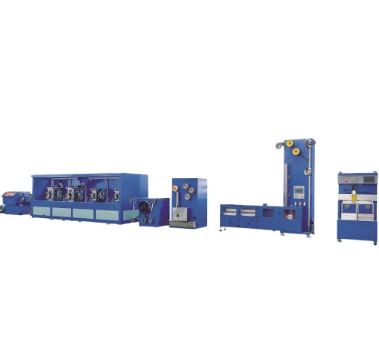
What Problems Do Manufacturers Commonly Face When Producing Flat Wire?
In my experience working with different production teams, the pain points tend to repeat themselves. Flat wire may look simple, but maintaining uniform thickness and surface finish over long runs is anything but easy without the right Flat Wire Rolling Mill.
- Inconsistent wire thickness leading to high rejection rates
- Surface scratches caused by unstable rolling pressure
- Frequent downtime due to difficult adjustments
- Limited flexibility when switching wire specifications
These issues often increase production costs quietly over time, which is why the equipment decision matters more than many buyers initially expect.
How Does a Modern Flat Wire Rolling Mill Improve Dimensional Accuracy?
What stood out to me when analyzing advanced rolling systems was how precision is built into the structure rather than added later as a workaround. A well-designed Flat Wire Rolling Mill focuses on stable roll alignment, controlled pressure distribution, and smooth material flow.
| Key Design Element | Impact on Flat Wire Quality |
|---|---|
| High-rigidity mill frame | Reduces vibration and ensures uniform thickness |
| Precision-ground rollers | Improves surface finish and dimensional consistency |
| Accurate adjustment mechanisms | Allows quick fine-tuning for different wire sizes |
From a practical standpoint, these features reduce manual intervention and help operators maintain stable output even during long production cycles.
Why Is Operational Flexibility So Important in a Flat Wire Rolling Mill?
Markets change, orders vary, and production lines rarely stay static. I have seen many factories struggle because their rolling mills were designed for only one specification. A flexible Flat Wire Rolling Mill allows manufacturers to respond faster without compromising quality.
- Faster changeover between wire widths and thicknesses
- Reduced setup time for small-batch orders
- Better compatibility with downstream processing equipment
This kind of adaptability directly supports both large-scale production and customized orders, which is increasingly important in competitive markets.
How Does Equipment Stability Affect Long-Term Production Costs?
One insight I often share with buyers is that initial price is only part of the equation. An unstable Flat Wire Rolling Mill can quietly increase maintenance costs and material waste year after year.
| Stability Factor | Cost Impact Over Time |
|---|---|
| Consistent rolling pressure | Lower scrap rate and material savings |
| Durable bearing systems | Reduced maintenance frequency |
| Smooth drive transmission | Less energy loss and wear |
Over the lifespan of a Flat Wire Rolling Mill, these factors can make a noticeable difference in total operating cost.
What Should Buyers Look for When Evaluating a Flat Wire Rolling Solution?
Based on what I have seen across different projects, a smart evaluation goes beyond brochures. It involves understanding how the machine performs under real working conditions.
- Proven performance with similar materials and wire sizes
- Ease of operation and adjustment for daily use
- Availability of technical support and spare parts
- Room for future upgrades or line expansion
This is also where manufacturers like GRM tend to stand out, as their design philosophy aligns closely with long-term production needs rather than short-term gains.
Is Now the Right Time to Upgrade Your Flat Wire Rolling Mill?
If rising quality requirements, tighter tolerances, or frequent order changes sound familiar, it may be time to reassess your current setup. A well-matched Flat Wire Rolling Mill can help stabilize output, reduce waste, and improve overall production confidence.
If you are exploring options or want to discuss how a rolling solution can be tailored to your specific application, feel free to contact us and leave an inquiry. I believe the right conversation at the right time can lead to measurable improvements on your production floor.