

Why Does the Right Stone Polishing Machinery Make Such a Big Difference?
2026-04-07
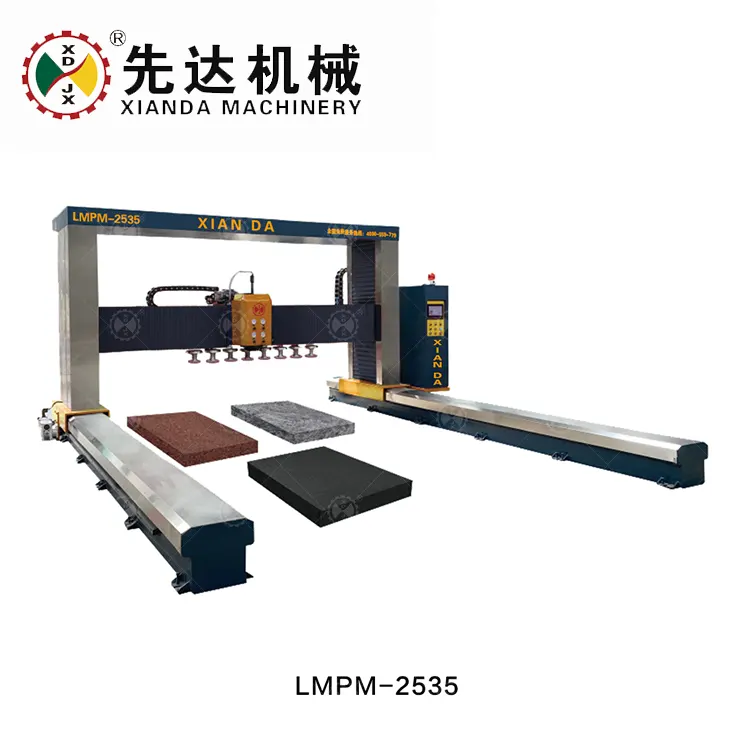
When I look at what today’s stone processors truly need, I do not just think about gloss level or machine speed. I think about consistency, labor efficiency, edge quality, rework reduction, and the ability to handle different materials without slowing production down. That is exactly where Fujian Xianda Machinery Co.,Ltd. gradually comes into the picture, because manufacturers searching for dependable surface-finishing solutions are no longer satisfied with rough output or unstable polishing results. They want Stone Polishing Machinery that helps them produce cleaner surfaces, smoother edges, and more reliable finishes across marble, granite, tombstone materials, slabs, and decorative stone products.
In my view, the real value of modern Stone Polishing Machinery is not limited to polishing alone. A well-designed machine helps reduce operator fatigue, improve repeatability, support scalable output, and protect product quality from one batch to the next. For workshops that want to grow and factories that need to stay competitive, that difference is not small at all.
What Challenges Do Stone Processors Usually Face?
I often see buyers focus first on price, but their real pain points usually appear later in production. Surface finishing is one of the most sensitive stages in stone processing, and even a small inconsistency can affect the final selling value of the product. If polishing is uneven, if tool change is inconvenient, or if the machine cannot adapt well to different materials, production becomes expensive very quickly.
- Uneven gloss on slabs or finished stone products
- Low efficiency when switching between polishing stages
- High dependence on skilled manual labor
- Surface scratches caused by unstable pressure or vibration
- Difficulty handling different materials such as marble, granite, and bluestone
- Long downtime caused by complicated operation or maintenance
- Inconsistent output when production volume increases
These are exactly the issues that push many buyers to replace manual-heavy polishing methods with automated or intelligent equipment. In other words, they are not simply buying a machine. They are buying better control over quality, delivery, and operating cost.
How Can Stone Polishing Machinery Improve Daily Production?
I believe the best polishing equipment should solve practical workshop problems, not create new ones. A capable polishing system can improve the finishing process in several ways at once. First, it keeps motion stable, which matters because stone surfaces react badly to vibration and inconsistent contact pressure. Second, it simplifies operation so that workers can manage the machine more confidently. Third, it supports more predictable polishing performance across different product types.
That is why many processors now look for Stone Polishing Machinery with features such as automatic tool changing, programmable controls, integrated structures, and reduced reliance on manual polishing. These functions are valuable not because they sound advanced, but because they help workshops move from variable output to controlled output.
From a production perspective, the advantages are clear:
- More uniform surface finishing from piece to piece
- Better productivity for medium and high-volume orders
- Less wasted material caused by polishing defects
- Reduced labor intensity for operators
- Greater process stability for repetitive work
- Improved compatibility with modern factory workflows
When I evaluate equipment in this category, I always look at whether it helps the customer move faster without losing finish quality. That balance is where real purchasing value appears.
Why Do Buyers Care So Much About Automation and Stability?
Because polishing is not only about making stone look bright. It is about creating a finish that meets commercial expectations every single time. If a machine performs well in the morning but becomes unstable later in the day, the result is rework, delays, and customer complaints. That is why stability matters just as much as speed.
Modern polishing solutions are increasingly designed around more intelligent control logic, more integrated machine structures, and smoother operating performance. For many stone producers, the ability to maintain stable polishing under continuous production is more valuable than chasing the highest theoretical speed.
I would summarize the buying logic this way:
| Buyer Concern | Why It Matters | Expected Benefit |
| Stable machine structure | Helps reduce vibration during polishing | More consistent surface quality |
| Easy operation | Shortens training time and lowers operating difficulty | Better labor efficiency |
| Automatic tool change | Improves workflow continuity between polishing stages | Higher productivity |
| Programmable control | Supports repeatable polishing processes | Reduced variation between batches |
| Adaptability to different materials | Allows one machine to serve multiple product needs | Greater production flexibility |
When a buyer starts viewing equipment through this lens, it becomes much easier to understand why reliable Stone Polishing Machinery can directly influence both output quality and business growth.
Which Product Scenarios Benefit Most From Better Polishing Equipment?
Not every buyer is producing the same type of stone product, so it is important to think in application terms rather than abstract machine terms. In my experience, polishing equipment becomes especially valuable in production environments where finish quality influences the final selling price or project acceptance standard.
- Stone slabs requiring smoother and more attractive surfaces
- Tombstones that need neat finishing and professional presentation
- Decorative stone components used in architectural applications
- Monument processing that demands precision and consistency
- Custom stone products where appearance quality affects customer satisfaction
For these applications, a polishing machine is not just a supporting tool. It is part of the product value chain. A better finish can improve visual appeal, strengthen customer trust, and reduce rejection rates. That is a serious commercial advantage in a market where appearance and workmanship often shape buying decisions.
What Should I Look For Before Choosing a Polishing Machine?
I do not think buyers should choose only by machine appearance or quotation alone. The better approach is to match machine capability with production reality. A workshop with flexible custom orders may have different priorities than a factory building a more automated line. The right decision comes from understanding your own operating conditions first.
Here are the questions I would ask before making a purchase:
- What stone materials do I process most often?
- Do I mainly polish slabs, tombstones, or other finished products?
- How important is automation to my current labor structure?
- Do I need easier operation for faster worker training?
- Will I scale production in the near future?
- Do I need more stable repeatability across large order volumes?
- How important is after-sales communication and technical support?
These questions matter because the best machine is not simply the most advanced one. It is the one that matches your daily workload, finish requirements, and growth plan. That is where practical purchasing logic beats generic sales language.
How Does a Smarter Machine Help Reduce Hidden Costs?
One of the biggest mistakes I see in equipment purchasing is ignoring hidden cost. Many buyers compare only the initial machine price, but the long-term cost of unstable polishing is often much higher. Rework, wasted abrasives, downtime, inconsistent output, and labor inefficiency all eat into margins.
That is why I see intelligent or integrated Stone Polishing Machinery as a cost-control tool as much as a finishing tool. When operation is simpler and polishing performance is more stable, factories can reduce a surprising number of routine losses.
| Hidden Cost Area | What Causes It | How Better Machinery Helps |
| Rework | Uneven finish or scratches | Supports more consistent polishing results |
| Labor inefficiency | Manual-heavy polishing process | Improves automation and ease of operation |
| Downtime | Complex operation or unstable performance | Promotes smoother workflow and easier handling |
| Material loss | Surface defects during finishing | Helps protect product quality |
| Training cost | Difficult machine learning curve | Reduces operator adaptation time |
If I were buying for a professional workshop or factory, I would take these ongoing operating costs very seriously. Over time, they can matter just as much as the machine itself.
Why Is Supplier Understanding Just As Important As Machine Performance?
A good machine matters, but a supplier who understands stone processing matters too. I always think buyers should pay attention to whether the manufacturer understands actual production needs instead of just listing technical selling points. That difference becomes obvious in communication. A supplier with real industry familiarity will talk about efficiency, surface consistency, operation convenience, material compatibility, and practical finishing results. Those are the conversations that help buyers make smarter decisions.
For companies exploring stronger polishing solutions, Fujian Xianda Machinery Co.,Ltd. attracts attention because its product direction is closely tied to stone processing applications. That makes it easier for buyers to connect equipment features with real production goals instead of looking at isolated machine descriptions.
In B2B purchasing, that connection matters. A buyer wants to know not only what the machine is, but also what the machine can improve in actual production. That is where trust starts to build.
Can the Right Stone Polishing Machinery Support Business Growth?
Yes, and I think this point is often underestimated. Better polishing equipment can do more than improve one process. It can help a company take on more demanding orders, improve delivery consistency, and present a stronger image to customers who care about finish quality. In many cases, polishing quality becomes part of the brand impression buyers carry with them.
If your polished stone products look more refined, more consistent, and more professionally finished, you are in a better position to compete for repeat business. That is especially important in markets where customers compare not only price, but visible workmanship.
I would describe the business impact like this:
- Higher product consistency supports stronger customer confidence
- Better finish quality can increase perceived product value
- Improved efficiency helps shorten delivery cycles
- Reduced defects can protect profit margin
- Smarter production systems make scaling easier
So when I think about purchasing Stone Polishing Machinery, I do not see it as a narrow equipment decision. I see it as a quality and competitiveness decision.
Why Is Now a Good Time to Upgrade My Stone Finishing Process?
Because customer expectations are not getting lower. Buyers want cleaner surfaces, better consistency, and faster response times. At the same time, labor pressure and operating costs continue to challenge manufacturers. If polishing remains too dependent on variable manual work, growth becomes harder to manage.
Upgrading does not always mean overcomplicating production. Sometimes it simply means choosing a more reliable, more efficient machine that matches today’s manufacturing expectations. If your current polishing process creates bottlenecks, quality variation, or unnecessary labor burden, then improving that stage may be one of the most practical upgrades you can make.
That is why I would encourage serious stone processors to look beyond basic machine descriptions and focus on what truly matters in daily use: stability, efficiency, adaptability, and finish quality. Those are the qualities that help equipment keep delivering value long after installation.
How Can I Take the Next Step With Confidence?
If you are comparing equipment for slab polishing, tombstone finishing, or other stone surface applications, this is the right time to evaluate what your production line truly needs. A dependable polishing solution can help you improve consistency, reduce hidden costs, and strengthen the overall quality of your finished products.
If you want to learn more about a practical and production-focused Stone Polishing Machinery solution, now is the time to act. Reach out to Fujian Xianda Machinery Co.,Ltd. to discuss your material types, production goals, and finishing requirements. If you are ready to improve output quality and efficiency with a more reliable polishing process, please contact us today and send your inquiry for detailed support.