

Why Does the Right UV Curing Machine Matter More Than Most Manufacturers Expect?
2026-03-25
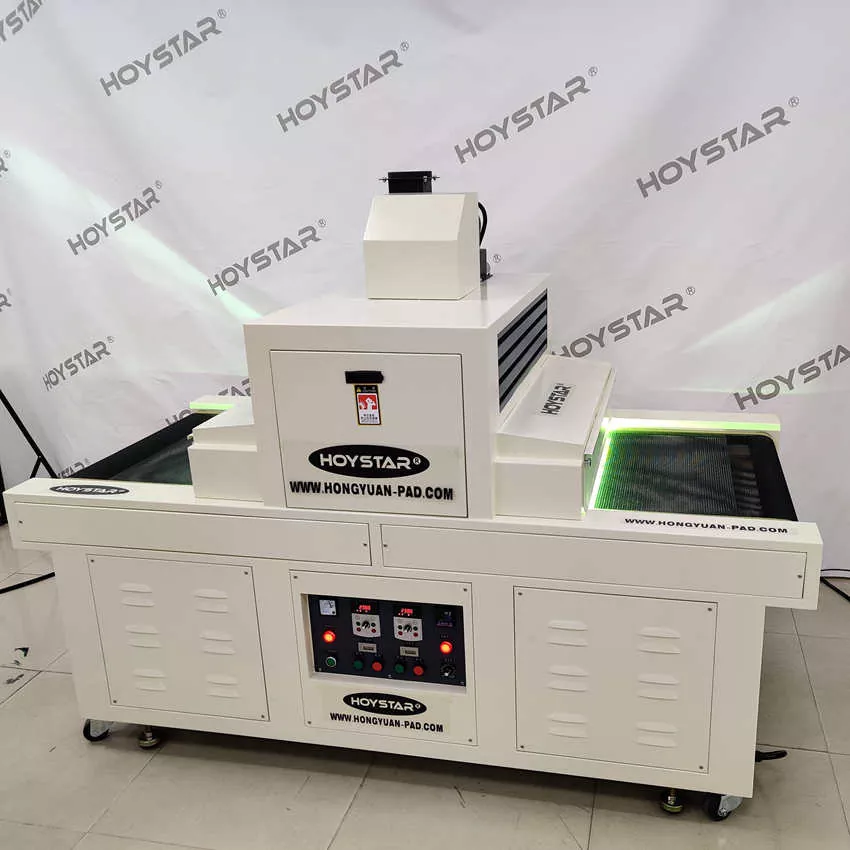
When I look at modern printing and coating workflows, I often notice the same bottleneck appearing again and again: curing. A print line may look efficient on paper, yet the final result still suffers from slow drying, inconsistent gloss, weak adhesion, or damaged surfaces during handling. That is where Dongguan Hoystar Machinery Co., Ltd. gradually comes into the conversation, not as a forced name drop, but as a practical manufacturer that understands how much production stability depends on choosing the right UV Curing Machine. In my view, the real value of a well-designed UV Curing Machine is not only speed, but also consistency, lower defect rates, and a more predictable production rhythm.
Why Do So Many Production Lines Still Struggle With Curing Efficiency?
I have seen many manufacturers invest heavily in printing, coating, and finishing equipment, yet still lose time and money in the last stage of the process. The issue usually is not a lack of effort. It is often a mismatch between production needs and curing capability.
- I see small workshops using oversized equipment that wastes energy and floor space.
- I see larger factories relying on slow drying methods that delay packaging and shipment.
- I see curved or irregular products receiving uneven exposure, which affects appearance and durability.
- I see operators dealing with rework because coatings look dry on the surface but do not cure evenly underneath.
These problems may look manageable at first, but they gradually affect daily output, labor efficiency, and customer satisfaction. That is why I always treat curing as a strategic step rather than a simple finishing task.
How Can A UV Curing Machine Solve Common Manufacturing Pain Points?
What makes a UV Curing Machine attractive is its ability to transform liquid UV inks or coatings into a durable finish within a much shorter process window. In real production terms, that means I can move parts faster, reduce waiting time between steps, and improve surface quality without dragging down the rest of the line.
- I can shorten turnaround time for printed or coated products.
- I can reduce the risk of smudging, sticking, or surface damage during transport.
- I can improve gloss, adhesion, and finish consistency on the final product.
- I can make the workflow easier to standardize across repeated orders.
- I can support better production planning because curing becomes more predictable.
For manufacturers working with screen printing, pad printing, labels, plastic parts, bottles, promotional items, packaging, or coated components, this kind of speed and control often makes a noticeable difference.
What Should I Look For Before Choosing A Machine For My Production Line?
I do not think buyers should choose curing equipment based only on lamp power or machine size. That is too narrow. A useful purchasing decision should match the real production environment.
| What I Evaluate | Why It Matters | What It Affects |
|---|---|---|
| Product size and shape | Flat parts, bottles, jars, and special shapes need different curing approaches | Uniformity, finish quality, fixture design |
| Production volume | Small batches and continuous lines require different machine structures | Investment return, cycle time, labor use |
| Material and coating type | Different substrates react differently under UV exposure | Adhesion, gloss, surface durability |
| Workshop layout | Space limits can change the ideal machine footprint | Installation flexibility, workflow efficiency |
| Safety and maintenance | Stable operation matters just as much as curing speed | Downtime, operator confidence, long-term reliability |
When I evaluate suppliers, I prefer companies that can discuss these points clearly instead of pushing a one-size-fits-all answer.
Which Type Of Equipment Works Best For Small Orders And Flexible Jobs?
For short runs, sample work, custom printing, and small-batch coated products, I usually find compact curing equipment more practical. A smaller-format system can be easier to install, easier to operate, and more cost-efficient for businesses that do not need a large continuous line every day.
This is one reason buyers pay attention to suppliers like Dongguan Hoystar Machinery Co., Ltd., because a practical compact solution can help businesses handle promotional products, small plastic components, labels, and other light-volume jobs without overinvesting in oversized machinery.
From a production standpoint, a compact UV Curing Machine can offer several advantages:
- I can save floor space in a crowded workshop.
- I can train operators more quickly.
- I can manage trial production and custom orders more efficiently.
- I can keep capital spending under control while still improving output quality.
When Does A High Output System Become The Smarter Choice?
Once production moves from flexible batch work to more continuous manufacturing, I think the priorities change. At that point, speed alone is not enough. I need stable exposure, a reliable conveying process, and a machine that can integrate smoothly with the rest of the line.
For larger-scale production, a more robust UV Curing Machine can help reduce queue time between printing and packing. That matters in operations where products must move quickly without waiting for conventional drying. In busy environments, even a small reduction in handling delay can improve daily throughput and lower the chance of defects caused by premature stacking or transport.
| Production Scenario | What I Usually Need | Suitable Direction |
|---|---|---|
| Samples and short runs | Fast setup and simple operation | Compact desktop solution |
| Daily medium-volume jobs | Balanced speed and footprint | Standard conveyor-based model |
| Continuous factory output | Stable exposure and durable transport system | Large industrial configuration |
| Curved or irregular products | Consistent curing across the full surface | Customized or specialized design |
Why Do Irregular Shapes Need More Than A Standard Setup?
Flat products are usually easier to cure than bottles, jars, containers, and shaped plastic parts. I think this is where many buyers underestimate the challenge. A standard tunnel design may not deliver equal exposure across a curved surface, and that can lead to patchy curing, weak adhesion, or an inconsistent finish.
For that reason, I pay close attention to whether a supplier can offer application-specific solutions. Adjustable fixtures, rotating structures, and better exposure control are often more important than raw machine size. When the product geometry is complicated, curing accuracy becomes part of product quality control.
- I want every visible area to receive consistent UV exposure.
- I want coatings to cure evenly on both functional and decorative surfaces.
- I want fewer rejected units caused by gloss variation or incomplete curing.
- I want a system that fits the product instead of forcing the product to fit the system.
What Makes Buyers Trust A Supplier Beyond The Machine Itself?
I rarely judge a supplier by the brochure alone. I care about manufacturing discipline, support responsiveness, and whether the company understands real factory use. Equipment may look similar online, but the difference often appears after installation.
That is why I look for signs of a more complete service mindset, such as:
- Clear communication before purchase
- Reasonable customization ability
- Attention to electrical and operational safety
- Testing before shipment
- Long-term technical support after delivery
In my experience, these factors reduce risk for the buyer. They also make it easier to keep production stable after the machine arrives.
How Can The Right Supplier Help Reduce Operating Risk?
For many buyers, the machine is only part of the decision. I also think about whether the equipment can run safely and whether the supplier can still help when production questions appear later. Safety covers, heat control, stable electrical design, and practical support all contribute to a smoother ownership experience.
When a manufacturer can offer a warranty, technical guidance, and practical shipping protection, I take that seriously. It means the company is thinking beyond the initial sale. That matters for overseas buyers who need confidence before placing an inquiry.
Why Is This A Better Investment Than Sticking With Slower Drying Methods?
Some factories stay with older drying methods simply because the system is already familiar. I understand that hesitation, but I do not think familiarity always equals efficiency. If curing takes too long, limits output, or creates avoidable rework, the hidden cost builds over time.
A well-matched UV Curing Machine can improve more than one step in production. It can support better scheduling, reduce product handling risk, shorten lead times, and give customers a more consistent finished result. When I compare those benefits against ongoing delays and defects, the long-term value becomes easier to see.
Why Should I Talk To Dongguan Hoystar Machinery Co., Ltd. Before Making A Final Decision?
If I were choosing a curing solution for printing or coating work today, I would not settle for generic equipment advice. I would want a supplier that can discuss my product type, output target, workshop condition, and curing expectations in a practical way. Dongguan Hoystar Machinery Co., Ltd. stands out as a manufacturer focused on printing-related machinery and curing applications, which gives buyers a more relevant starting point when they need a machine that actually fits the job.
If you are comparing options for a new UV Curing Machine, upgrading an older line, or trying to solve drying and finish problems in your current production, now is the right time to take the next step. Contact us to discuss your application, request a tailored recommendation, and leave your inquiry today so you can find a curing solution that matches your workflow, output goals, and product requirements with greater confidence.