

Why Is a High-Performance Machining Center the Key to Staying Competitive in Modern Manufacturing?
2026-03-03
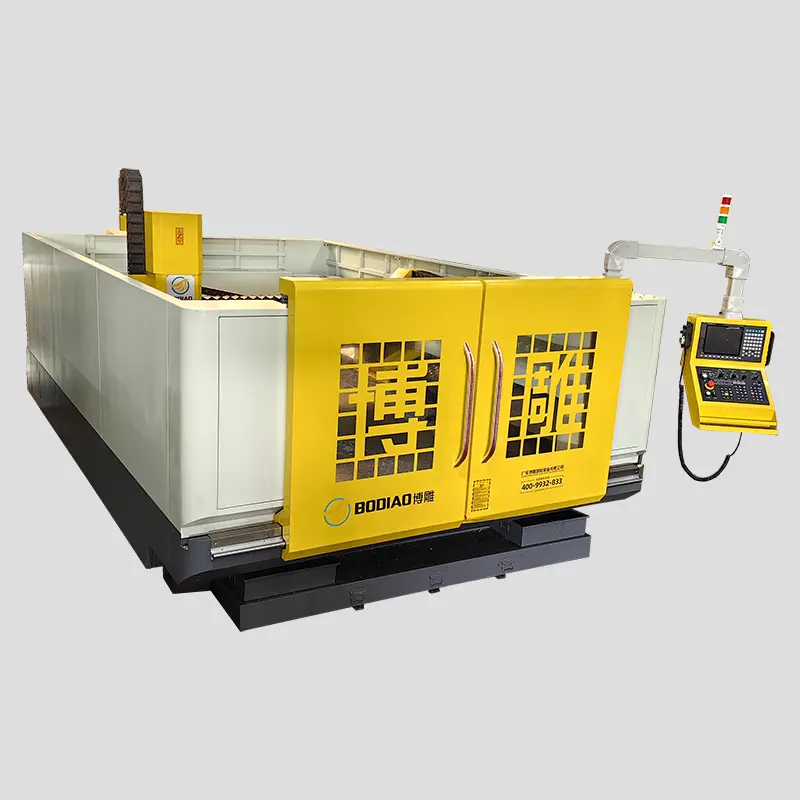
When I first stepped deeper into precision manufacturing, I quickly realized that equipment decisions define long-term competitiveness. Over the years, I have seen how Guangdong Bodiao Intelligent Equipment Co., Ltd. gradually integrated advanced CNC solutions into real production environments, and how the right Machining Center transformed efficiency, quality control, and delivery timelines. In today’s market, investing in a reliable Machining Center is no longer optional for manufacturers who want consistent accuracy and scalable output.
Why Do Manufacturers Struggle With Accuracy and Efficiency at the Same Time?
Many workshops face the same frustration: increasing order volumes while tolerances become tighter. Traditional single-function machines often require multiple setups, manual repositioning, and secondary finishing. Each step introduces potential error and increases labor costs.
When I evaluate production bottlenecks, I usually find three recurring pain points:
- Frequent repositioning leading to dimensional deviations
- Extended production cycles caused by tool changes and manual intervention
- Inconsistent surface finish across batch production
A modern Machining Center addresses these challenges by combining multi-axis control, automatic tool changers, and stable structural design in one integrated platform. Instead of separating milling, drilling, tapping, and contouring into multiple processes, we complete them within a single clamping operation.
How Does a Machining Center Improve Precision and Repeatability?
Precision is not just about spindle speed or control software. It depends on machine rigidity, thermal stability, and motion accuracy. In my experience, a well-designed Machining Center delivers repeatable results because every structural component works together to minimize vibration and thermal deformation.
Here is how performance improvements typically show up in real production:
| Performance Factor | Traditional Equipment | Advanced Machining Center |
| Positioning Accuracy | Manual adjustment required | High-precision servo control system |
| Tool Management | Manual tool replacement | Automatic tool changer reduces downtime |
| Surface Finish Consistency | Varies by operator skill | Stable spindle speed and rigid frame design |
| Batch Production Stability | High variation risk | Programmable and repeatable workflow |
By consolidating multiple machining steps into one intelligent system, the Machining Center reduces cumulative error. That directly translates into fewer rejected parts and stronger customer confidence.
What Makes Multi-Axis Capability So Important for Complex Parts?
Customer demand is shifting toward customized components, intricate contours, and lightweight structural designs. I have found that three-axis equipment often reaches its limitations when dealing with complex geometries or deep cavities.
With a multi-axis Machining Center, we can:
- Reduce the number of setups for complex components
- Improve machining efficiency for curved or angled surfaces
- Achieve tighter tolerances on multi-sided parts
- Enhance overall productivity without increasing floor space
Instead of repositioning the workpiece several times, the machine adjusts orientation automatically. That shift alone reduces human intervention and dramatically lowers the risk of alignment errors.
How Can a Machining Center Lower Long-Term Production Costs?
Some buyers initially focus on the purchase price, but I always recommend looking at the total cost of ownership. A well-built Machining Center lowers long-term expenses in several measurable ways.
- Reduced labor costs through automation
- Shorter production cycles and faster delivery
- Lower scrap rate due to improved precision
- Extended machine lifespan with stable structural design
When downtime decreases and output per shift increases, the return on investment becomes visible much sooner than many expect. Over time, the equipment pays for itself through consistent productivity gains.
Why Does Structural Design Matter More Than Spindle Speed Alone?
High spindle speed is attractive in specifications, but structural rigidity determines whether that speed can be fully utilized. In practice, vibration control, guide rail stability, and thermal compensation systems play critical roles in maintaining dimensional accuracy.
From what I have observed, manufacturers who prioritize machine frame stability and precision motion systems experience fewer maintenance interruptions. A robust Machining Center should integrate:
- Rigid cast structure for vibration absorption
- Precision linear guideways or box ways for smooth motion
- Reliable CNC control system for accurate interpolation
- Efficient cooling and lubrication systems
These elements ensure the machine performs consistently even during continuous operation.
How Does Intelligent Automation Strengthen Production Management?
Modern manufacturing relies heavily on digital integration. I see increasing demand for equipment that connects seamlessly with CAD/CAM systems and factory management platforms.
An advanced Machining Center allows us to:
- Upload and modify machining programs quickly
- Monitor tool wear and maintenance schedules
- Standardize production across different shifts
- Improve traceability for quality control audits
When machines communicate with digital systems, production planning becomes more predictable and scalable. This level of automation supports sustainable growth without sacrificing quality.
Is Investing in a Machining Center the Right Move for Your Business?
If you are facing increasing order complexity, tighter deadlines, or rising labor costs, upgrading to a high-quality Machining Center may be the strategic decision that reshapes your production capability. From precision improvement to cost optimization, the advantages extend beyond basic machining.
I always encourage manufacturers to evaluate their current workflow and identify inefficiencies that stem from outdated equipment. The right solution can enhance competitiveness, stabilize quality, and open new market opportunities.
If you are exploring how a professional Machining Center can elevate your operations, we welcome you to contact us for detailed technical consultation and tailored solutions. Share your machining requirements, and let us help you build a more efficient and future-ready production line.