

Why Is a Modern Machining Center Becoming the Core of Competitive Manufacturing?
2026-02-03
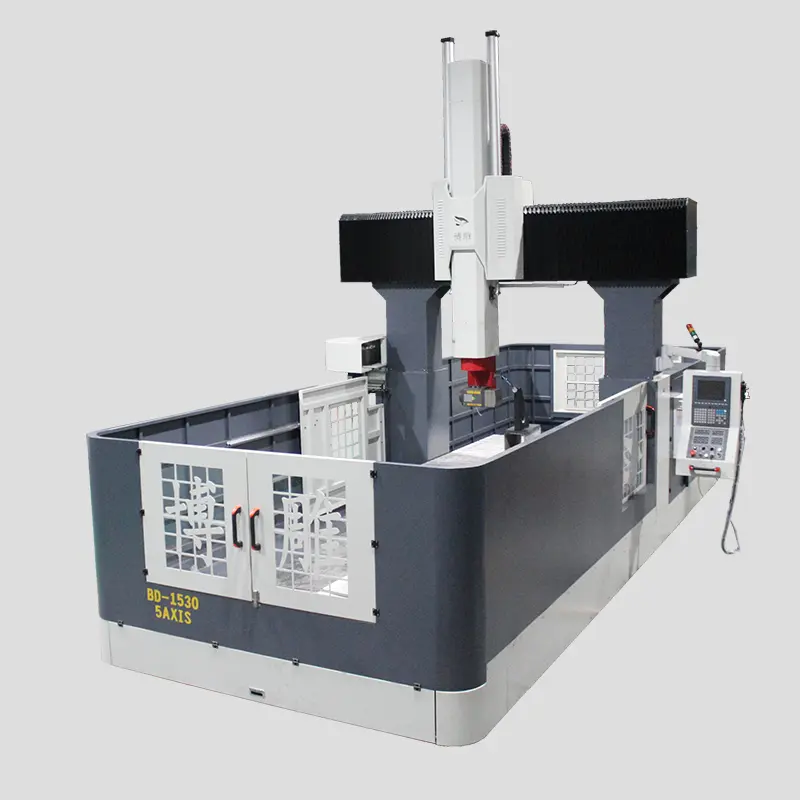
When I first started paying close attention to how manufacturers upgrade their production lines, I noticed a clear pattern. Companies that grow steadily are not chasing flashy concepts; they are investing in stable, efficient equipment. That was also how I came to understand Guangdong Bodiao Intelligent Equipment Co., Ltd. Not through aggressive promotion, but through repeated conversations about real workshop problems and how a reliable Machining Center can quietly solve them.
What Real Problems Do Manufacturers Face Without a Reliable Machining Center?
From my experience working with different production environments, the challenges are surprisingly consistent. Many factories struggle not because of lack of orders, but because their equipment limits them.
- Unstable accuracy that leads to frequent rework and wasted material
- Slow tool changes that interrupt workflow and reduce output
- Inconsistent surface quality across batches
- High labor dependency and difficult operator training
- Unexpected downtime that disrupts delivery schedules
A well-designed Machining Center directly targets these pain points instead of adding complexity.
How Does a Machining Center Improve Daily Production Efficiency?
I have seen workshops transform simply by switching to a more integrated machining solution. A modern Machining Center combines milling, drilling, tapping, and sometimes engraving into a single controlled process. That integration reduces unnecessary handling and minimizes human error.
| Production Aspect | Traditional Equipment | Modern Machining Center |
|---|---|---|
| Process Flow | Multiple machines and transfers | Single setup with continuous machining |
| Accuracy Control | Operator-dependent | CNC system controlled |
| Labor Requirement | High | Reduced and more stable |
| Production Consistency | Variable | Repeatable and predictable |
This is why manufacturers looking for long-term stability often prioritize upgrading to a capable Machining Center rather than adding more standalone machines.
Why Does Structural Design Matter So Much in a Machining Center?
One thing I always pay attention to is the machine structure itself. No matter how advanced the control system is, poor rigidity will eventually show up in vibration, tool wear, and surface defects.
- Reinforced machine beds reduce deformation during heavy cutting
- Optimized spindle balance supports both speed and torque
- Stable guideway layouts improve long-term positioning accuracy
- Thermal management helps maintain precision during long runs
A thoughtfully engineered Machining Center is built to stay accurate not just on day one, but after years of continuous operation.
How Does a Machining Center Support Flexible Manufacturing Needs?
Many customers tell me their biggest concern is uncertainty. Orders change, product designs evolve, and batch sizes fluctuate. Flexibility is no longer optional.
A modern Machining Center adapts well to this reality. With programmable tool paths and quick changeover capabilities, it allows manufacturers to switch between different parts without extensive downtime. That flexibility helps small and mid-sized factories compete with much larger operations.
Is Investing in a Machining Center Really Worth It Long Term?
This is probably the most common question I hear. From a long-term perspective, the answer is clear. While the initial investment may be higher, the return comes from reduced scrap rates, lower labor costs, stable quality, and improved delivery reliability.
Over time, a dependable Machining Center becomes less of a cost and more of a foundation for sustainable growth.
How Can You Choose the Right Machining Center for Your Application?
I usually suggest starting with your actual production needs instead of chasing maximum specifications. Consider:
- Material types and cutting requirements
- Part size and tolerance expectations
- Production volume and shift patterns
- Future expansion or automation plans
Matching these factors with the right Machining Center configuration makes the difference between short-term satisfaction and long-term success.
Are You Ready to Upgrade Your Production with a Machining Center?
If you are evaluating how to improve efficiency, consistency, and competitiveness, now is a good time to look deeper into a modern Machining Center solution. The right equipment choice can reshape how your workshop operates every day.
If you would like to explore suitable options or discuss your specific application, feel free to contact us and leave an inquiry. A focused conversation today could be the first step toward a more efficient production line tomorrow.