

Why Is a Strip Rolling Mill the Key to Consistent High-Quality Metal Strip Production?
2026-02-26
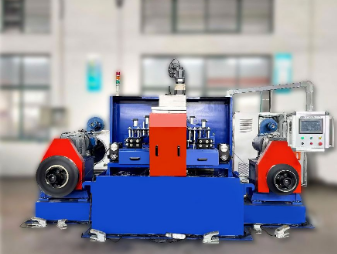
When I first began searching for ways to improve production stability and dimensional accuracy in strip processing, I realized how critical equipment selection truly is. Over time, as GRM Machinery gradually introduced advanced rolling technologies into the market, I had the opportunity to see how a well-designed Strip Rolling Mill can completely transform output quality, efficiency, and long-term profitability. In this article, I want to share practical insights based on real production challenges and explain why investing in a modern Strip Rolling Mill makes measurable business sense.
Are Inconsistent Thickness and Surface Defects Slowing Down Your Production?
One of the most common problems I encounter in strip processing is inconsistent thickness across the width of the material. Even minor deviations can result in rejected batches, downstream forming issues, and increased scrap rates. Surface defects such as waviness, edge cracking, or uneven tension only make the situation worse.
A high-performance Strip Rolling Mill addresses these issues through:
- Precision roll gap control systems
- Advanced hydraulic automatic gauge control
- Stable tension regulation between stands
- Optimized roll alignment and rigidity
- Integrated monitoring for real-time thickness adjustment
When I compare older systems with newer generation rolling equipment, the difference is immediately visible. Thickness tolerances become tighter, surface finish improves, and operators spend less time correcting errors manually.
How Does a Modern Strip Rolling Mill Improve Operational Efficiency?
Efficiency is not just about speed. It is about stable production at higher throughput without sacrificing quality. A properly engineered Strip Rolling Mill increases productivity through intelligent mechanical design and automation.
From my experience, the main efficiency advantages include:
- Higher rolling speeds with reduced vibration
- Lower downtime due to robust bearing and gearbox systems
- Quick roll change mechanisms
- Energy-efficient drive systems
- Automation integration with upstream and downstream equipment
Instead of relying on operator intuition alone, a well-designed Strip Rolling Mill uses data-driven control logic. This minimizes variation between shifts and ensures consistent output regardless of operator experience.
What Technical Features Should You Evaluate Before Choosing a Strip Rolling Mill?
Whenever I advise clients on equipment selection, I focus on structural integrity, control systems, and adaptability. Not all rolling mills are built with the same level of engineering precision.
| Evaluation Factor | Why It Matters | Operational Impact |
| Mill Stand Rigidity | Reduces deflection under load | Improves thickness accuracy |
| Roll Material and Heat Treatment | Enhances wear resistance | Extends service life |
| Hydraulic AGC System | Maintains constant strip thickness | Reduces scrap rate |
| Drive System Stability | Ensures smooth torque transmission | Prevents strip breakage |
| Automation Compatibility | Supports digital integration | Enables smart factory upgrades |
When I evaluate a Strip Rolling Mill, I always look beyond initial cost. Long-term reliability and performance stability are what ultimately protect margins.
Can a Strip Rolling Mill Reduce Long-Term Production Costs?
Many buyers initially focus on equipment price. However, the real question is total cost of ownership. A poorly engineered mill may appear affordable at first but generate hidden costs through maintenance, downtime, and material waste.
Here is what I have observed when companies upgrade to a high-quality Strip Rolling Mill:
- Reduced maintenance frequency due to reinforced structural components
- Lower energy consumption through optimized drive systems
- Less scrap material from accurate thickness control
- Improved yield rates in downstream forming or stamping processes
- Stronger competitiveness in markets requiring tight tolerance standards
Over several production cycles, these savings often exceed the initial investment difference.
Why Is Customization Important for Different Strip Applications?
Not all strip production is the same. Carbon steel, stainless steel, aluminum, copper, and special alloys each require different rolling forces, temperature controls, and surface treatment considerations.
A flexible Strip Rolling Mill should offer:
- Adjustable rolling force ranges
- Multiple stand configurations
- Tailored roll surface treatments
- Compatibility with coilers and tension reels
- Optional cooling and lubrication systems
In my experience, manufacturers that invest in adaptable rolling solutions can respond more quickly to changing market demands. Whether producing ultra-thin precision strip or heavier industrial material, flexibility directly translates into new business opportunities.
Is Automation the Future of Strip Rolling Mill Operations?
Digital integration is no longer optional. Today’s production environments demand traceability, data transparency, and predictive maintenance. A modern Strip Rolling Mill integrates seamlessly with PLC systems and centralized monitoring platforms.
Through real-time data analysis, operators can:
- Track rolling force and temperature fluctuations
- Identify abnormal vibration patterns
- Optimize pass schedules
- Reduce unplanned shutdowns
- Improve overall equipment effectiveness
I have seen how predictive diagnostics alone can significantly reduce unexpected downtime. That level of control creates confidence in long-term production planning.
Are You Ready to Upgrade Your Strip Rolling Mill for Higher Performance?
Choosing the right Strip Rolling Mill is not simply a machinery purchase. It is a strategic investment in product quality, operational stability, and future scalability. As global markets demand tighter tolerances and higher efficiency, equipment capability becomes a competitive advantage rather than just a production tool.
If you are evaluating solutions to improve strip thickness consistency, surface finish, and production efficiency, now is the right time to take the next step. I encourage you to explore advanced rolling solutions and see how they align with your production goals. For detailed specifications, customized configurations, and technical consultation, please contact us today. Let us discuss how the right Strip Rolling Mill can support your long-term growth and operational success.