

Why Is an Industrial Water Defrosting Air Cooler Ideal for Cold Storage Facilities
2026-02-28
Maintaining consistent temperatures in cold storage facilities is a constant battle against frost buildup. Traditional defrost methods can introduce heat that compromises product integrity and drives up energy bills. This is why the Industrial Water Defrosting Air Cooler from HANYORK has become the preferred solution for facility managers seeking reliability and efficiency. By using water to wash away frost, these units maintain steady temperatures far better than electric alternatives.
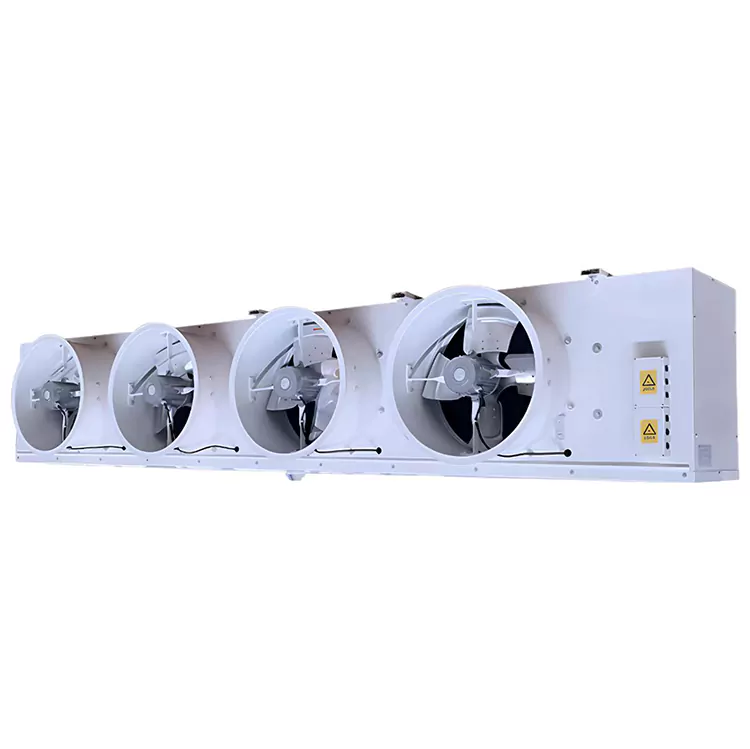
The Core Advantages of Water Defrost Technology
To understand why this technology is superior, it helps to compare it directly with standard electric defrost systems. The differences impact not only your energy bill but also the shelf life of your stored goods.
| Feature | Industrial Water Defrosting Air Cooler | Standard Electric Defrost Cooler |
|---|---|---|
| Cooling Stability | Minimal temperature fluctuation during defrost cycles. | Significant temperature spikes that can stress products. |
| Energy Consumption | Lower operating costs; uses water instead of high-wattage heaters. | High energy draw from electric heating elements. |
| Defrost Speed | Fast and uniform defrost across the entire coil surface. | Slower, often uneven defrosting leading to hot spots. |
| Maintenance Needs | Requires water line checks but fewer part replacements. | Frequent burnout of heaters and fuses increases upkeep. |
| Air Quality | Washes dust and debris from the coil, improving hygiene. | "Bakes" dust onto coils, potentially creating odors. |
Key Benefits for Cold Storage Operations
Facilities that prioritize either food safety or operational continuity find the Industrial Water Defrosting Air Cooler to be an indispensable asset. Here are the primary reasons for its growing adoption:
-
Preservation of Product Quality: Because the defrost cycle relies on water that is near freezing point, the temperature in the room remains stable. This prevents the thaw-refreeze cycle that damages the cellular structure of food products.
-
Enhanced Hygiene: The water rinse physically removes airborne contaminants and ice buildup, washing them down the drain. This prevents the coil from becoming a breeding ground for mold and bacteria, a common issue in dry defrost systems.
-
Rapid Defrost Cycles: Water transfers heat much more efficiently than air. This means the defrost cycle is completed in a fraction of the time required by electric systems, reducing downtime for the cooling process.
-
Reduced Fire Risk: By eliminating high-temperature electric coils inside the cooler, the system removes a potential ignition source, which is a critical safety consideration in large storage facilities.
Frequently Asked Questions
What happens to the water used during the defrost cycle?
The water utilized in the defrost process is carefully managed to prevent mess and ice buildup. The system operates on a timed schedule, spraying water over the evaporator coil to melt accumulated frost. This water, now mixed with the frost, flows down into a strategically positioned drain pan. From there, it is channeled out of the unit and into the facility's drainage system. HANYORK designs these systems to ensure complete drainage, preventing standing water that could freeze and damage the pan or pipes.
How does an Industrial Water Defrosting Air Cooler perform in very low temperatures?
This type of cooler is specifically engineered for low-temperature environments, typically operating efficiently down to -40°F. The key lies in the water management. The water source is treated and maintained at a controlled temperature to ensure it remains liquid upon contact with the coil. It effectively melts the frost, and because the defrost cycle is quick, the residual water is drained before it has a chance to freeze within the unit. This design ensures reliable, long-term operation even in deep-freeze conditions.
What maintenance is required to keep these units running efficiently?
Maintenance for a water defrost system is straightforward but essential. The primary tasks include regularly inspecting the water spray nozzles to ensure they are not clogged with minerals or debris, which can usually be managed with an inline water filter. It is also important to periodically check the drain pan and line to ensure they are clear and heating elements (if present in the drain pan) are functioning to prevent ice dams. Compared to electric defrost units that require frequent replacement of burnt-out heaters, the Industrial Water Defrosting Air Cooler generally offers lower long-term maintenance costs and less operational downtime.
Optimize Your Cold Storage Today
Choosing the right cooling equipment is a decision that impacts your daily operations and your bottom line. The Industrial Water Defrosting Air Cooler by HANYORK provides the temperature stability and energy savings that modern cold storage facilities demand. Don't let inefficient defrost cycles compromise your inventory.
Contact us today to discuss your specific cooling requirements and find the perfect solution for your facility.