

Why Manual Tightening Tools Matter in Modern Assembly Work?
2026-06-25
Manual tightening tools play a crucial role in a wide range of industries where precision fastening, reliability, and operator control are required. From automotive assembly lines to electronics manufacturing and maintenance workshops, these tools remain indispensable despite the rise of automated systems. Their flexibility, cost-effectiveness, and ability to provide tactile feedback make them essential for ensuring secure and accurate tightening operations. Today, manufacturers like Ningbo Shiji Bosi Tools Co., Ltd. continue to innovate in this field, offering durable and ergonomic solutions tailored for professional users worldwide.
Manual tightening tools refer to hand-operated devices designed to apply controlled torque to fasteners such as bolts, nuts, and screws. Unlike pneumatic or electric tools, they rely entirely on human force, allowing users to maintain full control over tightening pressure. This makes them particularly valuable in applications where over-tightening or under-tightening could lead to product failure or safety risks.
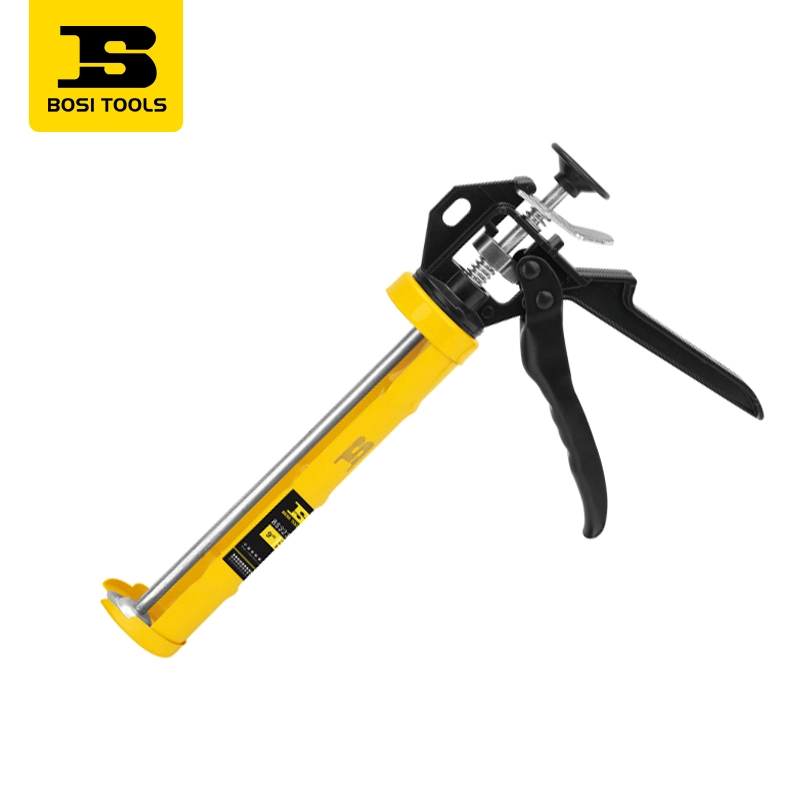
The Importance of Manual Tightening Tools in Industry
In modern production environments, precision is everything. Manual tightening tools help ensure that each fastener meets exact torque specifications without damaging components. They are widely used in:
- Mechanical assembly and repair
- Electrical equipment installation
- Automotive maintenance and production
- Aerospace component assembly
- Household appliance manufacturing
Their importance lies not only in functionality but also in reliability. Even in highly automated factories, manual tools are often used for final adjustments, quality checks, and maintenance work.
Key Types of Manual Tightening Tools
Different applications require different tightening solutions. Below is a simplified overview:
| Tool Type | Main Function | Typical Application | Key Advantage |
|---|---|---|---|
| Screwdrivers | Tightening small screws | Electronics, appliances | High precision control |
| Torque Wrenches | Controlled torque fastening | Automotive, machinery | Prevents over-tightening |
| Allen Keys | Hex socket fastening | Furniture, mechanical parts | Simple and versatile |
| Socket Wrenches | Heavy-duty fastening | Industrial equipment | High torque output |
| Ratchet Wrenches | Continuous tightening without repositioning | Automotive repair | Faster operation |
Each type of Manual Tightening Tools serves a unique purpose, and selecting the right one is critical for efficiency and safety.
Advantages of Using Manual Tightening Tools
Manual tightening tools offer several distinct benefits that make them a preferred choice in many industries:
- Precision Control: Operators can feel resistance and adjust force accordingly.
- Cost Efficiency: No need for electricity or compressed air systems.
- Durability: Fewer mechanical parts mean lower maintenance requirements.
- Portability: Easy to carry and use in any environment.
- Safety: Reduces risk of damaging delicate components.
These advantages make manual tools especially useful in environments where accuracy is more important than speed.
Manual vs Power Tightening Tools
Understanding the difference between manual and powered tools helps in choosing the right solution for specific tasks.
| Feature | Manual Tightening Tools | Power Tightening Tools |
|---|---|---|
| Control | High precision, operator-controlled | Limited tactile feedback |
| Speed | Slower | Faster |
| Cost | Low initial investment | Higher cost |
| Maintenance | Minimal | Requires servicing |
| Application | Precision tasks | Mass production |
While power tools dominate high-volume production, manual tightening tools remain irreplaceable for detailed work and final assembly stages.
How to Choose the Right Manual Tightening Tools
Selecting the right tool depends on several factors:
- Torque Requirement: Match tool capacity with fastening needs.
- Material Type: Soft materials require more delicate control.
- Working Environment: Confined spaces may require compact tools.
- Frequency of Use: Industrial-grade tools are needed for continuous operation.
- Ergonomics: Comfortable grip reduces operator fatigue.
Manufacturers like Ningbo Shiji Bosi Tools Co., Ltd. focus on ergonomic design and high-strength materials to ensure long-term performance and user comfort.
Industrial Applications and Performance Impact
The performance of Manual Tightening Tools directly affects product quality and operational safety. In automotive assembly, incorrect torque can lead to mechanical failure. In electronics, even slight over-tightening may damage circuit boards.
Common performance benefits include:
- Improved assembly accuracy
- Reduced product defects
- Enhanced operational safety
- Longer equipment lifespan
- Better maintenance efficiency
By integrating high-quality manual tools into production lines, companies can significantly improve consistency and reduce rework costs.
Why Professionals Still Rely on Manual Tightening Tools
Despite technological advancements, professionals continue to rely on manual tools because they offer unmatched control. In precision industries such as aerospace and medical device manufacturing, human tactile feedback is still considered superior for certain tasks.
Additionally, manual tools are essential in field repairs where electricity or air supply may not be available. This makes them a universal solution across multiple industries.
Conclusion
Manual tightening tools remain a foundational component in modern industrial and mechanical operations. Their simplicity, precision, and reliability ensure that they continue to play a vital role even in highly automated environments. Whether used for assembly, maintenance, or quality control, these tools provide unmatched control and consistency.
As a trusted manufacturer, Ningbo Shiji Bosi Tools Co., Ltd. is committed to delivering high-performance Manual Tightening Tools designed to meet global industrial standards and evolving customer needs.
If you are looking for reliable, durable, and precision-engineered tightening solutions, contact us today to learn more about our product range and customization options.